

Water damage at a Kearny warehouse or industrial site calls for prompt documentation, a thorough assessment, and organized insurance communication. For a Kearny NJ industrial property damage claim, record the building and its contents while damage is visible. Damp conditions can lead to mold growth within days. Business property insurance may also cover lost income, depending on the policy.
Water intrusion can affect more than floors and walls. It may disrupt equipment, inventory, and operations, so connect each observed loss to the affected area and property. Clear records help explain what happened and support the claim presented to the insurer.
This article explains how to document water damage, organize restoration assessments, and coordinate an industrial property claim. It also covers business interruption, factors that can affect the claim timeline, and how public-adjusting support from Integrity Adjusters & Associates can help prepare and present a commercial property claim.
Key Takeaways
- Learn how an industrial property assessment can organize damage details across building areas, equipment, and business contents.
- See how claim documentation can support communication with the insurance adjuster and help clarify what the insurer is evaluating.
- Understand which practical factors shape restoration and claim timelines, from the extent of damage to the scope of repairs.
- Find out how commercial property claim support can help present a well-organized claim when business operations are affected.
- Recognize when public-adjusting support may help bring structure to the claim process and its insurance coordination.
Can you handle water damage at a Kearny warehouse or industrial site?
Yes. Water damage at an industrial site can be assessed and documented as part of a property insurance claim. Common scenarios include stormwater entering a warehouse, plumbing failures, and water reaching inventory, production equipment, or building systems. Record damage by area and property type instead of describing the site as one undifferentiated loss.
Kearny has experienced local flooding. Route 7 and Sellers Street flooded on December 23, 2022. That history makes it practical to record the source and path of water, including affected entrances, floor levels, storage zones, and equipment. The record should distinguish visible water damage from resulting operational effects, such as equipment that cannot be used or inventory that is affected.
Water extraction and structural drying address different parts of the response. Extraction removes standing water and accessible trapped moisture. Drying then targets moisture in building materials and enclosed spaces. A restoration assessment can map affected areas, document materials and contents, and note where drying progress needs measurement. Photos, room or zone labels, and equipment descriptions connect observed damage to the claim record.
Water intrusion can affect more than surface finishes. Moisture may reach wall cavities, insulation, flooring, and other concealed areas; prolonged dampness can contribute to mold growth within days. Record visible signs, the extent of wet materials, and areas needing further evaluation. Mold remediation is more than removing standing water: it must address affected materials and the moisture conditions that allowed growth.
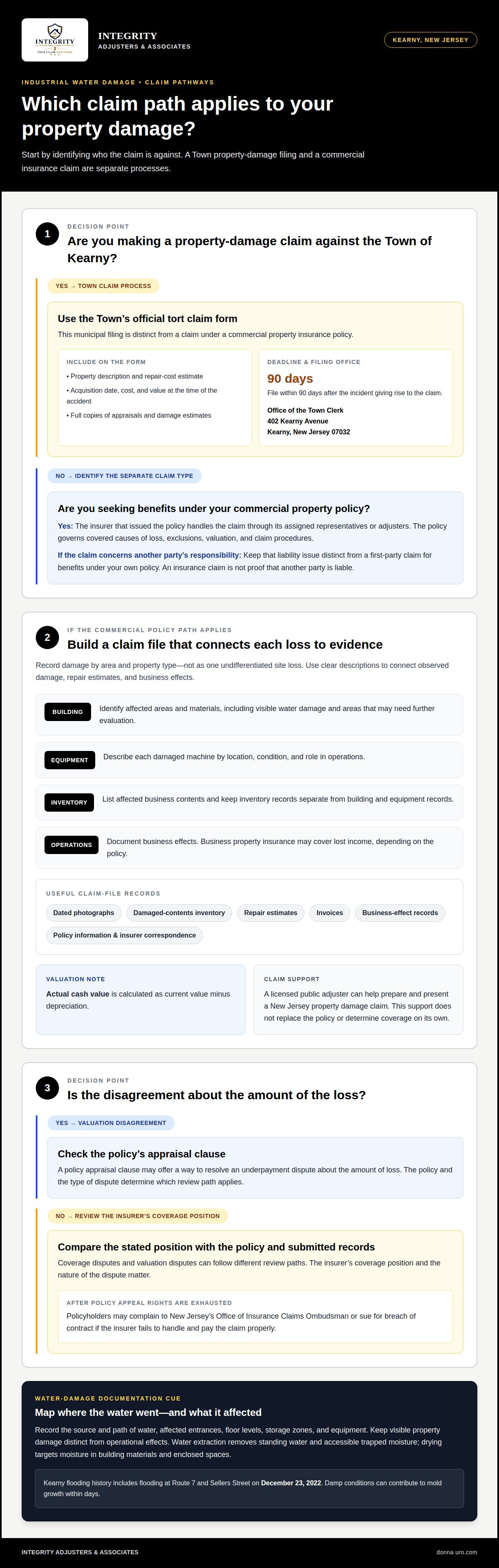
For a Town of Kearny property damage claim, the official tort claim form must include a property description and repair-cost estimate. It asks for the property's acquisition date, cost, and value at the time of the accident, and requests full copies of appraisals and damage estimates. A claim against the Town must be filed within 90 days after the incident giving rise to it. The form is filed with the Office of the Town Clerk at 402 Kearny Avenue, Kearny, New Jersey 07032. This municipal process is distinct from a claim under a commercial property insurance policy.
The Town Clerk is the filing office identified for the Town's property damage claim form. Local claim information does not identify specific Kearny or Hudson County agencies for operational fire, flood, environmental, or building response. Do not confuse the claim-filing office with emergency responders.
Do you work with my insurance company?
Insurance coordination means presenting organized damage records to the insurer handling your commercial property policy. A public adjuster can help New Jersey policyholders prepare, present, and adjust a property damage claim. For a Kearny NJ industrial property damage claim, this support can keep claim materials and insurer communications organized. It does not replace the policy or determine coverage on its own.
New Jersey recognizes a duty of good faith and fair dealing in every insurance policy. The policy governs covered causes of loss, exclusions, valuation, and claim procedures. For an underpayment dispute about the amount of loss, a policy appraisal clause may offer a way to resolve the valuation disagreement. The insurer’s coverage position and the type of dispute determine which review path applies.
The insurer that issued the policy handles the commercial property claim through its assigned representatives or adjusters. A licensed public adjuster can also help the policyholder prepare and present the claim. The policy and claim assignment determine which insurer representatives handle a specific loss. The policyholder’s records remain central to the review.
A strong claim file connects each reported loss to clear supporting records. Include dated photographs, an inventory of damaged contents, repair estimates, invoices, and records of business effects. For example, identify a damaged production machine by its location, condition, and role in operations. This gives the insurer a clearer basis for reviewing the property and claimed loss.
Organize evidence by damage category. Separate building components, equipment, inventory, and business interruption records rather than combining them into one total. Include relevant policy information and insurer correspondence with each claim update. For a Kearny NJ industrial property damage claim, consistent descriptions help the adjuster compare reported damage, estimates, and policy terms without confusing separate items.
Claim valuation depends on the policy and evidence supporting each loss. Actual cash value is calculated as current value minus depreciation. Business property compensation may include lost income when damage affects operations. Records linking the property damage to interrupted business activity can help explain that part of the claim.
Keep liability distinct from a first-party property claim. A first-party claim seeks benefits under the policy; a claim against another party concerns responsibility for causing damage. Keep evidence of the damage and its source together, but do not treat an insurance claim as proof that another party is liable.
For a denied claim, compare the insurer’s stated coverage position with the policy and submitted records. For an underpayment dispute about the amount, the appraisal clause may apply. After exhausting policy appeal rights, policyholders may also complain to New Jersey’s Office of Insurance Claims Ombudsman or sue for breach of contract if the insurer fails to handle and pay the claim properly.
The insurer that issued the policy typically reviews the claim through its assigned representative or adjuster. A licensed public adjuster can also help the policyholder prepare and present it. The policy and claim assignment determine the specific parties involved.
Rapid response to limit further damage
After industrial property damage, protect people first, stop the source if it is safe, and document conditions before cleanup changes the scene. Notify the insurer, record the cause of loss if known, and coordinate emergency restoration without delaying essential safety measures.
A response plan helps Kearny businesses act in sequence rather than improvise around a damaged site. Assign a site lead, identify who can authorize access, and keep contact details for building management, maintenance staff, and the insurance representative together. The written plan should also identify utility shutoffs and restricted areas.
Use a clear sequence when damage occurs:
- Control access. Keep staff away from wet floors, damaged ceilings, exposed wiring, or unstable shelving. Mark affected zones so forklifts and other equipment don’t cross them.
- Address the source. If safe, stop a leaking supply line or protect an opening from continuing rain. Record the source, location, and time discovered.
- Notify key contacts. Alert the site lead, property manager, and insurer through the appropriate channels. Record who was notified and when.
- Capture conditions. Photograph affected areas, inventory, and equipment before moving or discarding items, provided access is safe.
- Coordinate mitigation. Track what emergency restoration work is performed, which areas it affects, and what materials are removed or protected.
Each step creates a useful record. For example, if a roof leak sends water into a storage aisle, photographs can show the entry point, affected stock, and nearby equipment. A location label such as “north loading bay” connects images, inventory records, and later repair assessments. Keep invoices and written updates with the claim file.
Emergency restoration may include removing water, protecting contents, and starting drying. These actions address ongoing damage but do not replace the insurance assessment. Log work dates, affected locations, materials handled, and changes to site access. If equipment must be moved to prevent further damage, record its original location and condition.
Include business continuity in the same plan. Identify which operations depend on each area, piece of equipment, or inventory group. If a production line becomes inaccessible, for example, note its function and the operational change. This creates a clear record of how property damage affected the business, separate from the physical repair scope.
Before an incident, keep current site plans, equipment inventories, utility locations, and emergency contacts somewhere accessible. Update the records as conditions change. A controlled response reduces confusion among staff, restoration work, and the insurance review while preserving a clear account of what happened.
Restoration assessment and timelines
Industrial properties in Kearny may face floodwater, storm-related roof leaks, fire, smoke, soot, or water carrying contaminants. Before restoration begins, identify the source, affected materials, and any hazards.
A restoration timeline depends on the extent of damage, materials involved, and work needed to make affected areas usable. An assessment separates immediate stabilization from cleaning, drying, repairs, and final review. A small roof leak in one storage area differs from water reaching several production zones, electrical systems, or inventory. Each scope should identify the required work and conditions affecting the next step.
For storm or roof damage, assess both visible interior effects and the building entry point. A stained ceiling may indicate water intrusion, but also record affected insulation, wall finishes, stored materials, and nearby equipment. Document the roof condition and any need for temporary protection. Otherwise, interior repairs may be planned without accounting for the source of damage.
Fire restoration requires a separate review of heat, smoke, and soot. Smoke may affect rooms beyond the area where flames were present, and soot can settle on equipment, contents, and building surfaces. Map affected zones and distinguish cleaning needs from repair or replacement needs. For example, documenting soot on a production machine separately from damaged wall finishes clarifies the work scope.
Contamination concerns depend on the water source and affected materials. Floodwater entering a warehouse may contact stored goods, building finishes, or process areas. Record where water traveled and what it reached, then identify materials needing further evaluation. This avoids treating every wet surface as contaminated and helps define suitable restoration tasks.
Clear records make timeline changes easier to explain. The restoration file can track:
- Area and condition: identify each affected room, roof section, storage bay, or production zone.
- Work completed: note stabilization, cleaning, drying, or removal by location.
- Remaining scope: list unresolved damage, access limits, and repair dependencies.
- Operational effects: connect affected equipment or spaces to interrupted business functions.
These records support a practical sequence: assess the source, define affected areas, document the work, and update the scope as conditions change. A drying delay, concealed damage, or newly discovered soot can alter the remaining work. Record changes by location to distinguish new findings from completed tasks and connect restoration progress to the property claim.
After the work sequence is set, the restoration team documents each job with daily moisture readings for adjuster review and to show when the structure is dry. These records distinguish completed drying from repairs that remain, while access limits or unresolved damage may still affect the schedule. The service provider describes its Kearny restoration response as available 24/7 · 365, supporting prompt assessment and stabilization.
Kearny closed on state financing in 2021 for a new stormwater pump station at Dukes Street. Separately, in Kearny, New Jersey, if fire, another casualty, or an act of God destroys 80% or more of a nonconforming structure’s existing area, its use as a nonconforming use must end. For an affected property, restoration planning should account for this threshold when defining the scope and considering whether the existing use can continue.
Business property insurance
For a Kearny industrial property, a commercial claim should connect each damaged asset to the business function it supports. A warehouse roof, production equipment, stored inventory, and interrupted operations are distinct parts of the loss. Separating them creates a clearer picture than one combined damage description.
Organize the claim around the policy’s coverage categories and the affected property. Record building damage separately from machinery, inventory, and operational impacts. For example, a damaged conveyor may disrupt production even if the surrounding building remains usable. This distinction helps explain both physical damage and its business consequences.
Document business interruption separately. New Jersey property damage compensation may include lost income when business property is damaged. Link the interruption to the affected property and operational change. For example, identify a damaged production area, the work it supports, and the resulting disruption. Organize operating records and claim documents by date and business function.
Valuation also depends on how the policy treats damaged property. Actual cash value is calculated as current value minus depreciation. Replacement cost and actual cash value are different approaches, so the policy language and insurer’s estimate matter. For an equipment loss, compare the item described in the estimate with its condition, age, and documented role. Keep those details tied to the specific asset.
A practical claim file can group records into these categories:
- Building: roof, structural components, interior finishes, and affected work areas.
- Business property: equipment, inventory, and other damaged contents, identified by location and condition.
- Operations: affected processes, work areas, and records supporting interruption-related losses.
- Claim handling: insurer estimates, submitted records, correspondence, and decisions about disputed items.
Another party may share responsibility for the damage. If an insurer pays a property damage claim, it may pursue the responsible party through subrogation. If successful, the policyholder may recover their deductible. Preserve records identifying the suspected source and sequence of events, such as a documented roof failure or leaking system, but do not treat suspicion alone as proof of responsibility.
For rising water from a river, street, or lake, usually only a flood policy covers the damage. The water source therefore matters to the coverage review. Keep the origin and path of the water connected to records of the affected property.
A well-organized commercial claim presents each loss category with its supporting documents. This helps clarify what was damaged, how operations were affected, and which valuation questions remain for review.
Integrity Adjusters & Associates: Residential Water Damage Claim Support
Integrity Adjusters & Associates helps policyholders document property damage and prepare a comprehensive claim for the insurer. Its Residential Water Damage Claim Support serves residential losses; commercial support covers the firm’s listed commercial claim offerings, including fire loss. Clear records of damaged property, estimates, and business effects help organize the insurance claim.
Consider claim support when the damage record feels incomplete, the insurer’s assessment leaves questions, or several loss categories need to be presented together. Integrity Adjusters & Associates provides claim advocacy and documentation, not physical restoration or legal representation. For a Kearny industrial loss, organize property evidence and insurer correspondence for review.
Contact Integrity Adjusters & Associates to discuss your property damage claim and the support you need.
Put your claim on a clear path forward
A Kearny industrial property damage claim benefits from a record that connects physical losses, operational effects, and insurance correspondence. Bring those materials together so the claim can be reviewed as a complete account, rather than disconnected estimates and notes.
Integrity Adjusters & Associates provides commercial business property claim support, helping policyholders document losses and prepare a comprehensive claim for the insurer. The firm also offers Residential Water Damage Claim Support, Residential Storm Damage Claim Support, and Residential Fire Loss Claim Support for homeowners facing those losses.
If you’re ready to discuss support for your property claim, contact Integrity Adjusters & Associates. A well-organized claim gives you a practical foundation for the next conversation with your insurer.
Frequently Asked Questions
How fast can you get to a property in Kearny?
Integrity Adjusters & Associates does not provide emergency mitigation or physical restoration, so it does not dispatch a crew to extract water or repair a site. Its role is public-adjusting advocacy: documenting damage and preparing a property insurance claim. For an active hazard, prioritize site safety and emergency response. Claim support can help organize the insurance record once damage and affected property can be documented safely.
What is the deadline to report property damage and file an insurance claim in New Jersey?
For an insurance claim, the policy’s notice and filing provisions govern applicable deadlines. New Jersey’s six-year period for general property damage claims does not replace a policy deadline. Report the loss through the insurer’s required process and follow the policy’s instructions for notice and supporting information. Claims against government entities have separate requirements, so do not treat them as ordinary insurance claims.
How do I document industrial property damage for an insurance claim?
Build a record identifying each affected asset and connecting it to ownership and business use. For equipment, capture its make, model, serial number, and pre-loss maintenance or purchase records when available. Preserve original photographs and invoices, and label copies by location and date. Use existing stock or receiving records to identify damaged inventory and quantities. Keep a separate copy of everything submitted and of insurer responses.


