

A collapsed warehouse roof is both a physical loss and a claim-evidence problem. A North Bergen NJ warehouse roof collapse claim may involve documenting damage to the building, contents, and business operations, then presenting those losses through the applicable commercial property policy. On November 15, 2020, high winds tore off the roof and collapsed a wall at a 400,000-square-foot warehouse on West Side Avenue in North Bergen.
For a business facing a North Bergen NJ warehouse roof collapse claim, the immediate priorities are safety and securing the property. Next, create a clear record of the damage, disrupted operations, and known circumstances of the loss.
This guide covers practical documentation steps, evidence that can support a claim, and factors that may affect available options. It also explains how public adjusting support can help organize and present commercial property losses to an insurer.
Key Takeaways
- Separate building damage, damaged contents, and business impacts so each part of the loss can be assessed clearly.
- Organize photographs, inventory records, and other documentation to create a coherent account of what was affected.
- Review how the reported cause of the collapse relates to the commercial property coverage and claim requirements.
- Commercial property claim support can help document losses and present them to the insurer in a structured claim.
North Bergen NJ warehouse roof collapse claim
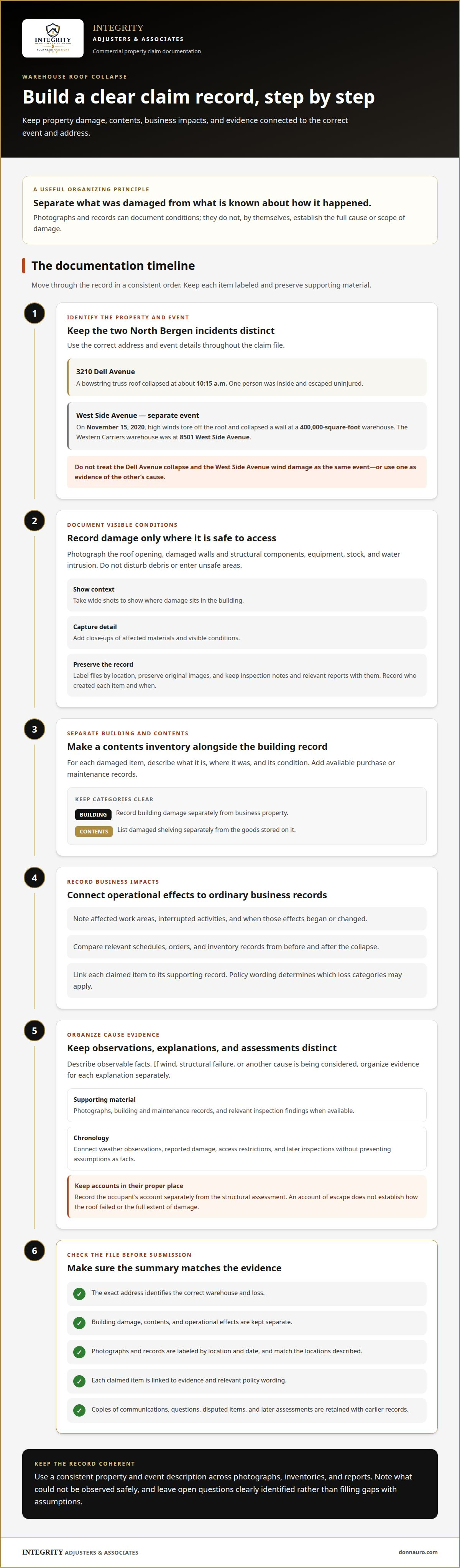
A warehouse roof collapse can affect more than the roof itself. At 3210 Dell Avenue in North Bergen, a bowstring truss roof collapsed at about 10:15 a.m. One person was inside and escaped uninjured. For a commercial property claim, the central task is to connect the physical damage and resulting losses to clear records and the applicable policy terms.
Keep separate North Bergen incidents distinct. The Dell Avenue collapse is not the same event as the November 15, 2020, wind damage to a 400,000-square-foot warehouse on West Side Avenue. High winds tore off that warehouse’s roof and collapsed a wall. The Western Carriers warehouse was at 8501 West Side Avenue. Different addresses and events mean records should identify the specific property and loss being claimed.
Build a record of the damage
Create a dated record of visible conditions, but only enter areas that are safe to access. Photograph the roof opening, damaged walls and structural components, equipment, stock, and water intrusion. Take wide shots to show where damage sits in the building, then close-ups of affected materials. Label files by location, such as “loading area” or “storage aisle,” and preserve the original images.
If the roof is supported by bowstring trusses, photograph visible damage without disturbing debris or entering unsafe areas. Images can document conditions, but cannot by themselves establish the full cause or scope of damage. Keep inspection notes and relevant reports with the photographs. Record who created each item and when, preserving a clear sequence in the claim file.
Separate property and business impacts
Prepare an inventory of damaged contents alongside the building damage record. Describe each item, its location and condition, and include available purchase or maintenance records. For example, list damaged shelving separately from the goods stored on it. This helps distinguish building components from business property.
Document operational effects using ordinary business records. Note affected work areas, interrupted activities, and when those effects began or changed. Compare relevant schedules, orders, and inventory records from before and after the collapse. Policy wording determines which loss categories may apply, so connect each claimed item to its supporting record.
Connect the cause to the claim file
Describe the event using observable facts. For the Dell Avenue collapse, the known details include the address, approximate time, bowstring truss roof, and the person who escaped unharmed. Do not treat separate wind damage on West Side Avenue as evidence of the cause of the Dell Avenue collapse. Check that the property location, event details, and supporting documents agree throughout the claim.
If wind, structural failure, or another cause is being considered, organize evidence for each explanation separately. Include photographs, building and maintenance records, and relevant inspection findings when available. A clear timeline can connect weather observations, reported damage, access restrictions, and later inspections without presenting an assumption as fact.
Present a coherent commercial claim
Before submitting materials, compare the loss summary with the supporting records. Confirm the address identifies the correct warehouse, listed contents appear in the inventory, and photographs match the locations described. Keep copies of communications and note questions or disputed items. An organized file helps show how each claimed loss relates to the collapse.
- Identify the property by its exact address.
- Keep building damage separate from contents and operational effects.
- Label photographs and records by location and date.
- Link each claimed item to evidence and relevant policy wording.
Keep the occupant’s account separate from the structural assessment. One person was inside the North Bergen warehouse when its roof collapsed and escaped uninjured. Record this detail without treating it as proof of how the roof failed or the extent of the damage. Separate observations from conclusions about cause, and connect conclusions to the inspection material that supports them.
As the claim file develops, use a consistent description of the property and collapse across photographs, inventories, and reports. Note limits on what could be observed safely, and do not fill gaps with assumptions. Retain later assessments alongside earlier records so changes in findings remain clear. This helps reviewers distinguish documented conditions from open questions and keeps building damage and business effects tied to their respective records.
Integrity Adjusters & Associates: Residential Water Damage Claim Support
Integrity Adjusters & Associates helps New Jersey policyholders document property damage and assemble comprehensive claims for insurers. For a warehouse collapse, the firm can help organize records of building damage, affected contents, and related losses. Its public adjusting advocacy supports a clear presentation of the commercial property claim.
A commercial warehouse collapse calls for support focused on commercial property claims. The work centers on documenting damage accurately and bringing supporting information together. Public adjusting advocacy helps present the claim, but does not replace legal representation or physical repairs.
Consider claim support when records are extensive, losses involve different parts of the property, or the claim needs a clearer presentation. Contact Integrity Adjusters & Associates to discuss support for your property claim.
Move the Claim Toward a Clear Decision
A North Bergen, NJ, warehouse roof-collapse claim is a significant business matter, not just a file of damage records. Decide who will coordinate the claim, track insurer questions, and keep supporting materials organized as the matter progresses. Assigning responsibility helps keep unresolved details visible while business leaders manage other priorities.
Claim support can be useful when commercial property damage is complex or documentation needs careful organization. Integrity Adjusters & Associates helps New Jersey policyholders document property losses and prepare comprehensive claims for insurers. The policy terms and evidence for the specific loss shape the available options. A free claim review costs nothing and is a practical next step.
If you’re ready to discuss support for your property claim, contact Integrity Adjusters & Associates. A clear next step can help you approach the process with greater structure and focus.


