

An Atlantic City NJ hotel storm damage claim involves documenting storm-related property damage, submitting the claim to the insurer, and reviewing how the losses are assessed. The claim may include damage to the building, contents, and areas that affect hotel operations. Clear records help connect reported damage to the storm and explain the losses being claimed.
When a storm disrupts a hotel, safety and operations come first. Once the property is secure, managing the claim can feel like another major task, particularly when damage affects multiple parts of the building or business.
This guide explains what to expect when filing and reviewing an Atlantic City NJ hotel storm damage claim, including which records help document losses and what may shape the insurer’s review. It also covers how commercial storm damage claim support can help organize evidence and present a comprehensive account of property damage.
Key Takeaways
- Organize records of storm damage across the building, contents, and areas affected by hotel operations.
- Connect each reported loss to the storm with clear, consistent documentation.
- Expect the insurer’s review to focus on the damage evidence and the losses included in the claim.
- Learn how claim support can help document property losses and prepare a comprehensive claim for the insurer.
Atlantic City NJ hotel storm damage claim
A hotel storm claim starts with a clear record of what the storm damaged and how each loss affects the property. In Atlantic City, wind, rain, and debris can affect roofs, windows, exterior areas, guest rooms, equipment, and hotel operations. The insurer’s review compares reported losses with the policy and submitted evidence. Policy wording matters because it defines covered property, causes of loss, exclusions, and applicable limits.
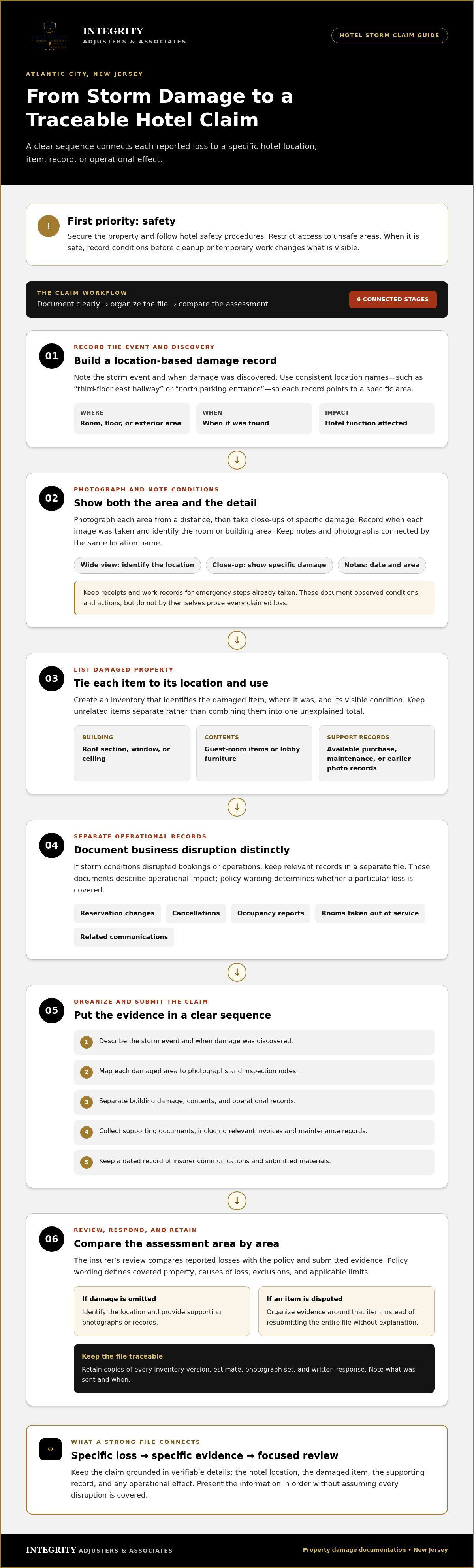
Start by documenting damage across the property. Assign one person to coordinate photographs, notes, invoices, and communications. Use consistent names for each location, such as “third-floor east hallway” or “north parking entrance.” Photograph each area from a distance, then take close-ups of specific damage. Note what is visible, when it was found, and which hotel function it affects. A consistently labeled record helps distinguish locations during the review.
Keep safety and documentation separate. Staff should follow hotel safety procedures and restrict access to unsafe areas. When it is safe to do so, photograph and note conditions before cleanup or temporary work changes what is visible. Record when each image was taken and identify the room or building area. Keep receipts and work records for emergency steps already taken. These records document observed conditions and actions, but do not by themselves prove every claimed loss.
Create an inventory linking each damaged item to its location and use. For example, list a water-damaged mattress by room and describe its visible condition. Record lobby furniture separately from guest-room contents. For building damage, identify the affected component, such as a roof section, window, or ceiling. Include available purchase records, maintenance documents, or earlier photographs if they help establish the item’s condition. Avoid combining unrelated items into one unexplained total.
Hotel claims may involve more than physical building damage. If storm conditions disrupted bookings or operations, keep relevant records in a separate file. These might include reservation changes, cancellations, occupancy reports, and communications about rooms taken out of service. Such documents describe the operational impact. Whether a particular loss is covered depends on the policy, so present the records clearly without assuming every disruption is included.
Before filing, organize the claim materials in a clear sequence:
- Describe the storm event and when damage was discovered.
- Map each damaged area to photographs and inspection notes.
- Separate building damage, contents, and operational records.
- Collect supporting documents, including relevant invoices and maintenance records.
- Keep a dated record of insurer communications and submitted materials.
During the review, compare the insurer’s assessment with the hotel’s documented damage, area by area. If an estimate addresses a roof section but omits related interior damage, identify the location and provide supporting photographs or records. If the cause or condition of an item is disputed, organize evidence around that item rather than resubmitting the entire file without explanation. A focused response clarifies the difference and keeps the review grounded in verifiable details.
Keep copies of every inventory version, estimate, photograph set, and written response. Note what was sent and when. This creates a traceable file if questions arise later. A strong claim does not rely on dramatic descriptions of the storm. It connects each claimed loss to a specific hotel location, item, record, or operational effect, then presents the details in order.
Integrity Adjusters & Associates: Residential Water Damage Claim Support
Integrity Adjusters & Associates helps policyholders document property damage and prepare a comprehensive claim for presentation to the insurer. Its Residential Water Damage Claim Support is relevant when a home has water-related losses, while Residential Storm Damage Claim Support addresses storm damage to residential property. The firm’s work focuses on recording losses accurately and organizing supporting information.
For hotel owners, the documentation steps above can help organize a commercial property claim. Integrity Adjusters & Associates provides commercial storm damage claim support to New Jersey policyholders, helping document property losses and prepare a comprehensive claim for the insurer’s review.
Contact Integrity Adjusters & Associates to discuss residential water or storm damage claim support.
Turn the Claim Review Into a Clear Next Step
A well-organized Atlantic City, NJ, hotel storm damage claim can also highlight where property records, maintenance documentation, and operational planning need closer coordination. Use those findings to inform future decisions, not just as paperwork to file away. Hotel leadership can clarify who coordinates claim information and how departments share important decisions.
Keep the focus on documented property damage and unresolved questions. This gives decision-makers a practical basis for planning next steps without assuming every loss will be handled the same way. Integrity Adjusters & Associates supports New Jersey residential and commercial policyholders with property insurance claims, including storm damage claims.
Contact Integrity Adjusters & Associates to discuss residential property claim support. A deliberate next step can help you move forward with greater clarity.


