

The cleanup bill is only one part of a Fort Lee, NJ high-rise water damage claim. Costs depend on how many units are affected, the type of water, and access to damaged areas. The claim also depends on clear records of what was damaged and where. In a multi-unit building, coordination and documentation can shape how cleanup charges and responsibility are assessed.
It’s reasonable to want a clear picture of costs before making decisions. This guide explains the factors that influence cleanup costs without presenting one building’s loss as a standard estimate. It also covers how building staff, unit owners, and associations can coordinate after a leak, and what to document for an insurance claim.
You’ll also learn how billing records, basement damage, and water-damaged ceilings can affect the claims process. The goal is practical clarity: understand the work involved, keep loss details organized, and know how claim support can help when damage needs thorough documentation.
Key Takeaways
- Cleanup costs depend on the number of affected units, water category, and access. The article explains how the scope of damage changes the estimate.
- Notify building management promptly after a leak so staff can coordinate access and help limit damage across units.
- Keep unit-specific damage records, photos, moisture readings, and billing details organized to support a clearer claim.
- Ceiling and basement damage can involve concealed areas, so documenting where water traveled matters as much as recording visible damage.
- Learn how to distinguish the source and spread of water damage, then build a claim record that reflects the full loss.
What does high-rise and condo water damage cleanup cost in Fort Lee, NJ?
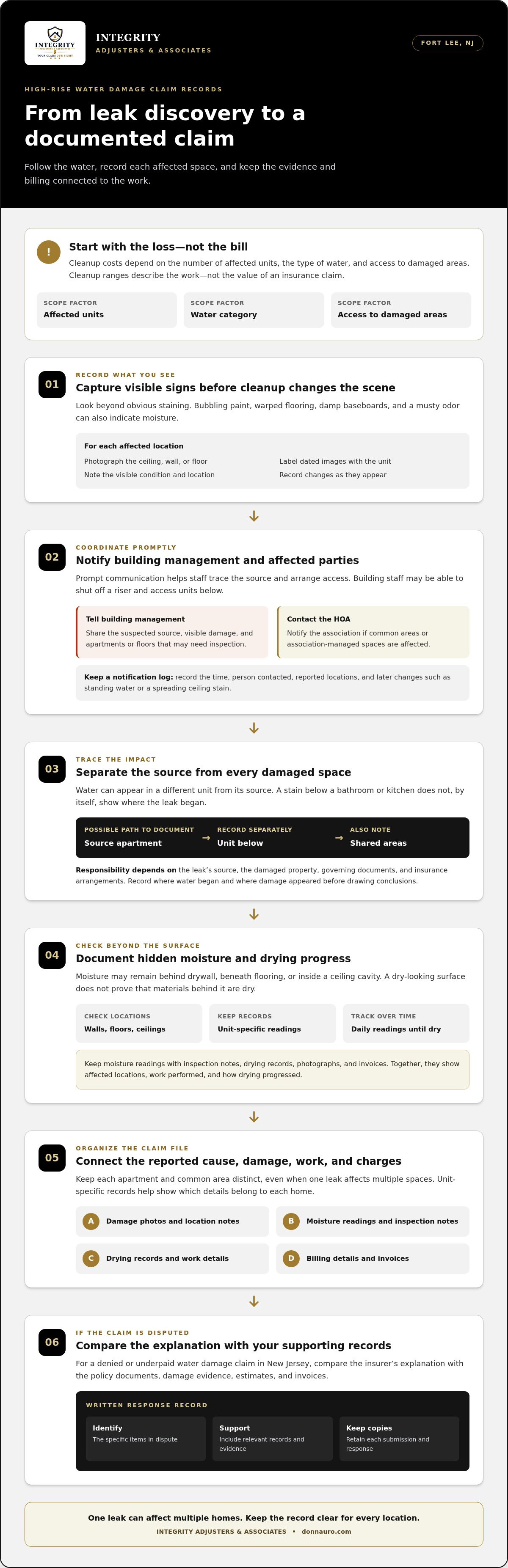
These ranges describe cleanup, not the value of an insurance claim. A Fort Lee NJ high-rise water damage claim also depends on how clearly the damage, drying work, and unit-by-unit impacts are documented. A burst pipe in one apartment, for example, may damage the ceiling below, requiring separate records for each home. The spread of water and access to affected areas help define the work.
Visible staining is only one sign of water damage. Bubbling paint, warped flooring, damp baseboards, or a musty odor can indicate moisture beyond the surface. After a leak, record the location and condition of each visible sign. Photograph the ceiling, wall, or floor before cleanup changes the scene, then keep dated images labeled with the affected unit.
Moisture can remain hidden behind drywall, beneath flooring, or inside a ceiling cavity. A dry-looking surface does not prove that materials behind it are dry. Moisture checks in affected areas can locate damp materials and show whether water has spread beyond the initial leak. In a multi-unit loss, separate unit records help distinguish damage in the source apartment from damage below or in shared areas.
Moisture monitoring adds a timeline to the claim file. Fort Lee restoration crews log moisture readings daily until the structure is dry. Keep those readings with the inspection notes, drying records, photographs, and invoices. Together, the documents show the affected locations, the work performed, and how drying progressed, rather than relying on a single final image.
Can you dispute a denied or underpaid water damage claim in New Jersey? Yes. Compare the insurer’s explanation with your policy documents, damage evidence, estimates, and invoices, then submit a clear written response with supporting records. Keep copies of every submission and response. A documented disagreement makes it easier to identify the specific items in dispute.
Before reviewing a cleanup bill, organize records by unit and damage location. Note building access issues, affected shared areas, and the connection between the apparent source and each damaged space. This gives owners and claim reviewers a clearer basis for understanding the scope of work and charges.
For a multi-unit water loss, keep separate, detailed records for each unit to help clarify the damage and claim. Unit-specific documentation shows which details relate to each home, rather than grouping losses and records across the building.
Coordination among owners, associations, and building staff
In a Fort Lee high-rise, one leak can affect multiple apartments and shared areas. Prompt, coordinated communication helps building staff trace the source and arrange access.
Management and HOA Notification
Notify building management as soon as you find a leak. Staff may be able to shut off a riser and access units below, helping limit further water movement. Contact the homeowners association if common areas or association-managed spaces are affected. State the suspected source, visible damage, and which apartments or floors may need inspection.
Keep a record of each notification, including the time, person contacted, and reported locations. For example, if water appears beneath a bathroom, report both that ceiling and the apartment above it. This gives management a practical starting point for tracing the leak and coordinating entry. Report changes, such as new standing water or a spreading ceiling stain, as they occur.
Responsibility and Insurance Arrangements
Who is responsible for water damage in a Fort Lee condo or rental high-rise? Responsibility depends on the leak’s source, the damaged property, and the building’s governing documents and insurance arrangements. Unit owners, landlords, and associations may have different responsibilities. Document where water began and where damage appeared before drawing conclusions about responsibility.
How do condo bylaws and master insurance policies affect water damage claims in Fort Lee? Bylaws describe how the association and owners handle building components and shared spaces, while the master policy sets the building-level insurance framework. Review those documents alongside your own policy to understand which property and damage each arrangement addresses.
High-rise layouts can make tracing a leak more complex than identifying a wet surface. Water may appear in a different unit from its source, so a stain below a bathroom or kitchen does not, by itself, show where the leak began. Management can coordinate inspections across floors, while residents can note when and where they first noticed moisture.
For a coordinated response, keep separate notes for each affected location. Record the apartment number or common area, visible conditions, and any changes after building staff access the space. If restoration work begins, note which areas are being addressed and how access was arranged. Clear records help distinguish damage in one residence from impacts elsewhere in the building.
Report standing water on a floor or a damp ceiling promptly, even when the source seems contained. Tell building staff which surface is wet and whether water is appearing elsewhere. Dehumidifiers may be used during drying, but their placement and operation should be coordinated with the work plan and building access. Keep communications focused on locations, observed changes, and actions taken.
Insurance claim documentation and billing
A well-organized claim file connects the reported cause, affected property, drying work, and charges. In a Fort Lee high-rise, keep each apartment and common area distinct, even when one leak affects several floors.
Does homeowners or renters insurance cover water damage in New Jersey high-rises? Sudden, accidental water damage, such as a burst pipe or appliance failure, is generally covered by standard New Jersey homeowners and commercial property policies. A renter’s coverage depends on the policy and property involved. Surface flooding is typically covered only under a separate NFIP flood policy.
What are New Jersey deadlines for reporting and filing property insurance claims? Reporting and filing requirements depend on the policy and claim instructions. Report the loss promptly, review the policy’s notice and documentation requirements, and keep a record of submission dates and insurer responses.
What does a Fort Lee high-rise water damage claim typically pay for? Depending on the policy and documented loss, it may cover damage to property and eligible mitigation work, including water extraction and drying. The cause, affected materials, and policy terms help determine which items qualify.
Build the file around evidence that links each charge to the work performed. For a flooded bathroom with water reaching the apartment below, keep separate entries for the source unit, damaged ceiling, and any shared space. Label photos by location and date. Pair each invoice with a description of the work, affected area, and reason for the work.
Useful records include:
- Photographs and videos showing the damage before work changes the scene.
- Inspection notes identifying the source, affected rooms, and visible conditions.
- Drying and mitigation records that describe work performed and areas treated.
- Itemized invoices, receipts, and written communications about the claim.
Billing is easier to assess when documents identify the unit, floor, and service performed. A combined invoice for several apartments can make it harder to connect charges to specific damage. Submit records with clear line items, and retain copies of invoices and payment receipts. If a charge is questioned, match it to the relevant photograph, inspection note, or work record.
Compare the insurer’s written assessment with your evidence, not just the total. Mark differences in affected rooms, drying work, materials, or billed services. For example, if an invoice lists work on two floors but the assessment describes only one unit, identify the second location and attach supporting records. Keep disputed items separate from amounts already addressed.
Keep a dated communication log from the first notice through the latest response. Record who received each document, how it was delivered, and any requested follow-up. A concise file helps show how the reported damage, mitigation, and billing relate, while preserving a clear record if the insurer asks for more information.
Basement and ceiling water damage
Basement and ceiling losses can involve damage beyond the first visible wet surface. In a Fort Lee condo, standing water on a basement floor may affect stored belongings, while a ceiling stain can signal water inside the cavity. Record each location separately. Note where water appears, which materials are wet, and whether the visible area changes during cleanup.
For basement damage, document the visible path of the water before moving items. Photograph the floor, walls, affected belongings, and any remaining waterline. If water extraction is performed, keep records identifying the area treated and the work completed. A location-based record helps distinguish basement contents from building materials and shared areas in the claim file.
Ceiling damage also needs careful documentation. Photograph the stain, bubbling paint, or sagging material from several angles, then record the room and apartment. In a Fort Lee condo, controlled access may allow a crew to dry the ceiling cavity and framing in place rather than remove the entire ceiling. Note the access point and materials reached.
Visible damage may not reveal the full extent of moisture. For example, a stain below an upstairs bathroom shows where water appeared, but not necessarily how it traveled inside the ceiling. Record observations from the affected room and any accessible adjacent area. Keep inspection notes with photographs so the claim file connects hidden areas to visible damage.
During basement cleanup, keep a simple inventory of affected belongings. Identify each item, its location, and its visible condition before disposal or cleaning. For building materials, record the specific wall or floor area involved. These details make it easier to compare documented damage with estimates and invoices without combining separate items or locations.
Use a consistent record for each space:
- Identify the apartment, basement area, or room.
- Describe the visible damage and materials affected.
- Save photographs from before and during cleanup.
- Match extraction or drying records to the treated location.
Keep access and work details with the relevant location. If a ceiling opening provides access to hidden framing, document where it was made and what area it exposed. If basement extraction addresses standing water, file the work record with basement photographs. This organization helps show what the cleanup addressed and where further review may be needed.
For a Fort Lee high-rise water damage claim, connect each visible sign to a specific room, material, and cleanup record. Keep basement evidence separate from ceiling evidence, even when both relate to one leak. A location-based file gives owners and claim reviewers a clearer view of the affected property and work performed.
What causes water damage in Fort Lee NJ high-rise apartments?
In Fort Lee apartments, water damage can start with a burst pipe, appliance failure, or sudden roof leak. The first visible mark may appear away from the failed component. Water can travel through floor assemblies and wall or ceiling cavities before reaching a surface. Identifying the likely source helps clarify which areas need inspection and documentation.
A burst pipe can release water into the unit where it occurs and affect building materials beyond that room. For example, water from a failed pipe may stain a ceiling below. Record the suspected source separately from the visible damage. Note which rooms and surfaces show signs, and preserve any building maintenance information related to the pipe.
An appliance failure is another possible source. A leak near a dishwasher or washing machine may affect flooring, nearby cabinets, or the space beneath the appliance. Photograph the appliance area and surrounding materials before cleanup changes the scene. Record the appliance’s location and reported leak details, rather than describing the damage only as a wet floor.
A sudden roof leak can bring water in from above, with signs appearing on a ceiling or upper-floor wall. Record the room, visible stain, and any changes after rainfall. A ceiling mark alone does not establish the point of entry. Building staff can help coordinate inspection of the roof area and affected interior spaces, while dated photos document what appeared inside the apartment.
Flooding has a different source and insurance distinction. Surface flooding is typically covered only under a separate NFIP flood policy. Fort Lee’s position near the Hudson waterfront also gives local context: Superstorm Sandy battered the waterfront below the cliffs in 2012. A leak from plumbing or an appliance should not be confused with surface water entering from outdoors; describe the observed source and route as accurately as possible.
Use a source-focused record for each incident:
- Write down where water first appeared and what component may be involved.
- Photograph the source area and every visible impact before cleanup.
- Note whether water appeared after appliance use, a plumbing failure, or rainfall.
- Keep building notices or maintenance reports with the incident documentation.
These details help distinguish cause from consequence. A ceiling stain, wet flooring, or damaged cabinet shows an effect, while the appliance, pipe, or roof area may point to a possible source. For a Fort Lee NJ high-rise water damage claim, connecting these observations gives reviewers a clearer account of how the loss began and which property was affected. Keep descriptions factual, and distinguish observed conditions from suspected causes.
Integrity Adjusters & Associates: Residential Water Damage Claim Support
Integrity Adjusters & Associates provides Residential Water Damage Claim Support for homeowners managing complex water losses. The firm helps policyholders document property damage and build a comprehensive claim to present to the insurance provider.
Consider claim support when a Fort Lee high-rise loss affects multiple units, raises questions about the full scope of damage, or involves records that need organizing for review. Unit-specific photos, moisture documentation, inspection notes, and invoices can help show how the loss affected the property. Integrity Adjusters & Associates focuses on claim documentation and advocacy, not physical cleanup or repairs.
For help organizing and presenting a residential water damage claim, contact Integrity Adjusters & Associates.
Move Your Claim Forward With a Clear Record
The next step is to turn available records into a clear account of the loss. For a Fort Lee NJ high-rise water damage claim, keep the evidence organized and identify questions that still need attention. A focused review can help you present the damage and supporting documents clearly to the insurance provider.
Integrity Adjusters & Associates supports residential water damage claims, as well as residential storm damage and residential fire loss claims. The firm helps policyholders document property damage and build a comprehensive claim to present to the insurer.
If you’re ready to discuss support for your property claim, contact Integrity Adjusters & Associates. A deliberate next step can help bring structure to a difficult process and put your documentation to work.
Frequently Asked Questions
What steps should residents take immediately after high-rise water damage?
First, alert building management and identify the affected apartment or shared area. If the leak appears to come from another unit, tell staff which space is affected and when you noticed it. Avoid disturbing damaged materials before recording their condition. Once the immediate response is underway, keep dated notes of new developments, such as water appearing in a nearby room or a ceiling stain spreading.
How do you file a water damage insurance claim in New Jersey?
Notify your insurer using the contact information and process stated in your policy, then clearly describe the incident and affected property. Ask for a claim reference and keep copies of submitted information and insurer correspondence. For a high-rise loss, distinguish damage inside your unit from damage in shared spaces. If the association is also reporting the incident, keep your own claim communications and records organized.
What evidence and documents are needed for a water damage claim?
Along with damage photos and work records, gather your policy declarations, proof of ownership or tenancy, and any building notices about the incident. For damaged personal property, prepare an itemized inventory with descriptions and available purchase or replacement records. Keep receipts for expenses connected to the loss, as well as maintenance records related to the suspected source. Label files by unit and room so each item can be matched to its location.


