

A pipe can split while ice still plugs the crack, so a leak may not appear until thawing begins. For an East Orange, NJ frozen pipe burst claim, a sudden drop in water pressure after a freeze can be an early warning. Look for visible damage or signs of water, and document what you find before cleanup.
It’s natural to focus first on stopping the water and protecting your home. Act quickly: water can spread through flooring and drywall, turning a hidden break into a larger loss. Never use an open flame to thaw a pipe.
This guide explains how to spot a possible rupture before the ice melts, limit further damage, and document the loss for your claim. You’ll also learn what to prepare for an insurer meeting and how a public adjuster can help organize damage documentation and present a comprehensive claim. Clear records of the freeze, thaw, affected areas, mitigation steps, and conversations can help keep the claim grounded in what happened.
Key Takeaways
- If a pipe bursts, shut off the main water supply and call a plumber to address the break safely.
- Build a clear claim record with photos, videos, a timeline of events, mitigation steps, and notes from conversations.
- Prepare for the insurer adjuster meeting by organizing damage evidence and identifying affected rooms, materials, and belongings.
- Understand how coverage can differ: a property owner’s policy generally addresses the building, while renters coverage addresses tenants’ belongings.
- Public adjuster support can help organize the documented loss and present a comprehensive property claim to the insurer.
How do I know if a pipe has burst before the ice actually thaws?
A frozen pipe can split before water appears. Ice may temporarily seal the crack, then thawing allows pressurized water to escape. Freezing water inside household plumbing can create internal pressure exceeding 2,000 psi. Pressure can build between an ice blockage and a closed faucet, stressing pipe walls and joints. In East Orange, homes dating from the early 1900s may have plumbing in spaces with less insulation than modern construction.
Look for warning signs around exposed plumbing, including frost, bulging, damp patches, or unusual sounds. A faucet that sputters or stops flowing can point to a frozen section. A sudden drop in water pressure after a freeze may signal a hidden rupture. For an East Orange NJ frozen pipe burst claim, note these early signs and where you observed them, even if no water is visible yet.
Multi-unit buildings create different damage paths. A frozen pipe in an upper-floor bathroom can leak into the ceiling below, then reach walls, flooring, or shared spaces. A break in a common plumbing line may affect several units, while a branch line may damage one apartment first. Water can spread through flooring and drywall within 1-2 hours, so inspect nearby rooms and the level below.
Roof leaks can follow winter weather, but an ice dam is not a burst plumbing pipe. Ice at the roof edge can obstruct drainage, allowing water to back up beneath shingles and enter the roof deck. Check ceilings near exterior walls for fresh stains, peeling paint, or wet insulation. Trace the water path upward when possible: a ceiling leak near the roof edge differs from water running down from an upstairs bathroom.
Document the scene before cleanup changes it. Photograph the pipe, surrounding surfaces, standing water, and damaged belongings. Take wide room views and close-ups, then note the date, room, and when water appeared. In a multi-unit property, identify affected units and shared areas. A well-organized East Orange NJ frozen pipe burst claim record should also note the freeze, thaw, mitigation steps, and names or dates associated with the incident.
Mitigation and repairs happen in stages. Stop the source and keep people away from unsafe wet areas. Drying may involve removing standing water, drying affected materials, and checking concealed spaces. Saturated drywall or insulation may require selective demolition to reach damaged plumbing or structure. Record removed materials and their locations, then photograph exposed areas before replacement. This creates a clearer record of the water damage and work performed.
Immediate steps after a pipe bursts
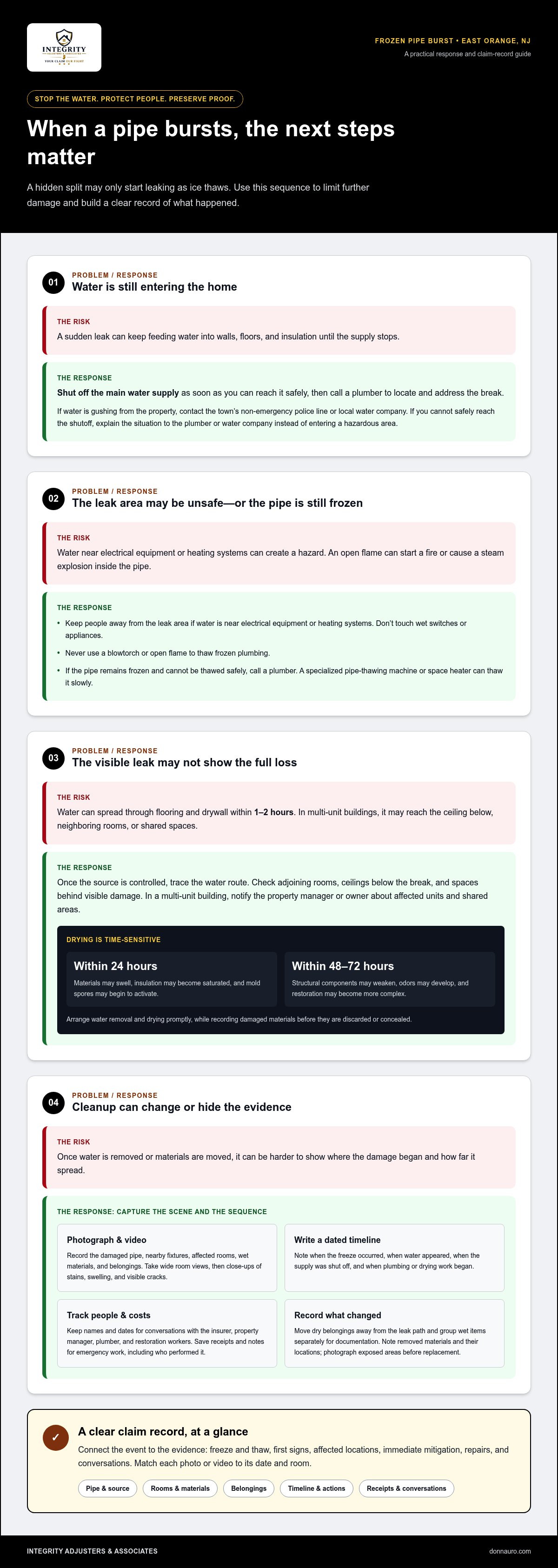
Act in sequence. Shut off the main water supply as soon as you can reach it safely, then call a plumber to locate and address the break. If water is gushing from the property, contact the town’s non-emergency police line or local water company. A sudden leak can keep feeding water into walls, floors, and insulation until the supply stops.
Keep people away from the leak area if water is near electrical equipment or heating systems. Don’t touch wet switches or appliances. Frozen and burst pipes can affect electrical and heating systems, so describe those concerns clearly when arranging help. If you can’t reach the shutoff valve safely, explain the situation to the plumber or water company instead of entering a hazardous area.
After stopping the flow, take these practical steps:
- Photograph the damaged pipe, the nearest fixtures, and water entering each affected room.
- Move dry belongings away from the leak path, and group wet items separately for documentation.
- Record the time you noticed the break, when the freeze occurred, and each action taken.
- Keep receipts and notes for emergency work, including the date and the person who performed it.
Don’t use a blowtorch or open flame to thaw frozen plumbing. A torch creates a fire risk and may cause a steam explosion inside the pipe. If the pipe remains frozen and you can’t thaw it safely, call a plumber. A specialized pipe-thawing machine or space heater can thaw a pipe slowly and reduce the risk of a violent pressure release.
Time matters after water enters building materials. Within 24 hours, materials may swell, insulation may become saturated, and mold spores may begin to activate. Within 48-72 hours, structural components may weaken, odors may develop, and restoration may become more complex. These are reasons to arrange water removal and drying promptly, not to conceal or discard damaged materials before recording them.
Once the immediate source is controlled, identify the full route of the water. Check adjoining rooms, ceilings below the break, and spaces behind visible damage. In a multi-unit building, notify the property manager or owner about affected shared areas and neighboring units. Keep a dated record of each location inspected, the visible conditions, and any follow-up work. That timeline helps distinguish the initial burst from damage discovered during drying.
Claim documentation and insurer adjuster meetings
Start a claim record as soon as the leak is controlled. Take photos and videos before cleanup changes the scene, including the damaged pipe, affected rooms, wet materials, and belongings. Capture wide views to show each room, then close-ups of stains, swelling, and visible cracks. Add the date and location to your notes so each image can be matched to the loss.
Build a timeline from the winter freeze through discovery and mitigation. Record when temperatures dropped, when water appeared, when the main supply was shut off, and when plumbing or drying work began. Include names and dates for conversations with the insurer, property manager, plumber, and restoration workers. Keep messages, work notes, and receipts together; they help explain what happened and what actions followed.
Before the insurer meeting, organize the evidence by room and damage type:
- Group photos by location, such as the kitchen ceiling, bathroom wall, or basement floor.
- List damaged belongings with descriptions and photographs showing their condition.
- Keep plumber findings, drying records, and invoices beside the related room notes.
- Mark areas that remain wet, inaccessible, or concealed behind finishes.
- Write down questions about observed damage and the next inspection steps.
Moisture mapping can show how far water traveled beyond visible staining. Ask the restoration team to record moisture readings by location and material, such as drywall beside a burst line or flooring beneath a cabinet. Keep the readings and any diagrams with the claim file. A dry surface does not establish that concealed insulation, wall cavities, or subflooring are dry.
At the meeting, walk through the affected areas in a consistent order. Point out the pipe location, water path, damaged finishes, and any rooms below or beside the break. Share the timeline and supporting photos, then note which areas the adjuster inspected. If a wall or floor remains closed, identify the concealed space and explain what evidence indicates moisture there.
Avoid permanent repairs before the adjuster has inspected and recorded the full loss. Necessary steps to limit ongoing damage can proceed, but photograph conditions before materials are moved or removed. Keep samples or removed materials when practical, and record where they came from. If drying reveals additional damage, photograph it, update the room inventory, and add the discovery date to your claim file.
Homeowner, commercial, and renters insurance considerations
For a frozen-pipe claim in New Jersey, report the loss promptly and follow the notice terms in your policy. To reduce freezing risk, keep the thermostat at least 55 degrees F, even when away, and open kitchen and bathroom cabinets so warm air reaches plumbing.
Policy Types and Claim Considerations
Homeowners and commercial property policies often cover sudden, accidental water damage from a burst pipe. Identify the damaged building areas, affected belongings, and source of water, then compare them with the policy’s covered property and claim conditions. In a two- or three-family home or apartment building, the owner’s policy usually covers the structure, while tenants’ renters policies cover their belongings.
For example, a burst pipe that damages a shared hallway may involve the building policy, while water-damaged tenant furniture belongs in the renter’s claim. Commercial property owners should record damage to the building and business property separately. Water entering from outside flooding raises a separate flood-policy question, rather than the same coverage analysis as a plumbing leak.
Coverage Limits and Exclusions
Review the policy’s limits, deductible, and exclusions alongside the damage inventory. Sudden pipe breaks are treated differently from long-term leaks or damage linked to inadequate heat, which may have limited coverage. The claim record should establish when the leak began, how it was discovered, and what temperatures or heating conditions were present.
Check which property each limit applies to. A building limit, personal-property limit, and any special sublimit may address different parts of a loss. For instance, damaged drywall and a tenant’s soaked rug are separate items with different ownership. Keep the policy pages and inventory together so each requested item can be matched to the applicable coverage language.
Settlement Negotiation
Review the insurer’s estimate against the documented damage, room by room. Compare listed materials and work with photos, moisture records, plumber findings, and restoration documents. If the estimate includes a ceiling repair but omits wet insulation or adjoining rooms, identify those omissions with dated evidence and explain how they relate to the burst.
Send corrections in writing and keep a copy of each submission. Organize disputed items by location, describe what the estimate includes, and state what documentation supports the difference. For example, pair a flooring estimate with moisture readings and photographs showing water beneath the finished surface. A structured response gives the insurer specific issues to review.
Claim Reporting Deadlines
New Jersey homeowners should report a frozen-pipe loss promptly and follow the notice requirements and claim instructions in their policy. Record the date of discovery and when the insurer receives notice. Keep a confirmation, claim number, and copies of any forms, since those records establish the reporting timeline.
Don’t wait for every repair estimate before notifying the insurer. A hidden leak may reveal additional affected spaces during drying, so update the claim record as new damage appears. If the policy requests documents or an inspection, note the request date and response date. This organized timeline helps track communication as the loss assessment proceeds.
Public adjuster support for frozen pipe claims
A public adjuster helps policyholders organize property-loss evidence and present a comprehensive claim to the insurance provider. For a frozen-pipe loss, that work can connect the plumbing failure to damage across rooms, materials, and belongings. A large government study found that policyholders who used public adjusters on certain claims received average payouts up to 747% higher than policyholders who did not. That finding describes those claims, not a guaranteed result for every loss.
Public-adjusting support can be especially relevant when owners face hidden water damage, a disputed scope, or several affected units. For example, a frozen supply line near an exterior wall may leak into insulation, adjoining rooms, or a unit below. The claim file should connect the pipe location, water path, damaged materials, and drying records. This detail helps the insurer evaluate the loss as a complete property claim.
Public-adjuster claim support may include organizing:
- Photos, videos, and room-by-room damage notes.
- Plumber findings and records of the source and repair.
- Moisture readings, drying documents, and affected-material details.
- Belongings and building damage, separated by ownership and location.
- Insurer estimates and questions about omitted or differently scoped items.
Those records give owners a structured basis for reviewing the insurer’s estimate. If an estimate includes a ceiling but omits wet insulation above it, photos, moisture records, and restoration notes can explain the gap. If water affected a shared hallway and an apartment, labeling each area helps distinguish building damage from a tenant’s belongings. Clear organization makes the claim easier to assess.
During the claim process, a public adjuster can help assemble documentation and present the policyholder’s account of the loss to the insurer. The work focuses on the property claim, evidence, and damage scope. It does not stop the water, perform physical repairs, or replace emergency mitigation. Owners still need to address the leak and protect the property while preserving records of the work.
Before an adjuster meeting, gather the policy, claim correspondence, estimates, and a dated damage timeline. Mark rooms where moisture remains or where finishes conceal affected materials. A public adjuster can help organize the evidence around those specific issues. That preparation gives the meeting a clear sequence: source, damage path, documented scope, and items needing review.
Consider public-adjusting support when the loss involves multiple rooms, hidden damage, or an estimate that does not reflect the documented scope. A well-organized claim gives the insurer specific evidence to review and helps owners keep the discussion focused on the actual property loss.
Integrity Adjusters & Associates: Residential Water Damage Claim Support
Integrity Adjusters & Associates provides Residential Water Damage Claim Support for homeowners documenting a frozen-pipe loss and preparing a comprehensive claim for their insurer. The firm helps organize damage evidence so affected areas, materials, and property losses are accurately recorded. This support can be useful when water has spread beyond the visible break, when drying reveals additional damage, or when the insurer’s estimate needs to be compared clearly with documented conditions.
Gather your photos, estimates, moisture records, and timeline of events for a focused claim review. Integrity Adjusters & Associates also supports residential storm and fire loss claims, along with commercial fire loss claims.
Contact Integrity Adjusters & Associates to discuss your property claim, or visit donnauro.com.
Move the claim forward with a clear next step
The next step is to turn your claim file into a focused account of the loss. For an East Orange NJ frozen pipe burst claim, keep your records together and identify any damage or estimate items that still need review. That gives each conversation a clear purpose and helps you stay organized as the claim progresses.
Integrity Adjusters & Associates offers Residential Water Damage Claim Support, along with Residential Storm Damage Claim Support and Residential Fire Loss Claim Support. Its team helps policyholders document property damage and prepare a comprehensive claim for the insurer. If you want support presenting your residential water damage claim, contact Integrity Adjusters & Associates.
A steady, evidence-focused approach can help you move from urgent property concerns toward a more organized claim process.
Frequently Asked Questions
What causes a pipe to burst during a freeze if the water isn't actually frozen at the break site?
Ice can block one section of a pipe while water remains liquid elsewhere. Pressure builds in the trapped water between the ice blockage and a closed faucet, stressing the pipe until it splits. The crack may be away from the frozen section. For example, a pipe inside a warm room can rupture because ice formed farther along its route through an unheated space.
What should I do immediately after discovering frozen pipe damage?
Stop the water source if you can reach the main shutoff safely, then arrange plumbing help. Keep away from wet electrical equipment and don’t use a torch to thaw a frozen line. If the break is in a shared building, notify the property manager so affected occupants can be alerted. Once conditions are safe, preserve damaged items and make a brief record of what you observed.
Why should I hire a public adjuster instead of filing the claim myself?
A public adjuster can help you document property damage, assemble the claim, and present it to the insurer. That support may be useful if a loss spans several rooms or the estimate leaves out documented damage. You can also file directly yourself. The choice depends on how much time you can devote to records, inspections, and claim communications, and how complex the damage assessment becomes.
What should you do immediately after a frozen pipe bursts in East Orange, NJ?
In East Orange, stop the water at the main shutoff if it’s safe, and call a plumber to address the break. If water is gushing and you can’t control it, contact the town’s non-emergency police line or local water company. Avoid open flames near frozen plumbing. In a multi-unit property, alert the owner or manager so they can check shared spaces and neighboring units.
How do you shut off the water supply in an East Orange home during a pipe burst?
Locate the home’s main shutoff valve, often near where the water service enters the building or near the meter. Turn a wheel handle clockwise; move a lever handle until it sits across the pipe. Don’t force a stuck or damaged valve. If water continues flowing or the valve is inaccessible, contact a plumber or the local water company for help stopping the supply.
Does homeowners insurance cover damage from frozen or burst pipes in New Jersey?
Homeowners policies often cover sudden and accidental water damage from a burst pipe, but the policy wording and circumstances matter. For example, damage from a sudden break may be assessed differently from damage caused by a long-term leak or inadequate heat. Review the policy’s covered property, limits, deductible, and claim conditions. Keep the plumbing source and resulting building damage clearly distinguished in your records.
What policy exclusions or maintenance requirements can affect a frozen-pipe insurance claim?
Long-term leakage and inadequate heat can limit coverage under some policies. The insurer may examine whether the home was heated, whether the pipe was exposed, and how quickly the leak was addressed. Keep records of the home’s heating conditions and any steps taken to protect vulnerable plumbing. Check your policy for specific duties and exclusions, since wording can differ between homeowners and commercial coverage.
How do you document water damage and file a burst-pipe claim with your insurer?
Notify your insurer promptly using the policy’s claim instructions, and request a claim reference for your records. Keep a dated folder with room labels, photographs, plumber findings, and communications. For example, identify a ceiling stain by the room and location where it appeared, rather than saving an unlabeled image. Add newly discovered damage to the file as drying exposes affected materials, and retain copies of everything submitted.


