

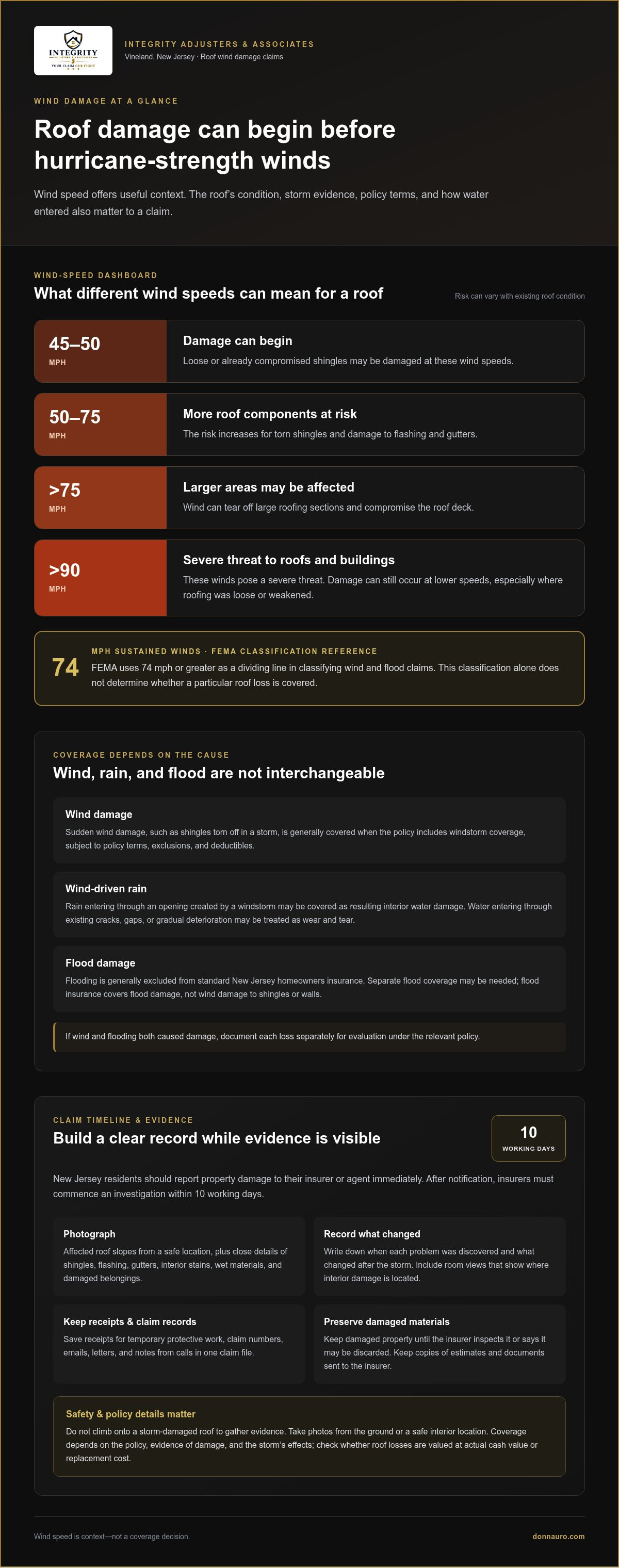
Roof damage can begin before winds reach hurricane strength. For a Vineland NJ wind damage insurance claim, the key point is that winds of 45 to 50 mph can damage loose or already compromised shingles, while 50-75 mph winds increase the risk of torn shingles and damage to flashing and gutters. Wind damage is generally covered by homeowners insurance, subject to the policy’s terms and deductible.
A damaged roof can let rain inside, but the water’s source matters. Wind-driven rain entering through a storm-created opening may be covered, while flood damage and water entering through existing gaps or gradual deterioration may be excluded or limited.
This guide explains what wind speeds can damage a roof, how wind-driven rain and separate deductibles affect coverage, and what to document when filing a claim. You’ll also learn how to protect your property, keep a clear record of the loss, and recognize storm-chaser tactics such as offers to waive your deductible.
Key Takeaways
- Coverage for rain inside the home can depend on whether wind created a new opening or water entered through existing wear, gaps, or flooding.
- Review your policy’s wind and hurricane deductible carefully; a percentage deductible is calculated using the insured dwelling value.
- After roof damage, notify your insurer promptly, photograph the damage, keep receipts for temporary protection, and save claim communications.
- Preserve damaged materials for inspection and organize estimates and other records to support the scope of your loss.
- Be cautious of contractors who offer to waive your deductible or pressure you to sign quickly; understand any contract before agreeing.
Wind-Driven Rain: What Is It and Does Your Insurance Cover It?
For New Jersey homeowners, sudden wind damage is generally covered, subject to policy terms, exclusions, and deductibles. Both the cause of the opening and the type of water damage matter.
Sudden Wind Damage Coverage
Sudden wind damage is physical damage caused by a wind event, such as shingles torn from a roof during a storm. Homeowners insurance generally covers this loss when the policy includes windstorm coverage. The insurer will assess the damage, its cause, and any applicable limits or exclusions.
Separate the storm damage from the roof’s prior condition. Photos showing missing shingles, lifted flashing, or a newly exposed roof area can help document what the wind caused. Existing wear can complicate a claim: a 22-year-old roof described as being at the natural end of its service life can be difficult to claim as storm-damaged. A licensed public adjuster represents the policyholder, not the insurer.
Wind, Water, and Flood Distinctions
Wind coverage applies to damage caused by wind; water coverage depends on how water entered; flood coverage addresses flood damage under separate coverage. This distinction matters when a storm damages a roof and rain gets inside, but rising water also enters the home.
For example, rain entering through a storm-created opening may qualify as wind-related damage under a homeowners policy. Flooding that accompanies a hurricane is generally excluded from standard homeowners insurance in New Jersey, so separate flood coverage may be needed. Flood insurance covers flood damage, not wind damage to shingles or walls. If wind and flooding both caused damage, document each loss separately for evaluation under the relevant policy.
Wind-Driven Rain and Repair Requirements
Wind-driven rain is rain pushed into a home through an opening created by a windstorm. Homeowners insurance often covers resulting interior water damage when covered wind damage to the roof or walls caused the opening. By contrast, rain entering through existing cracks, gaps, or gradual deterioration may be treated as wear and tear. The insurer may deny or limit that part of a claim based on the policy and evidence of the roof’s condition.
Actual cash value accounts for depreciation when valuing damaged property; replacement cost values repair or replacement without that deduction, subject to policy terms. Check which basis applies to your roof. In Vineland, permit requirements depend on the repair’s scope: replacing shingles differs from changing roof framing. Have the planned work assessed for applicable local permits and building-code requirements before repairs begin.
At What Wind Speed Does Roof Damage Occur?
Roof damage can begin at 45 to 50 mph, especially when shingles are loose or already compromised. Winds of 50-75 mph raise the risk of torn shingles and damage to flashing and gutters. For your claim, document both the storm’s effects and the condition of the roof afterward.
Photograph damaged shingles, flashing, gutters, ceilings, and belongings. Save storm-date records, repair receipts, and every message with your insurer. These details help show what the storm caused and support your account of the loss.
At speeds over 75 mph, wind can tear off large roofing sections and compromise the roof deck. Winds faster than 90 mph pose a severe threat to roofs and buildings. Damage can still occur at lower speeds, particularly where roofing was already loose or weakened.
FEMA guidance uses sustained winds of 74 mph or greater as a dividing line in classifying wind and flood claims. That classification does not by itself establish whether a particular roof loss is covered. The policy, evidence of the damage, and the storm’s effects on the property remain relevant to the insurer’s assessment.
Build a clear record while the evidence is visible:
- Take wide shots of each affected roof slope from a safe location, then photograph close details.
- Capture interior stains, wet materials, and damaged belongings, with room views that show their locations.
- Write down when you discovered each problem and what changed after the storm.
- Keep receipts for temporary protective work and list any damaged items separately.
- Save claim numbers, emails, letters, and notes from calls in one claim file.
Don’t climb onto a storm-damaged roof to gather evidence. Take photos from the ground or a safe interior location. If an adjuster later documents the roof with photos or video, compare those records with yours and note any areas that appear to be missing.
New Jersey residents should report property damage to their insurer or agent immediately. After notification, insurers must commence an investigation within 10 working days. Keep a dated record of the report and follow-up communications. A timely, organized file helps clarify the damage being reviewed and supports discussion of a settlement.
Keep damaged materials until the insurer inspects them or says they may be discarded. The New Jersey Department of Banking and Insurance recommends retaining damaged property for inspection. If the insurer asks for an estimate or supporting documents, keep copies and note when you provided them. This creates a traceable record throughout the claim process.
Wind and hurricane deductibles
A wind or hurricane deductible affects how much you pay before insurance contributes to covered repairs. In New Jersey, the policy wording determines which deductible applies and when.
Wind and Hail Deductibles
A wind or hail deductible is the policyholder’s share of covered damage before the insurer pays. Some New Jersey homeowners policies use percentage-based deductibles from 1% to 5% of dwelling coverage. For a home insured for $300,000, a 3% deductible equals $9,000. That amount can materially affect whether the insurance payment covers the repair scope.
Other policies use a fixed deductible, such as $1,000 or $2,500. Compare the declarations page and endorsements, not just the policy summary. A percentage deductible is calculated from the insured dwelling value, not from the repair invoice. The insurer’s payment is also generally capped by the applicable policy limit, even if repairs cost more.
Deductible Triggers
A trigger is the policy condition that activates a separate wind or hurricane deductible. Some New Jersey policies tie hurricane deductibles to a National Weather Service hurricane watch or warning for the area. Read the endorsement to identify the event definition and timing, since the trigger can determine which deductible applies to a loss.
New Jersey regulation N.J. Admin. Code § 11:2-42.8 requires insurers and the FAIR Plan to provide hurricane-deductible notices at new business and every renewal. The New Jersey Insurance Underwriting Association has required a hurricane deductible for dwelling fire policies in 92 designated coastal zip codes since March 1999. These notices help policyholders identify deductible terms before a storm claim.
The New Jersey hurricane deductible endorsement language, HD 04 05, took effect for new business on March 1, 2004. Its presence does not mean every policyholder faces the same trigger or deductible. Check the declarations page and endorsement together. Record the deductible type, percentage or fixed amount, and any stated hurricane trigger.
Windstorm damage, including hurricane damage, is generally covered by a standard homeowners policy, subject to its deductibles and restrictions. A separate wind or hail deductible may apply instead of the standard deductible. If a storm causes wind damage and flooding, distinguish each loss by cause and policy. Wind and flood adjusters must work together to determine which losses apply under each policy.
Before authorizing repairs, compare the deductible with the covered loss estimate and policy limit. For instance, a $9,000 deductible on a $300,000 insured dwelling can leave the homeowner responsible for that initial amount. Public adjusters can help policyholders document property losses and present a comprehensive claim, while the insurer evaluates coverage and payment under the policy.
Steps for filing a New Jersey roof insurance claim
New Jersey homeowners should report storm damage promptly to their insurer or agent. A clear inspection record helps connect roof conditions, interior leaks, and the timing of the storm.
Wind Speeds and Roof Damage
Wind speed provides context for roof damage, but it doesn’t establish the cause by itself. Vineland’s storm data recorded a maximum reported wind speed of 73 mph in the last 12 months. Loose shingles can be affected at lower speeds, while stronger gusts can damage flashing, gutters, or larger roof sections. Compare observed damage with the storm date and weather records.
During inspection, document missing shingles, lifted edges, damaged flashing, and debris impacts. Photograph roof areas from a safe location, then record any corresponding ceiling stains or water intrusion. Water near windows may point to another opening, so note its location separately. An adjuster may use photos or video to identify damage associated with the covered event.
Storm Assistance and Emergency Repairs
Claim support for storm damage includes documenting the loss, reporting it, and keeping a record of insurer communications. For immediate roof hazards, keep people away from affected areas and report the loss promptly to your insurer or agent. Integrity Adjusters & Associates’ Residential Storm Damage Claim Support helps document property losses and present a comprehensive claim.
A contractor’s inspection can identify visible roof conditions, but preserve your own evidence before temporary work changes the scene. Keep receipts for protective repairs and retain damaged materials until the insurer inspects them or says they may be discarded. Claim support covers documentation and presenting the insurance claim, not physical repairs.
Use a consistent filing sequence to keep the inspection, evidence, and settlement records organized:
- Notify your insurer or agent promptly, describe the damage, and record the report date and claim number.
- Photograph roof damage, interior leaks, damaged belongings, and any temporary protection before conditions change.
- Save weather details, contractor estimates, receipts, and all written communication in one claim file.
- Keep damaged property for inspection unless the insurer authorizes disposal, and note any items that must be moved for safety.
- Review the adjuster’s damage record and compare it with your photographs, estimates, and documented observations.
New Jersey insurers must commence an investigation within 10 working days after claim notification. Adjusters may document damage with photographs or video and identify damage caused by the covered peril. If the inspection misses a roof slope, flashing, or interior leak, submit the relevant images and records with a concise explanation. Organized evidence helps clarify what the storm caused and what the settlement considers.
Contractors may canvass neighborhoods after storms, but a doorstep visit doesn’t establish damage or coverage. Keep the insurance claim record separate from repair agreements, and don’t sign under pressure. A complete file helps you track inspection findings, repairs, and insurer decisions without confusing contractor estimates with the insurer’s coverage determination.
Storm-chaser and deductible-waiver warnings
After a nor’easter or coastal storm, door-to-door contractors may offer quick roof inspections and repairs. Treat a promised insurance outcome or deductible waiver as a reason to pause. New Jersey law, N.J.S.A. 2C:21-4.6, addresses contractor billing practices associated with waiving a homeowner’s deductible. A written estimate should describe the work and charges accurately, not disguise the deductible.
Vineland’s storm reports provide context, not proof of damage to an individual home. The latest 12-month figures include 250 high-wind reports, 20 hail reports, and 472 total storm reports. The largest reported hail diameter was 1.5 inches. These local records can help identify storm conditions, but the roof inspection and evidence must show what happened at your property.
Nor’easters can bring damaging wind, rain, and flooding, so keep those causes distinct in your claim records. The March 2018 nor’easter caused $2.8 billion in damage and 9 deaths across New Jersey and other Northeastern states. Hurricane Irene caused $18.8 billion in total damage in August 2011. Large regional losses illustrate the scale of storms, but they don’t establish an individual roof claim’s coverage.
Before signing a storm-repair agreement, keep these safeguards in mind:
- Read the written scope, estimate, payment terms, and cancellation language before agreeing.
- Keep your deductible as your responsibility; don’t accept billing that falsely makes it disappear.
- Save photographs of shingles, roof openings, and interior water intrusion before repair work changes the evidence.
- Record who inspected the property, what they observed, and any promises about insurance or settlement.
New Jersey door-to-door solicitations have a 3-business-day cancellation right. Keep the signed agreement and note when you received it, so the timeline is documented. Don’t let pressure to sign immediately prevent you from reading the terms. A contractor’s estimate describes proposed work; it does not determine what an insurance company will cover.
Flooding needs separate attention from wind damage. Vineland recorded 194 flood and flash-flood reports in the last 12 months, alongside 8 confirmed tornado reports and 51 severe-storm days with activity. If a storm caused roof damage and water intrusion, document where water entered and whether flooding also affected the property. Separate records help distinguish the damage causes during claim review.
Keep your claim file focused on evidence: written estimates, dated photographs, inspection notes, and communications with adjusters. If a storm caused both wind damage and flooding, organize records by location and apparent cause. This makes it easier to explain which shingles or interior areas were damaged and how each loss relates to the storm.
Integrity Adjusters & Associates: Residential Water Damage Claim Support
Integrity Adjusters & Associates helps New Jersey homeowners document storm-related property damage and prepare a comprehensive claim for the insurer. Its Residential Storm Damage Claim Support can help when roof damage, interior leaks, or related losses need to be clearly recorded. If wind-driven rain has damaged a home’s contents or interior, Residential Water Damage Claim Support may also fit the claim.
Consider claim support when damage is extensive, the inspection record seems incomplete, or the insurer’s assessment doesn’t reflect the losses you documented. Integrity Adjusters & Associates advocates for policyholders by organizing evidence and presenting the claim, not by performing physical repairs or providing legal representation. Keep photographs, estimates, receipts, and insurer correspondence organized for review.
Contact Integrity Adjusters & Associates for a free claim review that costs you nothing.
Take the Next Step With a Clear Claim Record
A Vineland NJ wind damage insurance claim can shape decisions well beyond the first inspection. Before moving forward, organize your claim materials into a clear account of what was damaged, what remains unresolved, and what you’ve already shared with the insurer. A concise record helps keep the next discussion focused on the property loss and its supporting evidence.
When the damage scope or claim presentation needs additional attention, Integrity Adjusters & Associates provides Residential Storm Damage Claim Support and Residential Water Damage Claim Support. The firm also offers Residential Fire Loss Claim Support. Its role is to document property losses and prepare a comprehensive claim for the insurer.
Choose a next step that fits your situation and keep your records accessible. For help presenting a residential property claim, contact Integrity Adjusters & Associates. A clear, organized path forward can make the process feel more manageable.
Frequently Asked Questions
When Does the Percentage Deductible Apply?
A percentage deductible applies when your policy’s terms trigger a separate wind, hail, or hurricane deductible. New Jersey homeowners may have a wind or hail deductible of 1% to 5% of dwelling coverage. For example, a $300,000 insured dwelling with a 3% deductible has a $9,000 deductible. Some policies define a hurricane trigger by a National Weather Service watch or warning, so review the endorsement and declarations together.
What wind damage does homeowners insurance cover in Vineland, NJ?
Homeowners insurance generally covers sudden wind damage, subject to policy terms, exclusions, and deductibles. Examples include shingles torn away, damaged flashing, or gutters affected by a windstorm. Coverage depends on whether the damage resulted from the storm or existing deterioration. Keep maintenance records, earlier roof photographs, and storm-date images together. Comparing them can help distinguish a new loss from pre-existing roof wear during the insurer’s review.
Does a standard NJ homeowners policy cover wind-driven rain and fallen trees?
Wind-driven rain entering through a storm-created opening is often covered when wind damage to the roof or wall is covered. Standard New Jersey homeowners policies exclude flood damage, which requires separate flood coverage. For a fallen tree, coverage depends on the policy terms and what the tree damaged. A tree striking the house differs from one falling without damaging insured property, so document the impact and review the policy’s tree-removal provisions.
What is the average wind damage insurance deductible in New Jersey?
New Jersey homeowners don’t share one standard wind deductible. Policies can use a fixed amount, such as $1,000 or $2,500, or a percentage of dwelling coverage. Separate wind or hail deductibles may range from 1% to 5%. Compare the declarations page with any deductible endorsement; the percentage is based on insured dwelling coverage, not the contractor’s repair estimate.
How do I file a wind damage insurance claim in Vineland, NJ?
For a Vineland NJ wind damage insurance claim, notify your insurer or agent, describe the damage, and record the claim number and report date. Photograph affected areas and belongings, including close details and wider views that show each location. Keep estimates, receipts for protective work, and written communications in one file. Before discarding damaged materials, retain them for the insurer’s inspection or until the insurer authorizes disposal.
How long do New Jersey homeowners have to report a wind damage claim?
Report roof or property damage promptly, because the policy sets the notice requirement. New Jersey homeowners policies commonly require notice within 30 to 60 days, while guidance for roof claims recommends notifying the insurer within 48 to 72 hours of discovering damage. Record when you found the loss and when you reported it. Early notice creates a dated claim record and lets the insurer begin investigating.
What are New Jersey rules for insurance claim inspections and payment deadlines?
New Jersey insurers must commence an investigation within 10 working days after claim notification. A first-party property claim must be settled within 30 calendar days after the insurer receives a properly executed proof of loss, once liability and the amount are established. Any amount finally agreed in settlement must be paid within 10 working days of the agreement. Keep copies of the proof of loss and settlement correspondence.
How do I dispute a low wind damage insurance settlement in New Jersey?
Send the insurer a written response identifying disputed items, with photographs, repair estimates, and inspection notes supporting each difference. Ask for the insurer’s explanation of omitted damage or pricing, and keep copies of every submission. A licensed public adjuster represents the policyholder; according to the New Jersey Department of Banking and Insurance, public adjusters must be licensed by the Department. For claim disputes, NJDOBI lists its Consumer Hotline at 1-800-446-7467.


