

Could a hail damage settlement look complete on paper while leaving some documented damage unexplained? Roof impacts can be hard to spot from the ground, and an insurer’s estimate may not make clear what was included, excluded, or assessed. If you’re looking for hail damage insurance settlement help, start by comparing the evidence with the estimate and your policy, rather than assuming the first offer tells the whole story.
It’s reasonable to feel uncertain about what to document, which deadlines apply, or whether to accept or question a settlement. A careful review can help bring those decisions into focus. This guide explains how hail damage claims are assessed, what photos, inspection findings, and repair estimates may help support a claim, and how to compare the insurer’s scope with the damage and policy terms.
You’ll also learn practical next steps before accepting or disputing an offer, and when public adjusting advocacy may help organize evidence and communicate the documented loss. The right outcome depends on the damage, supporting information, and the specific policy. Clear records can help you make a more informed decision.
Key Takeaways
- Use dated photos, videos, inspection notes, and storm details to build a clear record of potential hail damage.
- Compare each estimate line item and quantity with the observed damage, then check how your policy defines replacement cost and actual cash value.
- Follow a practical sequence: address safety, prevent further damage, document temporary measures, report the loss, and track claim communications.
- For hail damage insurance settlement help, identify the specific gaps or questions you need resolved before deciding whether to manage the review yourself or seek advocacy.
- Public adjusting support from Integrity Adjusters & Associates can help organize loss documentation and communicate the claim through the insurer’s process, without guaranteeing a particular outcome.
Hail damage insurance settlement help: what the process can and cannot do
A roof can show marks after a storm without making the extent or effect of the damage obvious from the ground. A mark that looks minor in a photo may also need closer inspection to determine whether it affects the roof’s function. Understanding hail formation and characteristics can provide useful context, but the presence of hail alone doesn’t establish which property damage is covered.
Hail damage claim support helps policyholders organize evidence, understand an insurer’s estimate, and review questions against the policy and documented loss. It can help present the damage clearly for insurer review, but it can’t guarantee coverage or payment. The insurer evaluates coverage based on the applicable policy and claim facts. If you believe the record is incomplete, you can ask questions or provide additional documentation.
What does hail damage settlement help involve?
Useful claim records may include inspection notes, dated photographs and videos, contractor estimates, and organized communications with the insurer. Together, these materials can help show what was observed, where it was found, and how the estimate addresses it. Claim advocacy focuses on documenting and presenting the loss. It isn’t legal representation, roof repair, or emergency mitigation.
For example, if an estimate lists damage to one roof area but inspection records describe observed damage elsewhere, organized photos and notes can help identify the difference for review. Those records don’t decide coverage by themselves. They give the insurer clearer information to consider when assessing the claim.
Why New Jersey homeowners should start with their policy
Review the policy language that applies to hail, roof damage, cosmetic damage, deductibles, and exclusions. Check whether the policy describes replacement cost value or actual cash value, and look for conditions that may affect how a roof loss is evaluated. Don’t assume a term applies in the same way across policies. The wording and facts of your individual claim matter.
New Jersey homeowners shouldn’t rely on a general statement about what hail damage is always covered. The state has no binding statewide definition separating cosmetic from functional roof damage, so policy wording and claim evidence are central to that distinction. If a clause is unclear, ask the insurer to identify the specific provision it applied and explain how it relates to the documented damage. Verify deadlines and required claim steps against your policy and current authoritative sources.
How hail damage is documented and evaluated for an insurance settlement
A useful claim record connects the reported storm to specific observations and the insurer’s written assessment. Clear, dated records help show what was observed, where it appeared, and how it relates to the damage being presented for review. They don’t establish coverage on their own, but they give the insurer concrete information to consider.
Which records can help support a hail damage claim?
Document what you can safely see from accessible locations. Take wide photos to show the affected area in context, then close-ups of visible marks. Record the date and location, and add a brief note describing each image. Don’t climb onto a roof or attempt an inspection that could put you at risk. Roof access and specialized assessment should be handled by qualified professionals.
Keep the claim file together. Include:
- Dated photos and videos of observed conditions
- Inspection notes or reports, including the areas inspected
- The insurer’s correspondence, written scope, and estimate
- Repair estimates, invoices, and receipts for temporary measures
- The reported storm date and the source used to verify it
Record the storm date reported to the insurer, but verify it against reliable local weather records before relying on it as supporting evidence. If an inspection occurs later, note when it took place and which areas were accessible. A clear timeline helps distinguish the storm report from later observations and claim communications.
How roof materials and damage scope affect the review
Asphalt shingles and metal roofing can show different impact patterns, so a photo alone may not explain the condition or its cause. Avoid diagnosing damage remotely. Instead, compare the inspection findings with the insurer’s written scope. Check which areas and materials are listed, what work is included, and whether the estimate addresses each documented observation.
For example, if an inspection report describes a roof area that doesn’t appear in the estimate, identify the location and provide the related record. Ask the insurer to clarify whether that area was inspected and how it was considered. This keeps the discussion focused on specific differences rather than assumptions about the repair needed.
Review policy-specific language on cosmetic damage, matching materials, and permitted repair methods. These terms can affect how a condition is evaluated, but their meaning and application depend on the policy and claim facts. If hail damage insurance settlement help would make organizing records or communicating documented differences easier, consider support with hail damage claim documentation.
Insurer estimate vs. documented hail damage: how to compare the settlement
Review the insurer’s estimate alongside your inspection records, not in isolation. A difference between your documentation and the estimate is a reason to ask questions, not automatic proof of underpayment or covered damage. The insurer evaluates the claim under the policy and the facts. Your task is to identify specific gaps and request clear explanations.
What should homeowners check in a hail damage estimate?
Match each documented area to the estimate’s scope of work. Check material descriptions and quantities, and look for labor, depreciation, and the deductible. If an item is unclear or absent, ask the insurer to explain its assessment in writing. Tie each question to a specific location or record so the response can address the issue directly.
| Review item | What to compare | Supporting record or question |
|---|---|---|
| Affected area | Observed location versus areas listed in the scope | Inspection notes and dated photos; ask whether the area was considered |
| Materials and work | Documented material and proposed work versus estimate descriptions | Inspection report or repair estimate; ask how the listed method was selected |
| Quantities | Measured or documented amounts versus estimate quantities | Ask what measurements or assumptions support the figures |
| Payment calculation | Any stated depreciation and deductible, plus whether the estimate refers to replacement cost value (RCV) or actual cash value (ACV) | Check definitions and conditions in your policy; ask how the calculation was applied |
RCV and ACV are policy terms to verify, not interchangeable labels. Review the definitions and any conditions affecting payment in your own policy. Don’t assume that one term applies to every roof or claim.
When should a homeowner request clarification or further review?
Request clarification when new inspection records or estimates appear to conflict with the insurer’s documented scope. Before contacting the insurer, gather the relevant photos, notes, and estimate pages. Then list each question and the evidence tied to it. This keeps the discussion focused and creates a useful record of what you asked and how the insurer responded.
For example, if a report identifies a roof area that isn’t listed in the estimate, ask whether it was inspected and how the finding was evaluated. If the explanation remains unclear, review the response against the policy and your documentation. Hail damage insurance settlement help can be useful for organizing that comparison and presenting documented questions. A difference alone doesn’t establish that damage is covered or that the insurer acted improperly.
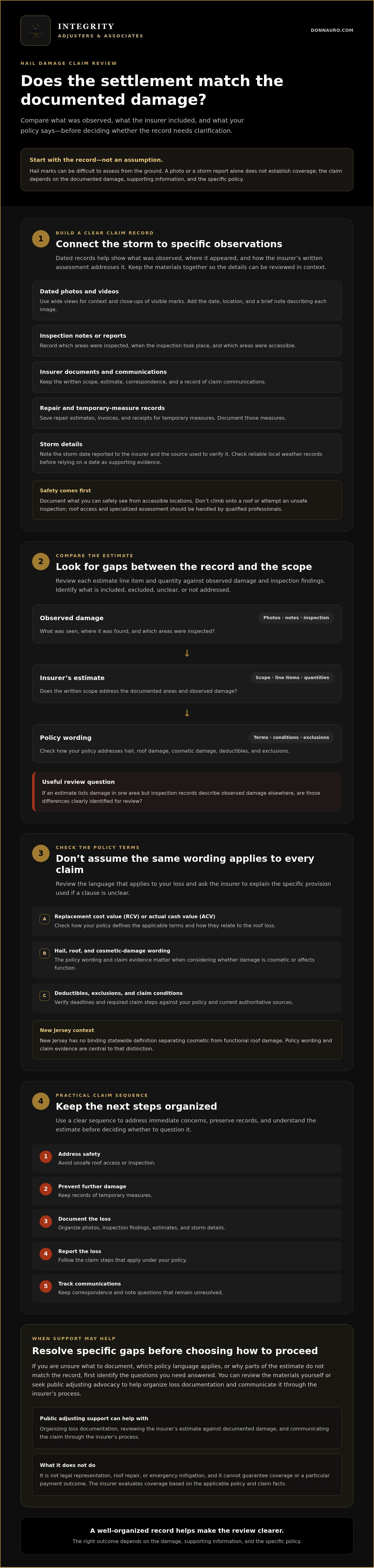
New Jersey hail damage: practical claim checklist
After a hailstorm in New Jersey, follow a clear sequence. Protect people first, then take reasonable steps to limit additional damage, preserve evidence, report the loss, and track each claim communication. Safety comes before photographs or paperwork.
What should you do immediately after a hailstorm?
- Protect people. Stay clear of damaged areas, downed lines, and unstable structures. Don’t climb onto a roof to inspect it.
- Prevent further damage. If it’s safe, take reasonable temporary protective measures. Contact qualified help if the situation requires it, and don’t delay urgent safety actions to document first.
- Document what you can access safely. Before cleanup changes the scene, photograph visible damage from the ground or other safe locations. Note the date, location, and what each image shows.
- Report the loss. Notify your insurer using the contact method required by your policy. Ask what information or forms are needed, and record when and how you reported the damage.
- Track the claim. Save correspondence, names or reference details from insurer communications, inspection dates, and follow-up items in one place.
Keep receipts for temporary measures and record what was done, when, and why. These details can help explain steps taken to protect the property. Check your policy for notice duties and deadlines, then confirm any questions with the insurer. Requirements can vary by policy, so don’t rely on a general timeline.
How should you prepare for an insurer inspection?
Bring your records together before the inspection. Organize your policy information, storm-date notes, photographs, prior condition records, repair documents, receipts, and any inspection reports. Prepare a concise list of observed damage and questions about areas or items you want the insurer to review.
Keep the discussion factual. Identify where you observed a condition and point to the relevant photo or report. If you don’t know the cause or extent, say so rather than guessing. Afterward, note the inspection date, which areas were reviewed, and any requested follow-up documents. Save copies of anything you submit.
For broader steps related to a home storm claim, consult a New Jersey residential storm damage claim guide and verify instructions against your policy. If organizing hail damage insurance settlement help feels difficult, review your hail claim documentation options.
When public adjusting may help with hail damage settlement review
Some homeowners can review an insurer’s estimate and manage follow-up themselves. Others may find the claim difficult to handle because the damage scope is complex, records are extensive, or there isn’t enough time to coordinate the process. Consider the level of support you need. The goal is a clear, evidence-based claim discussion, not a promised result.
What can a public adjuster help a policyholder organize?
A public adjuster can help document a loss, build a comprehensive claim for insurer review, and advocate for the policyholder through the insurance process. Organized records and a clear presentation can help explain the basis of a settlement discussion and identify questions that need answers. This support doesn’t determine coverage. The insurer evaluates the claim under the policy and its facts.
Integrity Adjusters & Associates provides public-adjusting advocacy for residential and commercial property claims in New Jersey. The firm helps policyholders document damage, build a comprehensive claim, and navigate the insurer’s process. Public adjusting is distinct from selling insurance, providing legal advice or representation, repairing the roof, or performing emergency mitigation. Make sure any support you consider matches the work you need.
Questions to ask before choosing claim support
Before engaging a professional, ask direct questions and review the answers in writing:
- What New Jersey credentials apply to this work, and how can I independently verify current requirements?
- What services are included, and what does the written agreement require?
- How is the fee determined? Ask for the fee basis in writing before deciding.
- What documents should I gather, and how will the claim information be used and presented?
- Which outcomes are not guaranteed, including coverage, approval, or a particular settlement?
Clear answers help you compare self-managed review with advocacy based on your claim’s complexity, available documentation, and time. If the records and insurer communications feel manageable, you may choose to continue handling the review yourself. If the scope or process is difficult to coordinate, hail damage insurance settlement help from a public adjuster may be an option to explore. Read the agreement carefully and verify credentials independently before making a decision.
Make your next claim decision with a clear record
A sound settlement review starts with evidence and policy-specific questions. Keep dated records of observed damage, compare those records with the insurer’s written estimate, and ask for clarification where the scope or calculations aren’t clear. A discrepancy deserves review, but it doesn’t automatically establish coverage or an incorrect settlement.
If you’re weighing hail damage insurance settlement help, consider whether you have the time and documentation to manage the review yourself or would benefit from claim advocacy. Integrity Adjusters & Associates supports New Jersey policyholders with loss documentation and claim preparation, and advocates through the insurer process for residential and commercial property claims. This support can help organize and present a documented loss, but it can’t guarantee coverage, approval, or a particular settlement.
To discuss your hail damage claim and understand whether this support fits your needs, discuss your hail damage claim with Integrity Adjusters & Associates. With an organized file and informed next steps, you can approach the claim process with greater clarity and confidence.
Frequently Asked Questions
Does homeowners insurance cover hail damage to a roof?
It depends on your policy and the facts of the loss. Review the sections addressing hail, roof damage, deductibles, exclusions, cosmetic damage, and any roof-specific terms. A visible mark doesn’t automatically establish covered damage, and a cosmetic-damage exclusion may affect how certain conditions are treated. Ask the insurer to identify the policy language used in its decision and explain how it applies to the documented roof condition.
How do I dispute a low hail damage insurance settlement?
Start by comparing the insurer’s written estimate with inspection records, photos, and repair estimates. Identify specific differences, such as a documented roof area or material that isn’t addressed, and ask the insurer for a written explanation. Submit relevant records with clear questions, and keep copies of all communications. A discrepancy alone doesn’t prove underpayment or coverage, so ground your request in the policy language and documented claim facts.
What evidence should I submit for a hail damage insurance claim?
Submit dated photos and videos of visible damage taken from safe, accessible locations, along with inspection notes or reports. Include the reported storm date and a reliable source for that information, repair estimates, relevant receipts, and the insurer’s estimate or correspondence if you’re asking about a difference. Label records by location and date where possible. Don’t climb onto a roof. Arrange for a qualified professional to assess areas that require roof access.
Can hail damage appear weeks or months after a storm?
Damage may be noticed later, especially if roof areas weren’t visible from the ground or signs become apparent during a later inspection. That doesn’t by itself confirm hail caused the condition. Record when and where you first observed it, preserve any earlier photos or maintenance records, and report the concern to your insurer. Ask a qualified professional to assess the roof, and check your policy for notice requirements rather than waiting to understand every detail.
How long do I have to file a hail damage claim in New Jersey?
There isn’t one claim-notice deadline that applies to every New Jersey policy. Check your policy for reporting duties and deadlines, and confirm the requirements with your insurer. New Jersey generally allows six years from the incident to file a property-damage lawsuit, but that is not the same as the deadline to notify your insurer or submit claim documents. For advice about a specific legal deadline, consult a qualified attorney.
Should I get an independent roof inspection before accepting a settlement?
An inspection may be useful if you’re unsure what damage was documented or the insurer’s scope doesn’t appear to address your observations. Choose a qualified professional and request written findings that identify inspected areas and observed conditions. Compare those findings with the insurer’s estimate and ask about specific differences before deciding. An inspection doesn’t guarantee coverage, and you should review the policy and settlement terms before accepting an offer.
Can a public adjuster help with a hail damage insurance settlement?
Yes. A public adjuster can help document property losses, prepare a comprehensive claim for insurer review, and advocate for the policyholder through the process. This hail damage insurance settlement help may be useful if the documentation or estimate review feels difficult to manage. It doesn’t guarantee coverage, approval, or a particular settlement. Before engaging support in New Jersey, independently verify applicable credentials and review the written services agreement and fee basis.


