

What if the visible water damage is only part of your business’s loss? After a flood, a West New York NJ commercial flood claim may involve damage to the building, equipment, inventory, and interrupted operations. Each category needs its own records and policy review.
It’s understandable to expect a commercial property policy to address flood damage, but coverage depends on the policy. Flooding is often excluded from standard commercial property coverage, and business interruption may not be included in a flood policy. The details matter. A clear record can help you identify what was damaged, support the amounts claimed, and raise specific questions about the insurer’s assessment.
This guide explains how to document building and contents damage, organize records of operational losses, and review relevant policy language without assuming a loss is covered. You’ll also learn how to track the claim and what to consider if the insurer’s evaluation appears incomplete. If documentation or an assessment raises concerns, policyholder advocacy may be one option to explore.
Key Takeaways
- Prioritize safety, limit further damage when it’s safe, and preserve evidence before affected items are discarded.
- For a West New York NJ commercial flood claim, separate building, contents, and operational losses so each can be documented and reviewed.
- Check the policy declarations, coverage forms, endorsements, exclusions, limits, and deductibles before drawing conclusions about coverage.
- Prepare an organized loss summary for the insurer’s inspection. Request written explanations when damage or items appear to be missing from the assessment.
- If questions remain about the documentation or estimate, learn how a public adjuster may help present the claim, without guaranteeing coverage or an outcome.
West New York Commercial Flood Claims: What to Do First
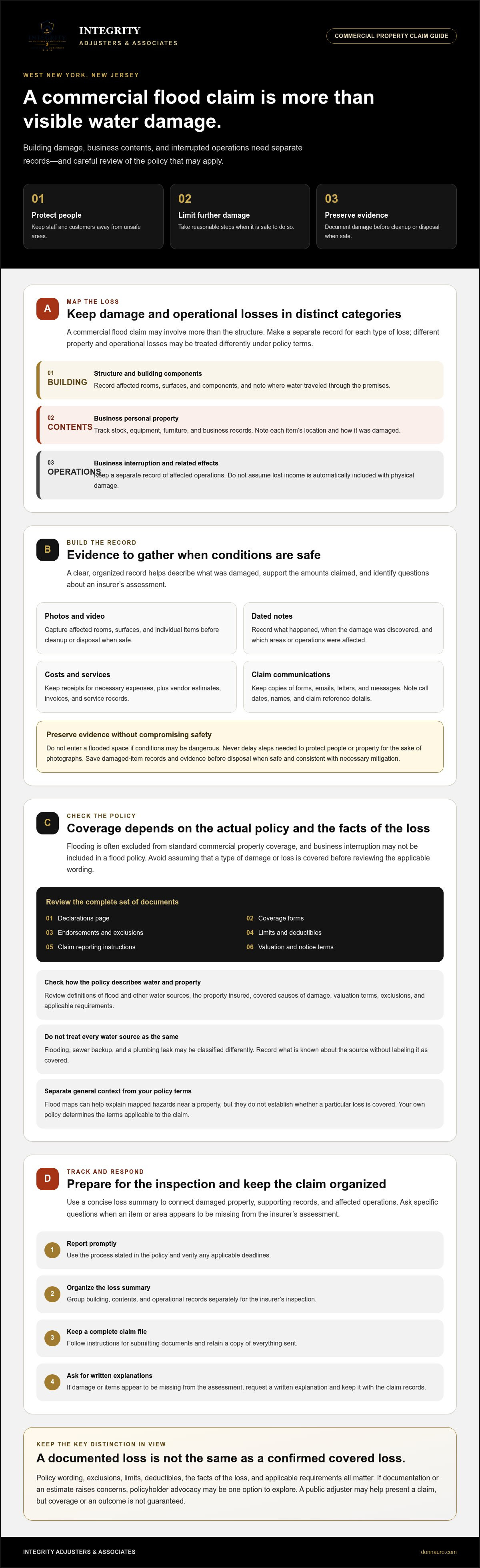
Start with three priorities: protect people, limit additional damage when it’s safe, and preserve evidence. Keep staff and customers away from unsafe areas, and contact emergency services if the situation requires it. Don’t enter a flooded space if conditions may be dangerous. Once it’s safe, document what you can before cleanup, but never delay steps needed to protect people or property for the sake of photographs.
A West New York NJ commercial flood claim may involve more than visible building damage. Water can affect equipment, inventory, furniture, business records, and the ability to keep operating. Create a separate record for each category. Review business interruption separately, since its coverage may depend on different policy terms from physical damage.
West New York businesses are in Hudson County, but flood exposure and resulting damage can vary from one property to another. The building’s location and layout, along with the path water took through the premises, help explain the specific loss. Coverage depends on the policy wording, exclusions, limits, facts of the loss, and applicable requirements. Don’t assume every water source or resulting loss qualifies as covered flood damage.
What counts as a commercial flood loss?
Separate damage to the structure from damage to business personal property. Building components, stock, equipment, furniture, and records may be treated differently under policy terms. Note where each affected item was located and how it was damaged. The National Flood Insurance Program is one source of flood insurance context, but your own policy determines the terms that apply to your claim.
Water from flooding, a sewer backup, or a plumbing leak may be classified differently. Record what you know about the source without labeling it as covered. Review business interruption separately rather than assuming lost income follows automatically from a property damage claim.
What should a West New York business do immediately?
When it’s safe, photograph or video affected rooms, surfaces, and individual items before cleanup or disposal. Make a dated note of what happened, when you discovered the damage, and which areas or operations were affected. Keep receipts for necessary expenses and retain vendor estimates, invoices, and service records. These documents help establish the timeline and support your account of the loss.
- Report the loss promptly through the process stated in your policy, and verify any applicable deadlines.
- Keep copies of forms, emails, letters, and messages. Record call dates, names, and claim reference details.
- Save damaged-item records and evidence before disposal when safe and consistent with necessary mitigation.
Prompt reporting creates a clear starting point. Follow the insurer’s instructions, ask how to submit supporting documents, and keep a copy of everything you send.
Check Commercial Flood Coverage Before Assuming What the Policy Pays
Before estimating what an insurer may pay, identify which policy or coverage part may apply. A commercial property policy and a separate flood policy can treat water damage differently. Even with flood insurance, the policy’s definitions, covered property, exclusions, limits, and deductibles shape the claim. For a West New York NJ commercial flood claim, review the actual documents rather than relying on a general understanding of what “flood coverage” usually means.
Gather the declarations page, coverage forms, endorsements, exclusions, and claim reporting instructions. Check how the policy defines flood and other water sources, what property is insured, how a loss is valued, and which causes of damage are covered. If wording is unclear, ask the insurer for clarification in writing or have the documents reviewed by a qualified professional. Don’t treat a general explanation as a legal interpretation of your policy.
Which policy documents and terms should you review?
Start with the declarations page to identify the listed coverage, limits, deductibles, and applicable forms. Then read the full forms and endorsements, not just summaries. Look for provisions addressing building property, business contents, exclusions, valuation, and notice requirements. NFIP Commercial Coverage offers context on a federal flood policy, but your own policy controls the terms applicable to your loss.
FEMA flood maps can help you understand mapped flood hazards near a property. They don’t establish whether a particular loss is covered, and a map designation shouldn’t replace a close policy review.
How do building, contents, and interruption losses differ?
Keep separate records for damage to the structure and damage to business property. Building repairs may be considered under different terms than inventory, machinery, furniture, or other contents. List affected items, their locations, and the condition you observed. Whether any category is covered depends on the policy language and the facts of the loss.
Document operational effects separately. Note closure dates, reduced hours or capacity, and additional expenses, then gather relevant financial records to support the timeline and amounts. Business interruption coverage may have separate terms, conditions, or exclusions, so don’t assume lost income or extra expenses are automatically included.
Organizing these categories can make gaps or questions easier to identify before you submit supporting information. If you’re considering commercial business property claim support, first confirm the provider’s role and that its services fit your claim needs.
Build a Commercial Flood Claim With Organized Damage Evidence
A well-organized file connects each claimed loss to evidence. For a West New York NJ commercial flood claim, use one dated folder, digital or physical, and keep a simple index of its contents. Record the property address, date of discovery, affected areas, and the source of each document when known. Don’t assume nearby businesses experienced the same conditions or that water entered every property for the same reason. Document what happened at your specific site.
For each damaged item, aim to show what it is, where it was, its condition before the loss if records are available, and the damage you observed. This helps distinguish a specific loss from a general estimate. Keep copies of submitted materials and insurer correspondence with the related records.
What evidence supports building and contents damage?
Photograph or video each affected room, building component, equipment item, and inventory area. Take wide views to show the location, then closer images of visible damage. When safe and consistent with necessary mitigation, document items before moving or disposing of them. Don’t delay action needed to protect people or prevent further damage.
Organize supporting documents by area or item. Useful records may include purchase documents, leases, maintenance records, prior condition photos, repair estimates, and receipts. Keep a dated log of cleanup and temporary protective measures, with related invoices or vendor records. If an item must be removed before it can be fully documented, note why and retain any available photographs, descriptions, or disposal records.
- Building: Identify affected rooms and components, and connect them to photographs and estimates.
- Contents: List inventory, machinery, furniture, and other property separately, with ownership or purchase records where available.
- Expenses: Match receipts and invoices to the work or purchase they document.
For more context on organizing a business property loss, see this commercial property insurance claim guide.
How should a business document interruption?
Keep operational records alongside, but separate from, the physical damage file. Note closure dates, restricted access, reduced capacity, and changes to normal operations. Preserve relevant sales, payroll, operating expense, and financial records for the affected period so the business impact can be reviewed against actual documentation.
Track additional operating expenses with dated explanations and receipts. Avoid estimating lost income from memory or assuming every disruption is covered. Whether interruption or extra expenses qualify depends on the policy wording and the specific facts. A clear timeline and organized financial records make those questions easier to assess.
Respond Methodically to Inspections, Estimates, and Claim Disputes
An insurer’s inspection and estimate are important parts of the claim record, but check them against the damage you observed and the evidence you collected. Before an inspection, prepare a concise loss summary and organize supporting documents by location and item. This gives you a clear reference during the visit and helps keep follow-up focused on specific questions.
How can you prepare for the insurer’s inspection?
Arrange photos by date and affected area, and prepare an itemized list of damaged building components, equipment, inventory, and other property. Mark areas that may need further inspection. If cleanup, access restrictions, or safety concerns prevent the inspector from seeing a condition, explain that and note it in your records. Keep copies of estimates and prior correspondence available.
During and after the inspection, record the date, attendees, areas reviewed, and any questions or commitments. Keep notes factual. If you need clarification, send a concise follow-up in writing and save the response with your claim documents.
What if the insurer’s estimate omits damage?
Compare the estimate line by line with your evidence. Note each item that appears missing or differs from what you documented, such as an unlisted room, equipment item, or repair task. Attach the clearest supporting photo, inventory record, estimate, or receipt for each concern. Ask the insurer in writing to explain its scope decision and how to submit additional information for review.
Follow the policy’s stated claim procedures and keep copies of every submission. A disagreement about scope doesn’t, by itself, establish that a decision is invalid. The policy wording and facts matter. If the assessment still raises questions, a qualified claim professional may help organize the documentation and present the policyholder’s position without guaranteeing a specific outcome.
For a West New York NJ commercial flood claim, keep disputed items specific and evidence based. If the same event also damaged a residence, the residential water damage claim guide may help with that separate claim context.
If you need help organizing and presenting a business property claim, ask about commercial business property claim support.
When Commercial Flood Claim Advocacy May Help in West New York
A commercial flood loss can involve building damage, business property, and operational records. Questions about coverage or the insurer’s estimate can add complexity. A public adjuster represents the policyholder in documenting and presenting an insurance claim. This support may be worth considering when records are extensive, the loss affects multiple parts of the business, or the insurer’s assessment leaves specific questions unanswered.
Public adjusting advocacy is not insurance sales, legal representation, physical repairs, or emergency mitigation. In an initial claim discussion, explain what happened, where the claim stands, and what concerns remain. Before proceeding, ask what work is included, how representation works, and what fees may apply. Verify current licensing requirements and whether the firm handles commercial flood claims in West New York.
What can a public adjuster help a business owner organize?
A public adjuster can assist with documenting damage and building a comprehensive claim for the insurer. This may involve organizing evidence around affected areas and damaged property, along with business records relevant to operational impacts, then presenting the policyholder’s claim. The goal is to support and clarify the claim, not guarantee coverage or a particular outcome. Review representation terms and applicable fees before deciding whether to proceed.
What should you have ready for a claim discussion?
Bring the key documents you already have. A concise summary can make the conversation more productive and show where further review may be needed.
- The policy, claim number, insurer correspondence, and any estimates or inspection notes.
- Photographs, inventories, receipts, and a timeline of the loss and actions taken afterward.
- A summary of damaged property, operational effects, completed mitigation, and unresolved questions.
Ask about relevant experience, current licensing, service scope, fees, and expected next steps. Confirm the answers directly rather than assuming every provider handles the same claim types or offers the same services.
For more information, explore commercial property claim advocacy. If you’re weighing support for a West New York NJ commercial flood claim, contact the firm to discuss your business property claim and confirm whether its current services fit your situation.
Take the Next Step With a Clear Claim Record
A strong claim record starts with prompt reporting, careful policy review, and organized evidence. Keep building damage, contents, and operational losses distinct, then compare the insurer’s estimate with what you documented. Coverage depends on the policy wording and the facts of the loss, so don’t assume every flood related expense is included.
If your West New York NJ commercial flood claim involves extensive records or an assessment that raises questions, policyholder advocacy may be worth exploring. Integrity Adjusters & Associates provides public adjusting advocacy for residential and commercial property insurance claims. The firm assists policyholders in documenting damage and building comprehensive claims to present to insurers. Ask about current service availability for commercial flood claims in West New York, along with the scope of representation and its terms.
Discuss your commercial flood claim with Integrity Adjusters & Associates to explain your loss, claim status, and outstanding concerns. A methodical record and focused questions can help you decide what to do next.
Frequently Asked Questions
What should a West New York business do after flood damage?
Protect people first, contact emergency services if needed, and stay out of unsafe areas. When it’s safe, take dated photos or video before cleanup, note affected rooms and business property, and retain receipts and vendor records. Report the loss through the insurer’s stated process, check the policy for notice instructions, and keep copies of communications. For a West New York NJ commercial flood claim, document conditions at your own site rather than assuming nearby properties had the same damage.
Does commercial property insurance cover flood damage?
Not necessarily. Standard commercial property insurance often excludes flood damage, which may require separate flood coverage. The answer depends on the specific policy wording, definitions, exclusions, limits, deductibles, and facts of the loss. Review the declarations, coverage forms, and endorsements to see how the policy treats the water source and affected property. Don’t assume that a policy covering other water damage also covers flooding or related losses.
What documents support a commercial flood insurance claim?
Support the claim with dated photographs and videos, an inventory of damaged property, receipts or purchase records, repair estimates, and records showing ownership or prior condition when available. Keep the policy, claim forms, insurer correspondence, and notes from calls or inspections together. For operational effects, preserve relevant sales, payroll, expense, and financial records. Organize evidence by location and item so each claimed loss can be matched to its supporting documentation.
Can a business claim lost income after flooding?
Possibly, but lost income isn’t automatically covered just because flooding disrupted operations. Business interruption protection may be included through separate coverage or an endorsement, and the applicable terms vary by policy. A standard NFIP commercial flood policy generally doesn’t cover business interruption. Review the policy and gather records of closures, reduced operations, sales, payroll, and extra expenses. Eligibility depends on the actual wording and facts of the loss.
How do I challenge a commercial flood claim estimate?
Compare the insurer’s estimate with your documented damage, then list specific items or areas that appear missing or unclear. Attach relevant photos, inventories, receipts, or estimates, and request a written explanation of the scope decision or the process for submitting additional evidence. Follow the policy’s claim procedures and keep copies of what you send. Whether an assessment is incomplete depends on the evidence, policy terms, and circumstances of the loss.
What does a public adjuster do for a commercial flood claim?
A public adjuster represents the policyholder in documenting and presenting an insurance claim. They may help organize property and business records, prepare a comprehensive claim, and navigate the insurer’s process. They aren’t the insurer, an attorney, a repair contractor, or an emergency mitigation provider. Before choosing representation in New Jersey, ask about licensing, experience, services, fees, and written terms, and confirm the provider’s current availability for your type of claim.
How soon should a West New York business report flood damage?
Report the loss promptly using the process and instructions in your policy. Check the applicable policy for notice requirements and deadlines, since they can vary. For an NFIP claim, current guidance states that the Proof of Loss form must be submitted to the insurer within 60 days of the flood event. Confirm the requirement and any instructions directly with your insurer, and keep copies of the report, forms, and supporting documents.


