

A leak in one Hoboken condo can involve more than one insurance policy. A Hoboken NJ condo water damage claim may fall under the unit owner’s policy, the association’s master policy, or both, depending on the water source and each policy’s terms. Sudden, accidental water damage is often covered, while flood damage typically requires separate flood insurance.
That distinction matters when water crosses unit boundaries or comes from a shared building system. The leak’s source, the damaged property, and the condo documents all help determine which coverage may apply. Act quickly: contain the water if it’s safe, notify the relevant parties, and document the damage before moving or discarding items.
This article explains how condo and HOA coverage may divide responsibility, what to do after a leak, and how to document damage while reducing the risk of hidden moisture. It also covers Hoboken water-loss scenarios that can complicate a claim, from an upstairs plumbing leak to water entering through a drain or flooding the building.
Key Takeaways
- Coverage can depend on the water source, the damaged property, and the terms of both the unit owner’s policy and the condo association’s master policy.
- Review your HOA documents and HO-6 policy to understand who may be responsible for unit interiors, building components, belongings, and shared expenses.
- After a leak, limit further damage and document affected areas and belongings promptly, while keeping a clear record of calls and actions.
- Identify whether the water came from plumbing, a shared building system, a drain backup, or flooding, since the cause can affect which coverage applies.
- Report the loss promptly and organize your records; Residential Water Damage Claim Support can help policyholders document damage and build a comprehensive claim.
Does Condo Insurance Cover Water Damage?
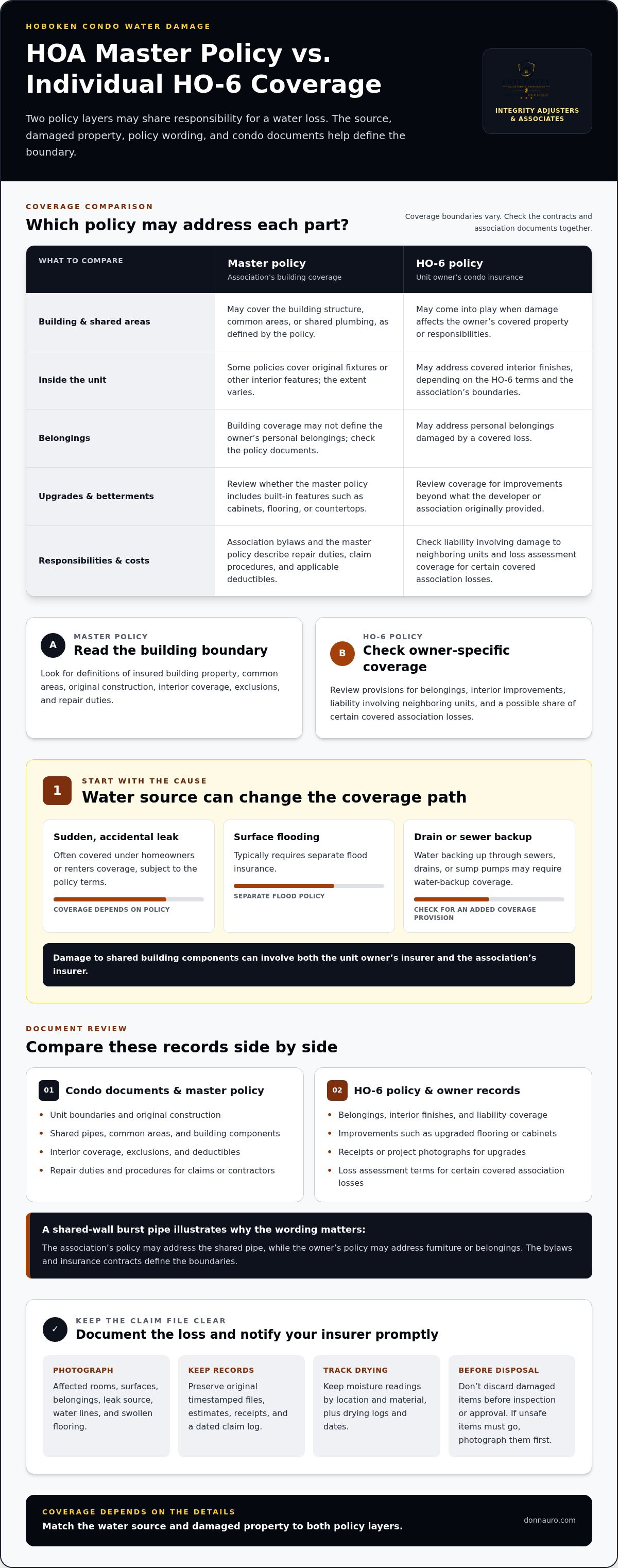
For a Hoboken NJ condo water damage claim, coverage depends on the water source, damaged property, and policy wording. Homeowners and renters policies often cover sudden, accidental leaks, such as a burst supply line. Surface flooding typically requires separate flood insurance. Water backing up through sewers, drains, or sump pumps may require water-backup coverage. Damage to shared building components can involve both the unit owner’s insurer and the association’s insurer.
Photograph each affected room, surface, and belonging before moving anything. Take close-ups of the leak source, water lines, swollen flooring, and damaged contents. Keep the original files with their timestamps. Ask the mitigation team to record moisture readings by location and material, and keep drying logs that show equipment placement, readings, and dates. These records can show how far the water traveled and which concealed areas needed drying.
Notify your insurer promptly and keep a dated claim log. For a Hoboken NJ condo water damage claim, record when you discovered the damage, when the water stopped, whom you contacted, and what each person said. After calls, send a brief written recap and keep replies, estimates, and receipts. Don’t discard damaged materials or belongings before inspection or approval. If unsafe items must be removed, photograph them first, keep a sample when practical, and document why disposal was necessary. If receipts are missing, photographs, bank statements, and other ownership records can help support your inventory.
- Homeowners or renters coverage: May address sudden leaks, damaged belongings, and temporary housing when a covered loss makes the unit uninhabitable.
- Association master insurance: May cover building structure, common areas, or shared plumbing. The policy and bylaws define the relevant boundaries.
- Flood insurance: Addresses covered flood damage under a separate policy, rather than ordinary interior leak coverage.
- Subrogation: After paying a covered loss, an insurer may seek reimbursement from a responsible neighbor’s insurer. Notify your own insurer even when another unit appears responsible.
Condo bylaws allocate repair duties, while the master policy defines insured building property and exclusions. Compare both documents with your HO-6 policy to identify responsibility for shared pipes, original fixtures, interior finishes, and personal belongings. This comparison can clarify which policy should address each part of a loss.
To dispute a denied or underpaid claim, request the insurer’s written decision and compare its reasons with your policy, photographs, moisture readings, and repair estimates. Send a dated response identifying disputed items and supporting evidence. New Jersey Courts states that small claims are lawsuits for $5,000 or less. The claim amount and supporting records help determine whether that court process fits the dispute.
For a Hoboken NJ condo water damage claim involving an uncooperative upstairs neighbor, residents can contact Hoboken’s housing authority through 311. Keep communications with the neighbor, property manager, and association in your records. The insurer handles the coverage decision, while New Jersey Courts handles qualifying lawsuits. Keep the file organized for each process.
HOA master policies and individual HO-6 coverage
Hoboken condo owners often have two policy layers: the association’s master policy and personal condo insurance, commonly called HO-6. The master policy insures property defined by its contract and association documents. An HO-6 policy addresses the unit owner’s covered property and responsibilities. For a water loss, identify the source first, then match each damaged item to the policy that may insure it.
Master policies vary in how far their coverage extends inside a unit. One may cover the structure, common areas, and original fixtures. Another may also cover cabinets, flooring, countertops, or built-in features. A burst pipe in a shared wall shows why the wording matters: the association’s policy may address the pipe, while the owner’s policy may address furniture or belongings. The bylaws and insurance contracts define the boundaries.
Review the condo documents and insurance contracts together instead of relying on a general summary from a building representative. Look for terms describing unit boundaries, original construction, improvements, betterments, deductibles, and repair duties. Improvements and betterments are upgrades beyond what the developer or association originally provided. If you installed upgraded flooring or cabinets, record those changes and keep receipts or project photographs with your claim file.
- Master policy: Identify covered building components, common areas, and any stated interior coverage.
- HO-6 policy: Review coverage for personal belongings, interior improvements, and liability involving damage to neighboring units.
- Association documents: Locate repair responsibilities, claim procedures, and rules for contractors entering shared areas.
- Loss assessment coverage: Check whether the policy helps with an owner’s share of certain covered association losses or liability claims, including amounts tied to a deductible or limits.
Flood coverage requires separate attention. An association flood policy may protect parts of the building structure, while an owner still needs to understand coverage for belongings, finished surfaces, and interior improvements. Compare the association’s policy with the HO-6 contract; don’t assume the master policy covers furniture or every finish inside the unit.
For an emergency leak, notify the property manager and insurer, then document affected areas before restoration changes them. Ask how the association handles damage to shared plumbing or common areas. Coordinate water extraction and drying access with building management, especially if workers or equipment need to enter common areas. Keep invoices, photographs, and communications in one file.
Finally, review how the HO-6 policy values damaged property. Replacement cost and actual cash value can produce different item valuations, so ask the insurer which basis applies. A room-by-room inventory, receipts, and photographs can support the stated value of flooring, furniture, and other contents.
Immediate leak containment and damage documentation
Prioritize safety, then stop the water from spreading. If water reaches electrical outlets, appliances, or a ceiling light, stay clear of the affected area and contact building management. Don’t enter standing water where electrical hazards may exist. If it’s safe, shut off the unit’s water supply or ask the property manager to isolate a shared line. Record who stopped the water and when.
Act quickly, but don’t let photographs delay emergency steps. The U.S. Environmental Protection Agency says mold may begin developing in a water-damaged Hoboken property within 24 to 48 hours. Move belongings away from wet floors when safe. Arrange water extraction and drying for affected areas, including spaces behind furniture or beneath flooring. Contact the HOA before work involving shared building systems or common areas.
- Contain the source: Photograph the leak before shutting off a valve, if doing so is safe. Note whether water came from a fixture, ceiling, appliance, or shared pipe.
- Map visible damage: Take wide room photographs, then close images of stains, warped flooring, wet furniture, and damaged belongings.
- Capture changes: Photograph affected areas before and during water extraction. Keep original image files and their timestamps.
- Track drying: Save moisture readings by room and material. Ask the mitigation team to record equipment locations, readings, and drying progress.
- Protect records: Keep invoices, work notes, HOA notices, and insurer messages together in a dated claim file.
Document concealed moisture, not just visible stains. Ask the restoration team which walls, floors, or cabinets were tested. Record each location and reading so later measurements can show whether materials dried. Request written findings when technicians open a wall or remove flooring. Keep removed materials available for inspection unless they pose a safety or sanitation concern.
Notify your insurer and property manager promptly. Write down the time of each call, whom you contacted, and the instructions you received. Follow up on verbal conversations with a concise email summarizing agreed actions. Save claim numbers, inspection dates, and written coverage decisions. If water affected another unit, coordinate access and document the adjoining damage without assuming who must pay.
Emergency work should prevent further loss, while major repairs need careful coordination. Before replacing cabinets, flooring, or drywall, photograph the area and keep relevant estimates. Tell the insurer what work is underway and why. Make a separate list of damaged belongings, including descriptions, condition, and available proof of ownership. This creates a clear record of the leak, mitigation, and resulting damage.
Water damage causes in Hoboken homes and condos
Water damage in Hoboken can start inside a unit or enter through the building. A sudden supply-line failure may soak flooring, cabinets, and belongings before the leak becomes visible downstairs. An upstairs plumbing leak can travel through ceilings and shared walls, affecting several units. Record the first visible damage and trace the water path with building management.
Plumbing failures are only one possible source. A leaking appliance, failed fixture, roof opening, or clogged drain can release water indoors. Water backing up through a sewer, drain, or sump pump is different from a broken pipe. Surface flooding is another distinct cause, and coverage may depend on separate flood insurance. Identifying the source helps explain the loss and focus on the relevant policy.
Hoboken’s history makes flood exposure part of local property planning. Superstorm Sandy flooded roughly 80 percent of Hoboken in 2012. Floodwater entering from outside can affect lower-level units, storage rooms, elevators, and shared building systems. Photograph water lines and affected common areas. Tell the association which floors and building components were reached, then preserve notices about inspections or system shutdowns.
- Plumbing leak: Note the fixture or pipe location, when water was stopped, and which rooms below were affected.
- Drain or sewer backup: Record where water emerged and whether it carried debris or odors.
- Surface flooding: Document entry points, water lines, and damage to contents and finished surfaces.
- Slow or concealed leak: Mark stains, bubbling paint, warped flooring, or recurring dampness by room.
Standing water can hide damage beneath rugs, furniture, and flooring. Move items only when it’s safe, and photograph their original positions first. Drying after a restoration project in Hoboken generally takes several days. Larger projects involving structural repairs may take one to several weeks. Dehumidifiers support drying, but readings and technician notes help document affected materials and concealed areas.
What are typical water damage repair costs in Hoboken, NJ? Repair costs depend on the water source, affected materials, area, drying needs, and structural work; the price depends on the case and is given after a quote request. A documented scope should separate water extraction, drying, damaged finishes, and structural repairs.
Whatever the cause, keep the timeline clear: when the source was discovered, when the water stopped, which units were affected, and when mitigation began. These details help distinguish sudden damage from gradual deterioration and connect each repair item to its likely cause. In a shared Hoboken building, the water’s source and path matter as much as the visible damage inside one condo.
What are the deadlines for reporting water damage and filing an insurance claim in New Jersey?
Report water damage promptly. Many insurance policies require prompt notice, and waiting can make it harder to connect later damage to the original leak. Contact your insurer as soon as the immediate hazard is under control. Record when you discovered the damage, when you notified the insurer, and any claim reference provided.
There isn’t one reporting deadline for every condo policy. Notice requirements and proof-of-loss instructions depend on the contract. Read the policy’s notice, cooperation, and claim-submission sections. If the insurer requests a form or supporting documents, note the stated due date and submit a complete response within that timeframe.
A leak may become visible only after water has traveled through a wall or ceiling. Tell the insurer when you discovered the damage and when you believe the leak began, distinguishing confirmed facts from estimates. Include the first visible signs, such as a ceiling stain, warped flooring, or damp cabinets. This timeline explains why you reported the damage after it apparently began.
- Notify the insurer: Use the claim-reporting method identified in your policy, and save confirmation of the notice.
- Notify the association: Contact the property manager when shared plumbing, common areas, or another unit may be involved.
- Keep a dated log: Record calls, emails, inspections, requests, and responses, including who communicated each instruction.
- Track requested records: List photographs, estimates, invoices, inventories, and forms sent to the insurer.
- Follow up in writing: Summarize conversations and ask for clarification when an instruction or deadline is unclear.
Don’t wait for final repair estimates before reporting a loss. Your initial notice can identify the event and affected areas; you can send additional records as inspections and drying progress. Keep copies of every submission. If an adjuster requests more information, respond to each item directly and retain proof of delivery.
Keep your insurance report separate from building communications. A property manager may need notice to arrange access or inspect shared systems, while your insurer needs notice under your own policy. If a neighbor’s unit appears responsible, report the damage to your insurer anyway. The insurer may pursue reimbursement through subrogation, but that process does not replace your own notice obligations.
If a claim is denied or delayed, review the insurer’s written decision, policy language, and claim log together. Identify unanswered document requests and send a concise written follow-up. Keep the association’s notices separate from insurer correspondence. A clear timeline shows when the damage was discovered, reported, inspected, and supported with records.
Integrity Adjusters & Associates: Residential Water Damage Claim Support
Integrity Adjusters & Associates helps New Jersey residential policyholders document water damage and prepare comprehensive claims for insurers. Its Residential Water Damage Claim Support is relevant when a leak affects multiple rooms, damages belongings, or raises questions about which losses belong in the claim. The firm organizes evidence, documents property damage, and presents the loss clearly.
Gather photographs, moisture or drying records, estimates, receipts, and communications with the insurer or association. These records help show what was damaged and how the loss developed. Integrity Adjusters & Associates also supports residential storm damage and fire loss claims, as well as commercial property claims involving fire, storms, or other business property damage.
For help organizing a residential water damage claim, contact Integrity Adjusters & Associates.
Move Your Claim Forward With a Clear Plan
The next step is to organize the available records into a clear account of what happened and what was damaged. For a Hoboken NJ condo water damage claim, connect the cause, affected property, and supporting documents, while noting any unanswered questions. A well-organized file can make conversations with an insurer more focused and help you respond to requests with relevant evidence.
Integrity Adjusters & Associates provides Residential Water Damage Claim Support, Residential Storm Damage Claim Support, and Residential Fire Loss Claim Support. The firm documents property losses and prepares comprehensive claims for insurers. This support can be useful when damage is extensive or claim details are difficult to organize.
Take the next step at your pace. Contact Integrity Adjusters & Associates to discuss support for your property claim and move forward with a clearer record.
Frequently Asked Questions
Can You Use Your Own Contractor?
Check applicable building requirements before work begins. Hoboken condo buildings may have access rules, approved work hours, or requirements for shared systems. Ask how the contractor should coordinate entry and protect common areas. For urgent work to prevent further damage, keep records of the condition, work performed, and expenses. The insurer determines policy coverage.
Can water damage affect neighboring apartments?
Yes. Water can move through ceilings, walls, floors, and pipe chases into neighboring units. For example, a leak beneath an upstairs sink can stain a lower unit’s ceiling and damage its cabinets. Notify the property manager if water crosses unit boundaries so affected residents can document separate damage. Keep your own photographs and communications. Each owner should report damage to their insurer rather than relying only on a neighbor’s account.
Determining Liability: Who Pays for Repairs?
Payment responsibility depends on the leak source, damaged property, governing documents, and policy terms. A failed shared pipe may involve the association’s responsibilities, while an owner’s appliance or personal belongings may fall under unit-level coverage. If a neighbor’s negligence caused the leak, insurers can assess responsibility and pursue reimbursement. Preserve evidence showing the source and path of the damage; don’t assume the unit where water appeared identifies who is liable.
How do I file a condo water damage insurance claim in Hoboken, NJ?
Contact your insurer using the claim-reporting method in your policy, obtain a claim reference, and note the date. Tell the property manager if common areas or another unit are affected. Organize a timeline, photographs, damaged-item inventory, and records of emergency work. Submit requested documents in an orderly file, clearly labeling each room or item. Keep copies of every message and estimate for your Hoboken claim.
Who is responsible for water damage in a Hoboken condo: owner, HOA, or neighbor?
Responsibility depends on the water source and building documents, not simply on where damage appears. The HOA may handle shared building infrastructure, an owner may be responsible for unit property or a private fixture, and a neighbor may be accountable for a leak originating in their unit. One event can involve several policies. Record the origin, route, and affected units before assigning responsibility.
What does a typical NJ condo insurance policy cover for water damage?
An HO-6 policy commonly addresses a unit owner’s belongings, certain interior improvements, and personal liability, subject to its terms. Sudden, accidental leaks may be covered, while gradual seepage, drain backups, and floodwater can be treated differently. For example, a damaged sofa and upgraded flooring involve distinct property categories. Review the policy’s exclusions, limits, deductible, and valuation method to understand how each item is considered.
Does condo insurance cover flood damage in Hoboken, and is separate flood insurance required?
Standard condo insurance typically doesn’t cover surface flooding; a separate flood policy is generally needed for that risk. An association policy may provide flood coverage for parts of the building, while an owner’s belongings and interior finishes need separate attention. For a Hoboken unit, distinguish outside floodwater from a plumbing leak or sewer backup. The water source matters because these causes may fall under different coverage provisions.
What steps should I take immediately after condo water damage in Hoboken?
First, avoid unsafe areas, especially standing water near outlets or electrical equipment. If it’s safe, stop the source or ask building management to isolate a shared line. Move vulnerable items away from wet areas, then note which rooms and neighboring units are affected. Keep a written timeline of actions and contacts. If the leak involves a common system, ask the property manager to record its location and any access restrictions.


