

Documentation can determine whether a home insurance claim reflects the full damage or leaves costly gaps. If you’re trying to figure out how to file a home insurance claim, paperwork, policy language, and concern about a low offer can make the first steps feel uncertain. Clear records help show what was damaged, when it happened, and what work may be needed.
A disciplined process brings order to the claim. This guide explains what to do first, how to document damage before repairs, what to gather for your insurer, and how to review an estimate and respond if it falls short. You’ll also learn where a public adjuster fits in: unlike the insurer’s adjuster, a public adjuster represents the policyholder and can help build and navigate a property damage claim.
Integrity Adjusters & Associates supports New Jersey homeowners with water, storm, and fire damage claims. The steps ahead can help you protect evidence, understand the process, and pursue a settlement grounded in the documented loss.
Key Takeaways
- Learn how to file a home insurance claim in a clear sequence, from protecting the property to communicating with the insurer.
- Build stronger evidence by photographing damage from multiple angles and recording how it appears to spread through the home.
- Understand how Replacement Cost Value and Actual Cash Value can affect an estimate and what your policy may pay.
- Review the insurer’s estimate for missing damage or repair details before treating it as a complete assessment.
- See how a public adjuster can advocate for the policyholder and help organize complex fire, water, or storm damage claims.
Immediate Actions: What to Do in the First 24 Hours
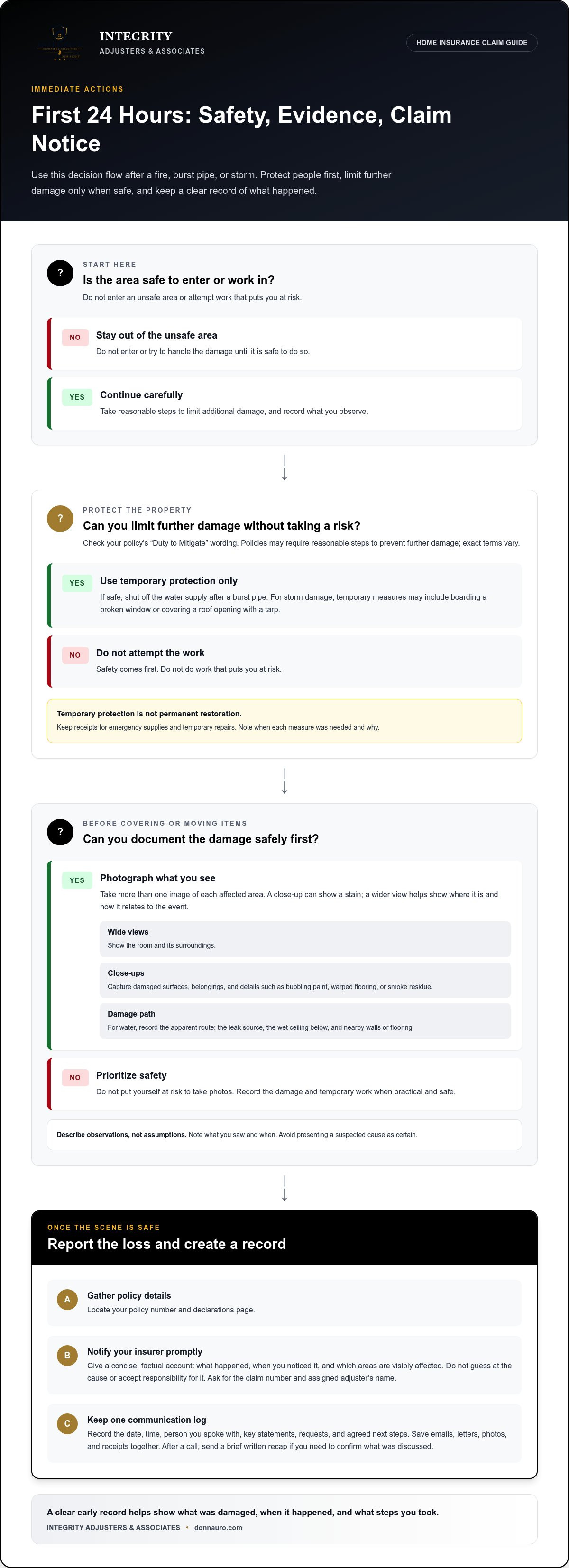
After a fire, burst pipe, or storm, focus first on people and immediate hazards. Don’t enter an unsafe area or attempt work that puts you at risk. Once it’s safe, take reasonable steps to limit additional damage and record what you see. These early actions create a clear starting point for how to file a home insurance claim.
Check your policy for its “Duty to Mitigate” wording. Policies may require reasonable steps to prevent further damage, but the specific terms vary. Distinguish temporary measures that protect the property from permanent restoration, and keep records of the damage and the steps you take.
For a brief overview of property insurance principles, see this neutral reference. The details of your coverage are set out in your policy.
For another perspective on handling the claims process, watch this video:
Ensure Safety and Limit Further Damage
If a pipe has burst and it’s safe to do so, shut off the water supply. For storm damage, arrange temporary protection, such as boarding a broken window or covering a roof opening with a tarp, only if you can do so safely. These are protective measures, not permanent repairs. When practical, photograph the damage and temporary work before covering or moving items. Keep receipts for emergency supplies and temporary repairs, and note when each measure was needed and why.
Report the Loss and Start a Communication Log
Locate your policy number and declarations page, then report the loss promptly through your insurer’s claims channel. Give a concise, factual account: what happened, when you noticed it, and which areas are visibly affected. Don’t guess at the cause or accept responsibility for it. Ask for the claim number and the assigned adjuster’s name.
Start a dedicated log with the date, time, person you spoke with, key statements, requests, and agreed next steps. Save emails, letters, photos, and receipts together. After a phone call, send a brief written recap if you need to confirm what was discussed. A consistent record helps you track the claim and respond accurately as the insurer’s review proceeds.
Strategic Documentation: Building Your Evidence File
A strong claim file connects visible damage to its cause and records what was affected. Capture photos and video before cleanup or moving damaged items, as long as it’s safe. Take more than one image of each area. A close-up may show a stain, but not where it is or how it relates to the event.
Document the apparent “path of the peril,” or the route damage seems to have taken through the property. For a water loss, that might mean photographing the leak source, the wet ceiling below it, and moisture or staining along nearby walls and flooring. Don’t present a suspected cause as certain. Record what you observed and when.
Capture the Full Picture
Start with wide shots that show each room and its surroundings. Then take close-ups of damaged surfaces, belongings, and details such as bubbling paint, warped flooring, or smoke residue. Include exterior areas, structural damage, and affected contents. In New Jersey homes, damage may also be concealed behind walls, beneath flooring, in insulation, or inside HVAC components. Note musty odors, discoloration, or residue, and ask that areas of concern be assessed rather than assuming there is no hidden damage.
For each major room, write one sentence describing its pre-loss condition. For example: “Before the water loss, the living room had intact hardwood flooring and no visible ceiling stains.” Keep the description factual, and distinguish what you remember from what you can verify through older photos, receipts, or maintenance records.
Build a Detailed Contents Inventory
List damaged belongings individually instead of grouping them as “clothing” or “kitchen items.” Record each item’s description, approximate age, original cost if known, and estimated replacement value. Add receipts, bank or credit card statements, owner manuals, and prior photos for higher-value property. If a detail is uncertain, label it as an estimate rather than guessing.
- Record the room, item, quantity, condition, and evidence available.
- Save original photo and video files, and organize copies by room or damage area.
- Track related expenses, such as spoiled food or temporary laundry needs, with dates and receipts. Coverage depends on the policy, so document the expense without assuming it will be reimbursed.
A complete, organized file gives the insurer a clearer basis to evaluate the loss and helps prevent overlooked details. For extensive fire, water, or storm damage, public adjusting support for property claims can help organize the evidence and present a comprehensive account of the loss.
Navigating the Carrier’s Claims Process
Once the claim is open, the insurer will review your policy, request information, and arrange an inspection. Understanding the terms that shape coverage can help you ask focused questions and see what the carrier’s estimate does and does not include. This stage of how to file a home insurance claim is more than paperwork. It’s where policy language and documented damage meet.
Interpret the Policy Before Evaluating the Estimate
Check the declarations page and relevant policy sections for coverage limits, deductibles, exclusions, and special limits on categories such as jewelry or electronics. Look for Additional Living Expenses (ALE), also called Loss of Use, which may apply if covered damage makes the home unfit to live in. The policy defines the conditions and limits, so note the wording that relates to your loss.
Understand the difference between Actual Cash Value (ACV) and Replacement Cost Value (RCV). ACV generally accounts for depreciation, while RCV refers to the cost to repair or replace covered property without that deduction, subject to policy terms and limits. Some policies initially pay ACV and may release recoverable depreciation after eligible work is completed and documented. Confirm how your policy handles payment instead of assuming the estimate is the final amount.
Prepare for the Inspection and Proof of Loss
The first site inspection is an assessment, not necessarily a complete accounting of every affected area. The adjuster may focus on visible damage and the information available during the visit. Be ready to identify affected rooms, explain what you observed, and point out areas that may need further assessment. If new damage appears or an area could not be inspected, document it and notify the carrier in writing.
A Proof of Loss is a formal statement about the amount and details of your claimed loss. It may require a signed or sworn declaration. Read every field carefully, support figures with your records, and don’t sign a statement you believe is incomplete or inaccurate. The insurer’s request should specify the required form and deadline. Ask for clarification promptly if instructions are unclear, and keep a copy of what you submit.
Track Deadlines and Keep Submission Records
Deadlines can apply to notice, requested documents, inspections, and Proof of Loss forms. Follow the dates in your policy and written carrier requests, and retain confirmation for each submission. Use the insurer’s tracked portal or a delivery method that provides proof of receipt.
Don’t rely on a general online timeline instead of checking current New Jersey requirements. NJ Department of Banking and Insurance rules may set insurer response standards, but the applicable requirements depend on the claim and process stage. Check current guidance through NJ DOBI, and keep a dated log of requests, responses, and outstanding items.
The Adjustment Phase: Defense Against Underpayment
The carrier’s staff adjuster investigates the loss and prepares an estimate on behalf of the insurance company. The inspection is an important part of the review, but the estimate may not capture every affected area or task needed to complete the work. Compare the scope with your damage records and policy, then identify specific gaps with supporting evidence.
Prepare for the Site Visit
Have your organized evidence file ready, including photos, room notes, contents records, and a list of questions. Walk through the affected areas with the adjuster and point out damage that may not be obvious, such as soot in HVAC components or moisture behind walls. Describe what you observed without presenting an unverified cause as fact. Ask how to obtain the adjuster’s notes and preliminary estimate, and record the request.
Check the Estimate Line by Line
Compare the estimate with your documentation and, where available, detailed repair quotes. Look beyond the total. Check whether the estimate accounts for all affected rooms and materials, necessary preparation and removal, disposal, and work needed to access damaged areas. A missing line item can matter even when the overall estimate appears substantial.
Then review the proposed scope. A repair may be appropriate when the damaged material can be restored effectively; replacement may be necessary when damage is extensive or repair won’t reasonably address it. The evidence, repair specifications, and policy terms all matter. If you disagree, identify the exact room, item, or task and explain what the estimate omits or why the proposed repair doesn’t address the documented damage.
- Compare quantities and materials in the estimate with what was observed and recorded.
- Review any depreciation deduction and ask whether the policy allows it to be recovered, and what documentation or steps are required.
- Submit a clear written response with supporting photos, measurements, or estimates, and keep a copy with proof of delivery.
An evidence-based dispute is stronger than simply calling an offer “too low.” Avoid signing a settlement or release until you understand what it covers and how it affects unresolved damage. If the scope remains disputed, a public adjuster represents the policyholder, not the insurance company, and can help organize the claim and communicate the documented differences. For help reviewing a property damage estimate, learn about public adjusting support.
Professional Advocacy: When to Hire a Public Adjuster
A public adjuster represents the policyholder in preparing and presenting a property insurance claim. The insurer’s adjuster assesses the loss for the carrier; a public adjuster works on the homeowner’s side, helping document damage, evaluate the claim, and communicate with the insurer. That distinction can matter when damage is extensive, the estimate leaves questions unanswered, or managing the claim alongside daily life becomes difficult.
Consider professional support for complicated fire losses, substantial water damage, or storm damage involving multiple rooms or parts of the building. Smoke and moisture can affect areas that aren’t immediately visible, while a detailed estimate may involve many materials and tasks. A public adjuster can help organize the evidence and address differences in the documented scope. Public adjusting advocacy concerns the insurance claim, not physical repairs or legal representation.
Weigh the Fee Against the Net Recovery
Public adjuster compensation and terms vary, so review the written agreement carefully before deciding. The value isn’t measured by a larger settlement alone. Compare the claim outcome after any fee with the amount and scope the insurer initially proposed, while accounting for policy limits, deductibles, coverage terms, and documented damage. No representative can guarantee a particular settlement. The aim is a well-supported claim and a fair evaluation of covered losses.
What Professional Advocacy Can Include
Support may include building a comprehensive claim file, assessing documented damage, reviewing estimates for gaps, and communicating with the carrier about disputed items. Ask how each requested line item will be explained and connected to evidence. A thorough presentation can keep the discussion focused on what was damaged, what work the estimate includes, and what remains unresolved.
Integrity Adjusters & Associates is a New Jersey public adjusting firm representing policyholders through residential and commercial fire, water, and storm claims. Its approach centers on documenting the loss and navigating the insurer’s process. If you’re deciding how to file a home insurance claim or need help addressing a complex or disputed property loss, learn about Integrity Adjusters & Associates claim support.
Move Forward With a Clear Claim Strategy
A well-supported claim starts with practical steps: protect people and property, document the damage, and keep a clear record of every communication and submission. As you learn how to file a home insurance claim, remember that the insurer’s estimate is one part of the process. If documented damage or necessary work appears to be missing, ask questions and support your concerns with evidence.
For New Jersey residential and commercial property owners, Integrity Adjusters & Associates provides policyholder advocacy and helps document fire, water, and storm damage. A public adjuster can organize the claim and navigate discussions with the carrier, keeping the focus on presenting the loss clearly.
If your claim feels complex or the proposed scope doesn’t reflect the damage, contact Integrity Adjusters & Associates for claim support. A clear record and steady advocacy can help you approach the process with greater confidence and keep your claim focused on the facts.
Frequently Asked Questions
How long do I have to file a home insurance claim in New Jersey?
There isn’t one universal filing deadline for every New Jersey home insurance claim. Your policy may require prompt notice, and deadlines can depend on the policy, type of loss, and applicable state rules. Report damage as soon as practical, review your policy’s notice and Proof of Loss requirements, and keep copies of all communications. Don’t assume the time allowed for filing is the same as the deadline for submitting requested documents.
Can I start cleaning up before the insurance adjuster arrives?
Yes. Take reasonable steps to protect people and prevent further damage, but document affected areas first when it’s safe. Photograph or video the damage before removing debris or damaged belongings. Keep samples or damaged items if practical, and save receipts for emergency supplies or temporary work. Don’t enter unsafe areas or begin permanent restoration solely to prepare for an inspection. Tell the insurer what protective steps you took and why.
What happens if my insurance claim is denied or underpaid?
Ask the insurer for its decision and supporting explanation in writing, then compare the stated reasons and estimate with your policy and damage records. If information is missing or the scope appears incomplete, submit a clear written response with relevant photos, estimates, or other evidence. In New Jersey, you can also contact the state insurance department about complaint options. A public adjuster can help policyholders document and present a disputed property claim.
Will my homeowners insurance premium increase if I file a claim?
It may, but a premium increase isn’t automatic or guaranteed. Insurers may consider factors such as claim type, claims history, policy terms, and other underwriting considerations. Before filing a small loss, compare the estimated covered damage with your deductible and consider whether additional damage may emerge. Ask your insurer how a claim could affect your policy, but don’t delay reporting a loss if your policy requires prompt notice.
Do I have to use the contractor recommended by my insurance company?
Not necessarily. A contractor recommendation or network may be an option, but it doesn’t by itself establish that you must use that contractor. Review your policy and any written settlement conditions, and understand what the insurer’s estimate includes before authorizing work. Keep the claim discussion focused on documented damage and the necessary scope. The insurer’s estimate and your repair arrangements are related, but they are not the same decision.
What is the difference between a public adjuster and a company adjuster?
A company adjuster works for the insurance company and investigates or estimates the claim on its behalf. A public adjuster represents the policyholder, helping document the loss, build a comprehensive claim, and navigate communication with the insurer. In New Jersey, Integrity Adjusters & Associates provides policyholder advocacy for residential and commercial property claims involving fire, water, and storm damage. The roles differ by whom they represent.
Should I file a claim if the damage is only slightly more than my deductible?
First, get a reasonable picture of the damage and compare the covered loss with your deductible. A small visible problem may involve additional damage, while policy limits or exclusions may affect what is payable. Consider potential claim-history effects, which can vary by insurer and circumstances, and check your policy’s notice requirements. If the damage is uncertain, document it and ask the insurer how to report it without assuming the claim will be paid.
What documents do I need to provide for a commercial property claim?
For a New Jersey commercial property claim, gather the policy and declarations, claim number, incident timeline, photos or videos, damaged-property inventory, and receipts for temporary protective measures. Add repair estimates, invoices, maintenance records, and proof of ownership where available. If business interruption or lost income is part of the claim, organize relevant financial records and expense documentation. The insurer may request additional materials based on the loss and policy.


