

A damaged roof, flooded classroom, or ruined equipment can disrupt school operations and leave decision-makers sorting through evidence, insurance responsibilities, and claim authority at the same time. A Teaneck NJ school property damage claim is easier to assess when those details are organized from the start.
Protecting students and staff and restoring essential operations may come first. Clear records matter, too. Photos, inventories, repair estimates, incident reports, and policy documents can help show what was damaged, how the loss affected the school, and which entity is authorized to act.
This guide explains how to document damage to buildings and contents, organize a complete claim file, and prepare for the insurer’s review. School-related claims may involve multiple parties, so identifying the insured entity, applicable policy, and authorized claim contact is an important early step. Public-adjusting advocacy can help an eligible policyholder organize the evidence and navigate the insurer’s process. It does not replace restoration work or legal representation.
Key Takeaways
- Start a Teaneck NJ school property damage claim by identifying the damaged property, the insured entity, and the policy that may apply.
- Build a dated claim file that connects incident records, photos, inventories, invoices, and insurer communications.
- Separate building damage, contents, equipment, and operational impacts so each loss can be assessed and supported clearly.
- Use a step-by-step process to review the policy, report the loss, coordinate inspections, and track insurer follow-up.
- Public-adjusting advocacy can help an eligible policyholder document damage and prepare a comprehensive claim.
Teaneck School Property Damage Claims: Start With the Loss and the Insured Entity
A school property damage claim seeks insurance benefits for physical damage that may be covered under an applicable policy. The cause of loss, policy terms, and identity of the insured all matter. Before preparing a Teaneck NJ school property damage claim, establish what was damaged, who owns it, and which organization has authority to report or discuss the loss.
Teaneck Public Schools’ property and liability insurance is provided through the New Jersey Schools Insurance Group (NJSIG), according to available district information. That fact alone does not establish which policy applies to a particular incident or what it covers. Identify the insured entity and insurance arrangement relevant to the property and event involved.
The video below reports on a Teaneck High School damage dispute. It provides local context, but a news report alone does not establish the extent of damage or determine insurance coverage.
Which Teaneck school property and entity are involved?
Identify the affected location and ownership before assigning responsibility. A public-school building, private-school facility, leased classroom, and separately owned equipment may involve different insureds and claim pathways. Record whether the loss affects the building, grounds, fixtures, computers, classroom contents, or property belonging to another organization. Then identify the policy’s named insured and the person authorized to report or discuss the claim. For Teaneck Public Schools, confirm the relevant entity and insurance arrangement rather than assuming every school-related loss follows the same process.
General information about property insurance, including how policies may value property, is summarized in Property Insurance Basics. The specific policy language governs the claim assessment.
Which events can lead to a school property claim?
Potential loss scenarios include fire, water intrusion, storm damage, and other events that physically affect school property. A storm might damage roofing while water affects ceilings, flooring, or equipment inside. A fire may damage the building and affect contents, records, or systems. Document each type separately. The policy and evidence about the cause determine how the insurer evaluates the loss. A damage category alone does not establish coverage or guarantee payment.
Keep the initial assessment factual. Note the location, observed condition, affected owner, and apparent cause. Distinguish confirmed damage from items that still need inspection. This helps keep the claim grounded in evidence as details emerge.
Build a Strong Teaneck School Property Damage Claim File
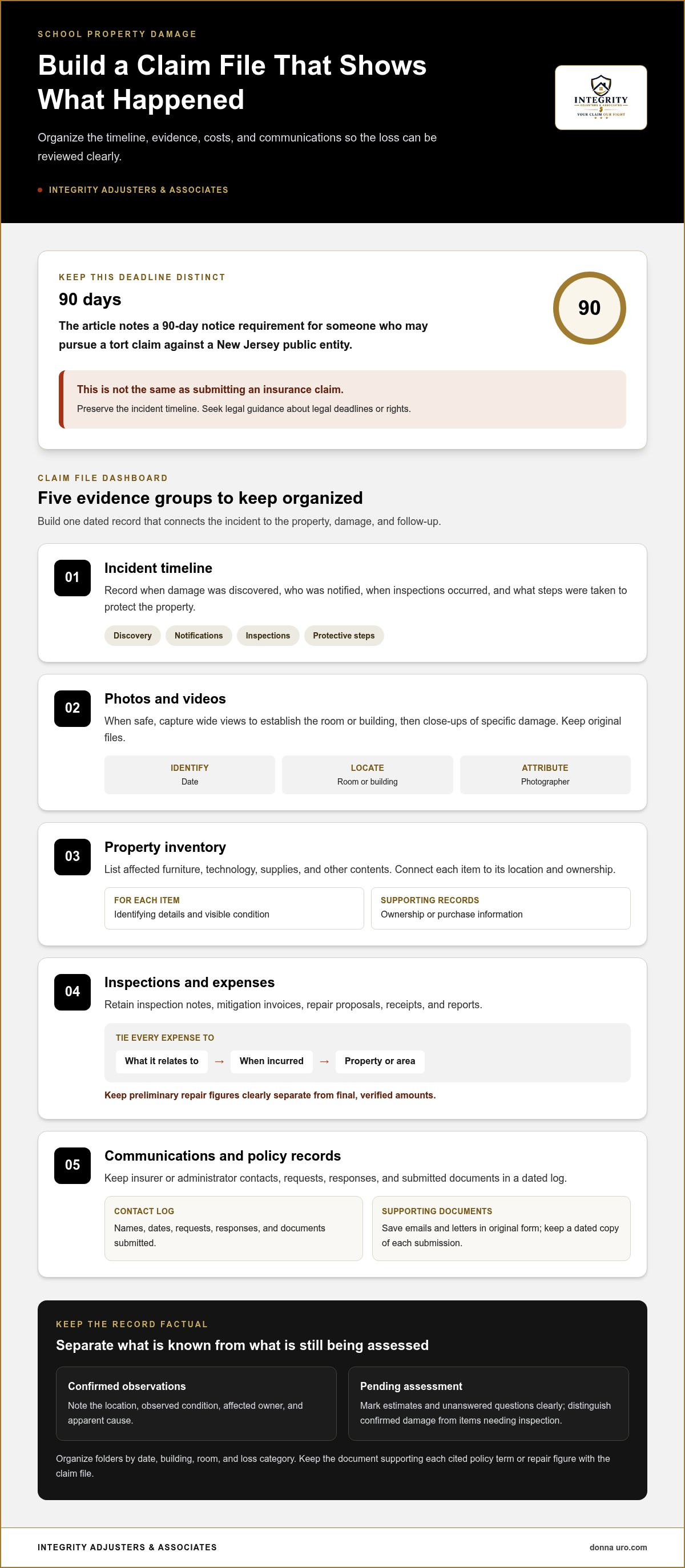
A well-organized file shows what happened, what was affected, and how the loss developed. Start a dated timeline with when the damage was discovered, who was notified, when inspections occurred, and what steps were taken to protect the property. Separate confirmed observations from estimates and unanswered questions. That distinction keeps the record factual as more information becomes available.
Document building damage and affected school contents
When it is safe to do so, take wide photographs that establish the room or building location, then close-ups that show specific damage. Preserve the original files and note the date, location, and photographer. Create an inventory of affected furniture, technology, supplies, and other contents. Include identifying details, visible condition, ownership or purchase records, and the item’s location before the incident. For example, document water staining on a classroom ceiling separately from damage to computers or books beneath it.
Use a consistent file structure, such as folders organized by date, building, room, and loss category. Save original photos and videos alongside copies of invoices, inventories, and relevant policy materials. Do not present a preliminary repair figure as a final, verified amount. When citing policy terms or repair figures, keep the document that supports each one with the claim file.
Preserve inspections, expenses, and communications
Retain inspection notes, mitigation invoices, repair proposals, receipts, and reports. For each expense, record what it relates to, when it was incurred, and which property or area it concerns. Maintain a contact log with insurer or administrator names, dates, requests, responses, and documents submitted. Save emails and letters in their original form, and keep a copy of each submission with the date sent. A clear log makes it easier to answer follow-up questions without reconstructing the claim history.
Insurance documentation and legal notice procedures are separate issues. If someone may pursue a tort claim against a New Jersey public entity, the state’s New Jersey Tort Claims Act information describes a 90-day notice requirement. That notice is not the same as submitting an insurance claim. Preserve the incident timeline and seek legal guidance about legal deadlines or rights.
For broader business-property claim documentation context, see this guide to commercial property insurance claim help. Integrity Adjusters & Associates helps residential and commercial property policyholders document damage, build comprehensive claims, and navigate the insurer’s process. Public-adjusting claim advocacy can help organize records and insurer communications.
Assess the School Loss: Buildings, Contents, and Operational Impacts
A clear loss assessment separates physical damage from its effects on school operations. For a Teaneck NJ school property damage claim, connect each claimed item to a location, observed condition, supporting record, and policy question. Keep verified damage distinct from projected costs or interruption estimates. This helps reviewers understand what is documented and what still needs evaluation.
| Loss category | What to record | Supporting evidence and policy question |
|---|---|---|
| Building | Area and component, such as a roof section, ceiling, or flooring, plus visible condition | Photos, inspection notes, repair proposal; which policy terms apply to the damaged structure? |
| Contents | Furniture, supplies, books, or other items, with room location and condition | Inventory, ownership or purchase records, photos; how is each item treated and valued? |
| Equipment | Technology, appliances, or specialized school equipment affected | Asset records, service notes, invoices; does the relevant policy address this property? |
| Operational impact | Closures, restricted access, relocation, or altered use, with dates | School notices and dated operational records; does the policy provide applicable time-element coverage? |
Organize building and contents damage separately
Group building damage by area and describe what you can observe, such as a ceiling stain in a named room or storm damage to a particular roof section. List contents and equipment separately, noting ownership information and available inventory or purchase records. Do not assume all items have the same coverage or valuation method. The applicable policy wording and evidence determine how each part of the loss is evaluated.
Describe school-use disruption without overstating a claim
Record the dates and scope of any closure, restricted access, temporary relocation, or change in room use. Support those details with dated notices, schedules, or other records. Distinguish confirmed operational effects from estimates, and show how each impact relates to the physical event. Business interruption or other time-element coverage depends on the policy language and circumstances. Operational disruption alone does not establish reimbursement.
If storm damage is involved, the documentation approach in this guide to commercial storm damage claim advocacy may offer useful context. Keep the school’s assessment specific: identify the damaged property, document observed conditions, and flag policy questions without treating estimates as established coverage.
Manage the Teaneck School Claim Process Without Losing Key Details
A Teaneck NJ school property damage claim can involve several decision-makers, records, inspections, and insurer requests. Use a consistent workflow and one central claim log to keep the process organized. Review the actual policy and reporting instructions promptly. Notice requirements and procedures can vary, so do not rely on a general timeline.
Coordinate reporting, site access, and claim documentation
Confirm who is authorized to report the loss and communicate for the named insured. Follow the applicable policy and insurer instructions for notice, documentation, and inspection access. Keep copies of everything submitted, including dates and delivery records. When safe, document site conditions before and after necessary protective work. Note what changed, when it changed, and why.
- Gather the core records. Assemble the policy documents available to the insured, incident timeline, photos, inventories, and initial expense records.
- Report the loss. Follow the policy’s instructions and record the date, recipient, claim reference, and materials provided.
- Coordinate inspection. Track scheduled visits, areas inspected, questions raised, and any follow-up documents requested.
- Submit organized support. Connect each estimate, invoice, or inventory item to the location and damage it addresses. Keep a copy of each submission.
- Follow up and record decisions. Log outstanding requests, responses, assessment updates, and next steps so no item gets lost between contacts.
Address questions, discrepancies, or an incomplete assessment
Compare the insurer’s assessment with the documented damage, inspection notes, inventories, and available estimates. If an area or item appears to be missing, identify it specifically and provide relevant supporting records. Keep responses concise and factual. Update the claim log with what was requested, what you supplied, and what remains unresolved.
If the claim is denied, review the written decision and its stated basis alongside the policy and submitted evidence. The guide to resolving denied property insurance claims in New Jersey may help explain possible next steps. Legal rights and deadlines are separate matters, so consult an attorney for legal advice.
A public adjuster advocates for the policyholder within the scope of the agreed engagement. This work can include organizing damage documentation, preparing a comprehensive claim, and supporting communication through the insurer’s process. Integrity Adjusters & Associates provides public-adjusting advocacy for residential and commercial property insurance claims. Get public-adjusting claim support to bring records and follow-up into a clearer structure.
Get Public-Adjusting Support for a Teaneck School Property Claim
A school loss may involve multiple buildings, contents, records, and operational effects. Public-adjusting advocacy can help organize documented facts into a claim file, prepare a comprehensive presentation of the loss, and support the policyholder through insurer communications. For a Teaneck NJ school property damage claim, first identify the named insured and the person authorized to act for it. Representation discussions should involve the appropriate decision-maker and stay within the scope of the policyholder’s authority.
What public-adjusting advocacy can contribute
An advocate can organize available photographs, inventories, inspection records, invoices, estimates, and claim correspondence so the insurer can review the reported damage and supporting materials. The advocate can help present documented losses and track questions or requests as the claim progresses. This is policyholder advocacy, not legal advice, a guarantee of coverage or settlement, or physical repair work. The applicable policy, evidence, and claim circumstances determine the insurer’s evaluation.
Clear organization is especially useful when the file includes separate building and contents damage, developing estimates, or several people involved in communications. An advocate can help distinguish observed damage from projections and connect records to affected locations. That supports a more complete presentation without treating uncertain amounts or policy interpretations as established facts.
Prepare for a focused claim discussion
Before discussing representation, gather the materials that show what happened and what has been done so far. A concise preparation file may include:
- The policy documents available to the insured and the insurer’s claim correspondence
- The incident date, affected buildings or rooms, and a brief timeline of key events
- Photographs, videos, contents inventories, and available ownership or purchase records
- Inspection notes, mitigation invoices, repair estimates, and records of protective work
- A list of open questions, pending insurer requests, and decisions already received
Keep the summary factual. Note which details are documented, which figures are estimates, and what remains to be assessed. Establish who can authorize claim communications or representation on behalf of the policyholder. This preparation makes the discussion more focused and helps clarify the support the claim needs.
Authorized Teaneck-area decision-makers can discuss school property claim advocacy and the documented loss with Integrity Adjusters & Associates. The focus is a disciplined claim file and informed support through the insurer’s process, without promises about the outcome.
Move Forward With a Clearer School Property Claim
A well-supported Teaneck NJ school property damage claim starts with clarity: identify the insured entity and property, document each loss with dated records, and separate confirmed physical damage from operational estimates. Keep insurer communications and open requests organized so decision-makers can track the claim from initial report through review.
When the loss involves multiple buildings, contents, or supporting records, public-adjusting advocacy can help a policyholder organize the evidence, prepare comprehensive claim materials, and navigate insurer communications. Integrity Adjusters & Associates provides public-adjusting advocacy for residential and commercial property claims. This is claim support, not legal representation or repair work, and it cannot guarantee coverage or a particular outcome.
If you are an authorized decision-maker ready to discuss the documented loss and the support your claim may need, discuss your school property damage claim with Integrity Adjusters & Associates. Contact Integrity Adjusters & Associates to discuss your New Jersey property claim and public-adjusting support.
Frequently Asked Questions
Can a Teaneck school file a property damage insurance claim?
Yes. A school that is the policyholder or an authorized representative may submit a claim for documented property damage. For a Teaneck NJ school property damage claim, first identify the damaged property’s owner, the policy’s named insured, and who has authority to communicate for that entity. Public and private schools may have different ownership and insurance arrangements. The applicable policy and facts determine the claim pathway, and the insurer evaluates whether the loss is covered.
What should a school document after property damage?
Document when the damage was discovered, where it occurred, what was affected, and what actions followed. Preserve dated photographs and videos, incident reports, inspection notes, inventories, invoices, and insurer communications. Keep building damage separate from contents and equipment. For example, record ceiling damage by room and list affected computers individually with available ownership or purchase records. Label observed conditions as facts, and distinguish them from estimates or anticipated costs.
How do you file a school property damage claim in New Jersey?
Start by identifying the policyholder and authorized claim contact, then review the applicable policy and reporting instructions. Gather a timeline, damage records, photographs, and available inventories or estimates. Report the loss through the required channel and retain copies of submissions and responses. Claim procedures and deadlines can vary with the policy and insurance arrangement, so do not rely on a generic timeline. Use a claim log to track inspections, information requests, and follow-up.
What property damage can a school insurance claim include?
A claim may involve physical damage to insured buildings, contents, equipment, or other property, depending on the policy and circumstances. Document each category separately, connecting every item to its location, observed condition, and supporting record. A damaged roof and affected classroom computers, for instance, should be recorded as distinct components of the loss. Coverage, exclusions, limits, and valuation depend on the actual policy, so do not assume every damaged item is treated alike.
Can a public adjuster help with a school property damage claim?
A public adjuster can advocate for a policyholder by helping document damage, organize claim materials, and navigate insurer communications. Before representation discussions, identify the named insured and confirm who is authorized to engage claim assistance under the relevant arrangements. Public adjusting supports the policyholder’s claim process. It is not legal representation, policy sales, emergency mitigation, or physical repair work. An advocate can help present documented losses, but cannot guarantee coverage, a settlement, or a particular timeline.
What if the insurer’s school damage assessment seems incomplete?
Compare the assessment with documented conditions, photographs, inventories, inspection notes, and available estimates. Identify specific items or areas that appear to be missing or described differently, then provide relevant supporting records through the appropriate claim channel. Keep copies and note the dates of requests and responses. If the insurer asks for more information, answer with organized, claim-related materials. If the claim is denied or disputed, review the decision and policy. A public adjuster may assist with policyholder advocacy.
Does a school property claim cover temporary relocation or lost operations?
It depends on the policy, the insured entity, the cause of loss, and the documented operational impact. Keep dated records of closures, restricted access, relocation decisions, and related expenses. Separate confirmed facts, such as a dated closure notice, from projections of potential costs or disruption. Some policies may include time-element coverage, but the terms control whether it applies and what documentation is relevant. Do not assume every operational effect is insured without reviewing the policy.


