

What if the ceiling stain is only one part of your roof leak claim? In Toms River, the key questions are what caused the leak, what damage followed, and whether the records connect the two. A Toms River public adjuster for roof leak claims can help organize that evidence and present it to the insurer.
It can be difficult to tell whether a leak came from sudden storm damage or gradual wear, especially when repairs can’t wait. Take reasonable steps to limit further damage, and document the roof, affected rooms, and damaged belongings before cleanup or repairs change what can be seen. Keep receipts and note when you discovered the leak and what you did next.
This article explains how insurers may assess roof leak claims and which photos, inspection findings, and other records can help show the cause and scope of loss. It also explains how a public adjuster can advocate for a complete, well-documented claim, how to approach an insurer’s inspection and estimate, and how to choose a next step without delaying necessary mitigation.
Key Takeaways
- A roof leak isn’t automatically covered or excluded. The policy and evidence about what caused it both matter.
- Connect the reported cause to the roof damage, interior impacts, and other losses to support a clearer claim review.
- Prioritize safety and reasonable steps to limit further damage, then document conditions and follow your policy’s reporting instructions.
- A Toms River public adjuster for roof leak claims can help organize damage records and present the policyholder’s claim to the insurer.
- Consider advocacy when the damage is extensive, the claim is disputed, or the insurer’s estimate may not capture the full scope of loss.
A roof leak in Toms River: when does it become an insurance claim?
A roof leak can damage more than shingles or roof decking. Water may reach ceilings, insulation, walls, flooring, and personal belongings. Homeowners in Toms River may be left wondering what to document and whether their policy may respond.
A roof leak insurance claim asks the insurer to assess property damage that may be covered under the policy. Coverage depends on the policy wording, the cause and timing of the damage, and the facts supported by records. A public adjuster represents the policyholder in preparing and presenting a claim. Learn more about what is a public adjuster and how adjusters’ roles can differ.
This video demonstrates roof inspection considerations related to insurance claims:
What damage should a homeowner look for after a roof leak?
Look for ceiling stains, bubbling or peeling paint, damp or sagging drywall, wet insulation, and damaged belongings. Water doesn’t always appear directly below the roof opening. It can travel along framing or other surfaces before becoming visible indoors, so record where each sign appears rather than assuming it marks the entry point.
Photograph visible conditions from a safe position. Include close-up views and wider shots that show where each item is located. Note when you noticed the damage, which rooms are affected, and whether conditions change. Don’t climb onto a wet or damaged roof, disturb unsafe materials, or enter areas that may be hazardous.
Why the cause of the leak matters to coverage
A sudden opening associated with an event such as wind or an impact may be evaluated differently from ongoing seepage, deterioration, or maintenance concerns. These are general considerations, not automatic coverage decisions. A storm, an older roof, or a visible leak alone doesn’t settle the question.
Damage evidence does not by itself establish policy coverage. The insurer evaluates the applicable policy language alongside evidence about the cause, timing, and resulting damage. Keep relevant photos, observations, and available inspection records together so the reported cause and affected areas can be reviewed as one connected account.
For homeowners in Toms River and across Ocean County, start by documenting what you can safely observe and preserving details that may help explain how the leak developed. Integrity Adjusters & Associates helps organize property-loss evidence and present it through the insurer’s claim process.
What a Toms River public adjuster does for a roof leak claim
A public adjuster represents the policyholder in preparing and presenting a property insurance claim. For a roof leak, that means bringing the reported cause, roof conditions, interior effects, and supporting records together in a clear account for the insurer’s review. The National Association of Public Insurance Adjusters explains what a Toms River public adjuster does as part of the policyholder-side claim process.
Integrity Adjusters & Associates helps policyholders document property damage, build a comprehensive claim, and navigate the insurer’s process. A public adjuster can help make the claim presentation more complete, while the insurer evaluates the claim under the applicable policy.
How claim documentation and presentation are organized
Claim preparation connects observed damage with the records that explain its scope and timeline. Relevant materials may include photographs, written observations, dates the leak or damage was discovered, inspection findings, and available repair or mitigation records. Consider roof and interior impacts together when the evidence supports a connection, rather than treating a ceiling stain as an isolated issue.
A comprehensive, evidence-led claim connects the reported cause, affected areas, and claimed losses in one organized presentation.
Public adjuster, insurer, and restoration provider: different roles
Each party has a distinct function. The insurer evaluates the claim under the policy. A restoration provider addresses physical cleanup or repair. A public adjuster represents the policyholder in documenting, assembling, and presenting the claim. Keeping these roles clear helps homeowners understand who is addressing the property and who is advocating on the insurance claim.
Integrity Adjusters & Associates provides claim advocacy, not legal representation or physical restoration. If you’re sorting through a roof-related water loss, you can explore property damage claim support as a way to organize the claim and its supporting evidence.
Will homeowners insurance cover a roof leak? Assess the evidence
A roof leak isn’t automatically covered or excluded. The answer depends on the specific policy and the facts surrounding the damage. A sudden event may raise different coverage questions than long-term seepage or deterioration, but neither the apparent cause nor the presence of water damage alone settles the claim.
Cause, policy terms, and documentation shape how a roof leak claim is reviewed. The insurer may consider coverage provisions, exclusions, and endorsements alongside records showing when the leak began, what conditions were found, and how the damage developed. Uncertainty is a reason to organize the available facts, not to assume the claim will be accepted or denied.
Sudden damage and gradual deterioration are not the same question
A recently observed opening or displaced roofing material after an event may provide context for a sudden-damage assessment. Repeated moisture marks, deteriorated materials, or records of prior leaks may raise questions about ongoing seepage or maintenance. These are general indicators, not coverage decisions. The applicable policy and claim-specific evidence matter.
Dated photos, inspection notes, and prior repair records can help establish the roof’s condition over time. For example, a record of an earlier repair may help distinguish a known issue from damage first observed after a later event. Don’t treat general descriptions of sudden damage or wear as a substitute for reviewing your own policy.
Which records help explain the roof leak?
Bring together documents that can help show the timeline, roof condition, and resulting loss. Useful records may include:
- Your insurance policy, including relevant endorsements, and correspondence from the insurer.
- Photos or videos of roof and interior conditions, with dates when available.
- The date you discovered the leak and notes describing what you observed.
- Invoices, inspection notes, and available roof maintenance or repair records.
- Receipts and notes for reasonable steps taken to limit additional damage.
Keep original files where possible, and label photos by location and date so they’re easier to understand. If information is missing, record what you know rather than guessing. A public adjuster can help organize available records into a coherent claim presentation, connecting evidence of the roof condition with affected rooms and documented losses. This supports a clearer review, but does not determine coverage.
For a Toms River homeowner, compare the available evidence with the policy and keep track of unanswered questions for the claim review. A Toms River public adjuster for roof leak claims can advocate for the policyholder by assembling and presenting the documented facts, while the insurer evaluates the claim under the policy.
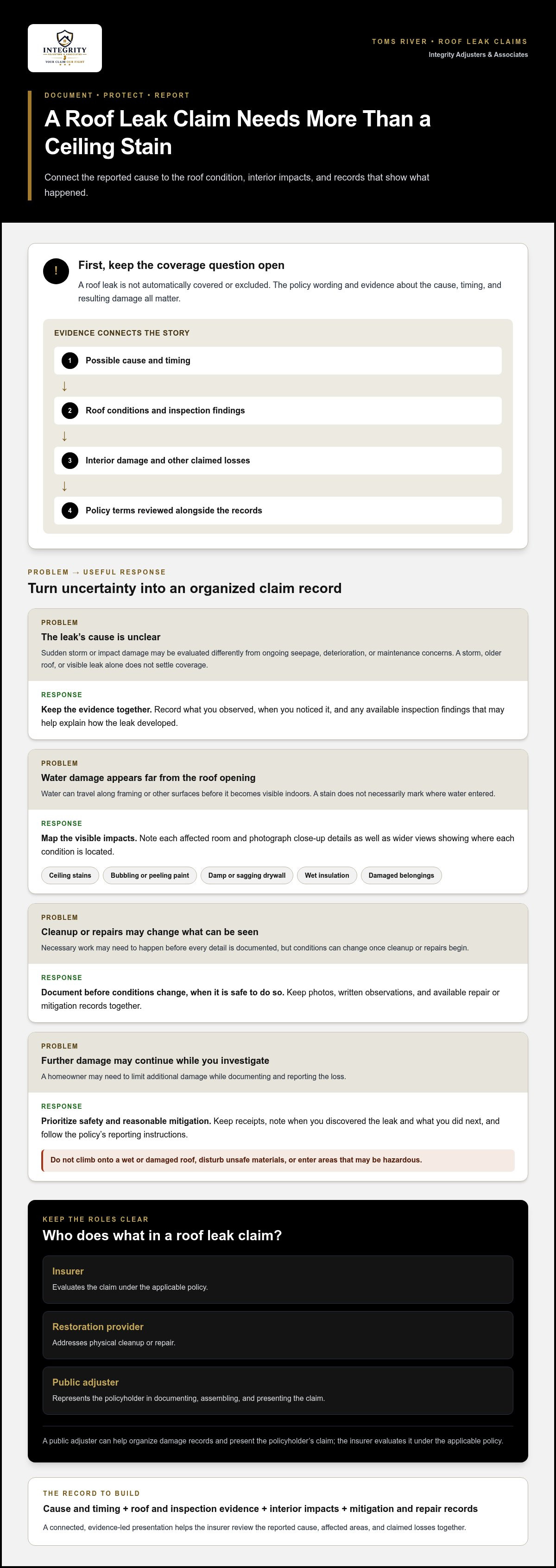
Toms River Roof Leak: Document, Protect, and Report
A roof leak calls for a clear sequence: address immediate safety, limit additional damage, document what you can safely observe, then report the loss. If there’s an immediate safety hazard, contact emergency services. Don’t climb onto a damaged or slippery roof, and don’t delay necessary protective work to take photos or wait for an inspection.
Follow your policy’s instructions for reporting and protecting the property. Keep notes about steps taken to limit further damage, along with related receipts and communications. These records can help explain what happened after discovery and what you did to protect the home.
Document the leak before and during mitigation
When it’s safe and accessible, photograph visible roof conditions from a safe vantage point and capture interior impacts, such as water marks or affected belongings. Take additional photos as conditions change or protective work takes place. Avoid entering unsafe spaces or disturbing materials that may pose a hazard.
Keep a dated log of when you discovered the leak, conversations, temporary measures, and changes in the damage. Separate what you observed from what you suspect. For example, note where and when water appeared rather than stating a cause you haven’t confirmed. That distinction keeps the record factual.
Report the loss and keep the claim record organized
Report the damage according to your insurer’s instructions and retain copies of what you submit. Record claim communications, inspection dates, information requests, and your responses. Save emails and letters together, and note the date, participants, and key points from phone conversations.
A simple folder can make the claim easier to follow. Group photos, receipts, notes, and insurer correspondence by date or topic. If the leak followed a storm, the residential storm damage claim guide offers related guidance. For broader water-loss documentation steps, see the residential water damage claim guide.
A Toms River public adjuster for roof leak claims can help organize damage records and present them through the insurer’s process. Integrity Adjusters & Associates provides advocacy to help policyholders build a comprehensive property claim.
When to bring in a Toms River public adjuster for a roof leak
Not every roof leak claim requires professional advocacy. A homeowner may be able to manage a straightforward claim independently, depending on the damage, the policy, and the insurer’s assessment. Support may be useful when several areas are affected, the estimate is disputed, or it’s unclear how the reported cause connects to the damage.
Signs that claim advocacy may be useful
Consider the demands of the claim, not just whether a leak is present. Added complexity may include damage in multiple rooms, a difference between the documented loss and the insurer’s estimate, or uncertainty about when and how the leak began. Coordinating extensive records can also be difficult while managing repairs and claim communications.
An advocate can help organize available evidence and present the documented loss in a clear, connected way. That can make it easier to explain which areas were affected and what information supports the claim. It doesn’t guarantee that the insurer will agree with the claimed scope or reach a particular settlement. If the damage is limited and the claim process is clear, you may decide to handle it yourself.
The next step with Integrity Adjusters & Associates
Roof leak claim advocacy focuses on the property loss, the records gathered, and the claim’s current status. Integrity Adjusters & Associates works on the policyholder’s side to document damage, build a comprehensive claim, and navigate the insurer’s process.
The role is claim advocacy. It isn’t roof repair, restoration work, or legal representation, and it doesn’t determine coverage or promise an outcome. You remain in control of decisions about your property and claim.
If you’re weighing whether support makes sense, gather the insurer’s estimate or correspondence, photos, and a brief timeline of what happened. A Toms River public adjuster for roof leak damage claims can help organize and present those records. Contact Integrity Adjusters & Associates through the firm’s website to discuss roof leak claim advocacy.
Move Forward With a Clear Roof Leak Claim Plan
A roof leak claim is assessed through the connection between the cause, the resulting damage, and the terms of the policy. Keep records of what you observe, take reasonable steps to limit further damage, and follow your insurer’s reporting instructions. Photos, dates, receipts, and correspondence can help clarify the loss.
If the claim involves several damaged areas, extensive documentation, or questions about the scope, policyholder-side advocacy can help organize and present the information. Integrity Adjusters & Associates supports residential water damage claims by documenting losses, building comprehensive property damage claims, and helping policyholders navigate insurer communications. A Toms River public adjuster for roof leak claims can advocate for a complete, well-documented presentation.
For support organizing your records and presenting your claim, discuss your Toms River roof leak claim with Integrity Adjusters & Associates.
Frequently Asked Questions
Can a public adjuster help with a roof leak insurance claim in Toms River?
Yes. A Toms River public adjuster for roof leak claims can help the policyholder document damage, organize supporting records, build a comprehensive claim, and navigate insurer communications. Integrity Adjusters & Associates provides property claim advocacy, including support for residential water damage. The insurer still evaluates coverage under the policy, so public adjusting support can’t guarantee that a leak will be covered or result in a particular settlement.
Does homeowners insurance cover a leaking roof?
It depends on the policy and the facts behind the leak. A sudden event that damages the roof may be evaluated differently from long-term seepage, deterioration, or maintenance concerns. The insurer reviews the policy language, applicable exclusions or endorsements, and evidence about the cause, timing, and resulting damage. A leak or interior stain by itself doesn’t establish coverage, so don’t assume the claim is either covered or excluded.
What should I do first after discovering a roof leak?
Address immediate safety risks first, then take reasonable steps to limit further damage. Contact emergency services if there’s a safety hazard, and don’t enter unsafe areas or climb onto a wet roof. Photograph visible conditions from a safe location, note when and where you found the leak, and keep receipts and records of protective measures. Follow your policy’s instructions for reporting the damage, and don’t delay necessary mitigation just to gather photos.
Can I make an insurance claim for a roof leak caused by a storm?
You can report storm-related roof damage to your insurer, but a storm doesn’t automatically determine coverage. The insurer will assess the policy and evidence, including the reported damage, its timing, and how the roof leak may relate to the storm. In New Jersey, preserve available photos, inspection notes, and records of steps taken to limit further damage. Report the loss according to your policy instructions, even if you’re still gathering information.
What evidence helps support a roof leak insurance claim?
Useful records may include dated photos or videos of roof and interior damage, the date you discovered the leak, written observations, inspection notes, insurer correspondence, and available maintenance or repair records. Keep receipts for reasonable protective measures and note when they were taken. Organize materials by date and location, and distinguish what you directly observed from assumptions about the cause. Together, these records can help explain the loss and support a clearer claim review.
Should I repair a leaking roof before the insurance inspection?
Don’t leave the home exposed to additional damage just to wait for an inspection. Take reasonable protective steps, following your policy instructions, and document conditions before and during the work when it’s safe to do so. Keep receipts and records describing what was done. If an insurer inspection is being arranged, record the appointment details and communicate about urgent protective work. Avoid unsafe roof access or delaying necessary mitigation for photographs.
How does a public adjuster differ from a roofing contractor?
A public adjuster represents the policyholder in documenting and presenting an insurance claim. A roofing contractor evaluates or performs physical roof work, such as repair or replacement. The insurer assesses the claim under the policy. These roles are distinct: Integrity Adjusters & Associates provides claim advocacy and helps assemble property-loss documentation, not roof repairs or legal representation. Clear records of both damage and work performed can help keep the claim presentation organized.


