
What if the insurer’s estimate doesn’t account for every documented part of your property damage? After a home or business loss, you need a clear view of what the estimate includes and how to respond when details are missing. A Hamilton NJ insurance settlement negotiator can help organize claim documentation and communicate with the insurer on your behalf.
That support has defined limits. A public adjuster advocates for the policyholder by preparing and presenting a property claim, but does not provide legal representation or guarantee a particular settlement. A strong claim presentation connects evidence of the damage with the scope of repairs and related costs.
This guide explains what claim advocacy involves, which records and damage documentation can support a complete presentation, and how residential and commercial claims may differ. You’ll also learn how to assess support for your loss and choose a practical next step for your Hamilton property claim.
Key Takeaways
- A Hamilton NJ insurance settlement negotiator can help organize a property claim, document damage, and communicate with the insurer, without guaranteeing a particular outcome.
- Build a clear claim presentation by connecting photos, inventories, estimates, and property records to the losses being claimed.
- Evaluate claim support by its documentation process, communication approach, transparency, and fit for your residential or commercial property.
- Before discussing an active claim, gather your policy, insurer correspondence, damage photos, inventories, and available estimates.
- Integrity Adjusters & Associates supports residential and commercial policyholders with claim documentation and preparation.
What a Hamilton, NJ Insurance Settlement Negotiator Does for Property Claims
A Hamilton NJ insurance settlement negotiator helps a property owner present a residential or commercial insurance claim in an organized, evidence-based way. This role is commonly associated with a public adjuster, who advocates for the policyholder by documenting damage, preparing claim materials, and communicating with the insurer. For a neutral overview of the role, see What a Public Adjuster Does.
That advocacy can bring structure to a complicated claim, but it doesn’t guarantee coverage or a particular settlement. The policy and documented facts matter: the adjuster supports the claim, while the insurer evaluates it under the policy.
For additional context on decisions during the claim process, watch this video:
How claim advocacy differs from an insurance company adjuster
An insurer’s adjuster works for the insurance company, investigating the reported loss and assessing the claim for the insurer. A policyholder’s public adjuster works on behalf of the property owner, organizing evidence and presenting the losses being claimed. For example, the public adjuster may document affected rooms, damaged contents, and related records so the insurer can review the claimed scope. Different assessments don’t automatically mean either party acted improperly.
An attorney has a different role: providing legal representation and advice. A public adjuster focuses on claim documentation and insurer communications, not legal representation. Understanding the distinction can help you choose the right kind of support for your concern.
When Hamilton property owners may seek negotiation support
Claim support can be useful when damage is complex, the claimed scope is disputed, records are incomplete, or managing insurer questions has become difficult. Needs also vary by property. A homeowner may need to organize room-by-room damage details, while a business may need to document the building, contents, and property used in operations.
Water losses can affect several areas and involve multiple supporting records. For a closer look at that type of claim, review residential water damage claim support. Integrity Adjusters & Associates helps residential and commercial policyholders document property damage, prepare comprehensive claims, and communicate with insurers. The goal is a clear claim presentation, not a promised outcome.
How a Property Insurance Settlement Is Built and Negotiated
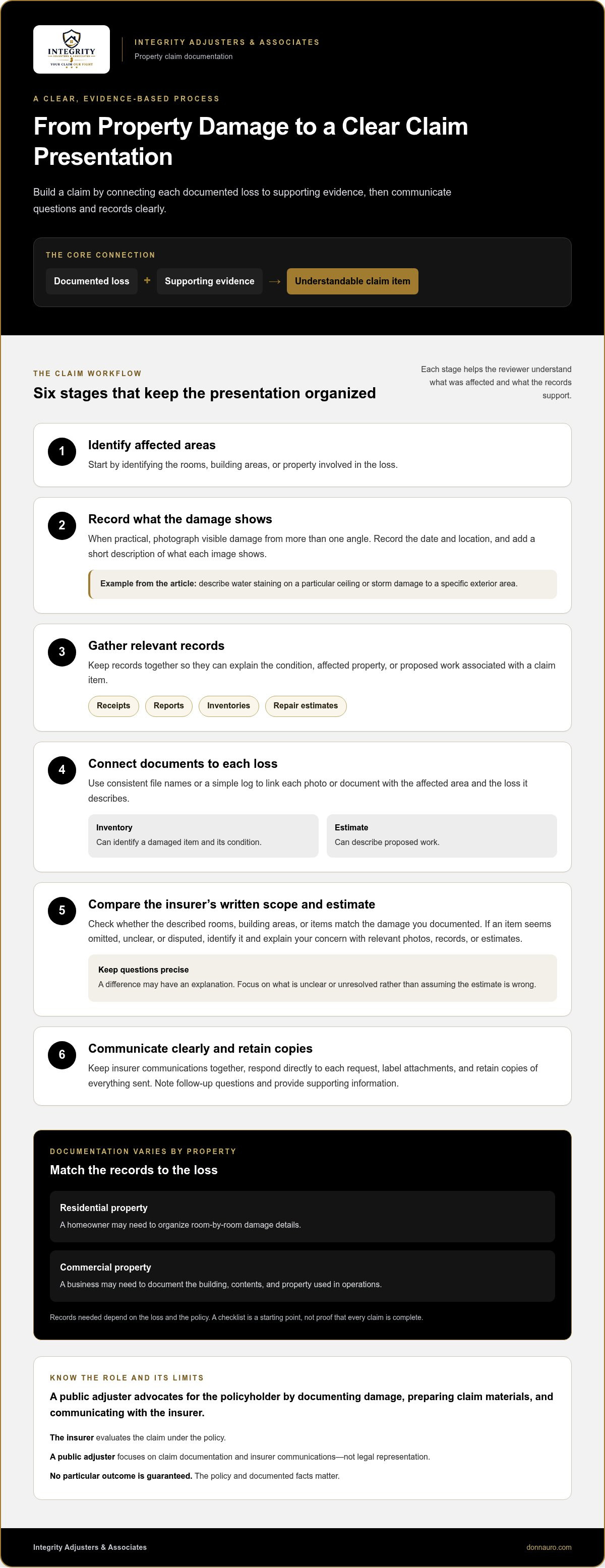
A well-supported property claim develops in stages. First, identify the affected areas. Then document the damage and gather relevant records. Organize the claim so each item is easy to understand, and communicate with the insurer using specific, evidence-based responses. A Hamilton NJ insurance settlement negotiator can help connect these steps and keep the claim presentation orderly.
A claim presentation should connect each documented loss to clear supporting evidence. That connection helps the reviewer understand what was damaged and how the submitted records support the claimed loss.
From property damage to a documented claim
When practical, photograph visible damage from more than one angle and record the date and location. Add a short description of what each image shows, such as water staining on a particular ceiling or storm damage to a specific exterior area. Keep relevant receipts, reports, inventories, and repair estimates together. These records can help explain the condition, affected property, or proposed work associated with a claim item.
Organization matters. Use consistent file names or a simple log to connect each photo or document with the affected area and the loss it describes. An inventory can identify a damaged item and its condition; an estimate can describe proposed work. The records needed depend on the loss and policy, so use a checklist as a starting point, not as proof that every claim is complete.
Reviewing an offer and identifying unresolved questions
Compare the insurer’s written scope and estimate with your evidence. Check whether the described rooms, building areas, or items match the damage you documented. A difference may have an explanation, so focus on precise questions rather than assuming the estimate is wrong. If an item appears omitted, unclear, or disputed, identify it and provide relevant photos, records, or estimates to explain your concern.
Keep insurer communications together. Respond to each request directly, label attachments, and retain copies of everything you send. If a response raises another question, note it and follow up with the supporting information. United Policyholders offers additional consumer guidance on How to Negotiate a Settlement.
Business losses may involve records beyond building damage, including affected contents or property used in operations. For more context, see commercial property insurance claim help. Integrity Adjusters & Associates helps policyholders document property damage and prepare comprehensive claims for insurer review.
How to Compare Insurance Settlement Negotiators in Hamilton
Choosing claim support is a decision about process and fit, not promises. A Hamilton NJ insurance settlement negotiator should be able to explain how the work applies to your type of loss, what documentation is prepared, and how insurer communications are handled. Look for a clear process that addresses your property and claim records.
Questions that clarify the negotiator's role and process
A sound claim process explains how damage is documented and claim materials are organized for insurer review. It should also make clear who manages communications, how updates are provided, and how new evidence or questions are handled. Focus on practical steps rather than promises about a settlement amount or coverage decision.
The role should be clear, too. Claim advocacy focuses on preparing and presenting the property claim. It isn’t legal advice or representation. In New Jersey, public adjusters must meet state licensing requirements; property owners can review current requirements and license information through the New Jersey Department of Banking and Insurance. Read the written engagement terms before proceeding, including how fees are calculated and what work they cover.
Matching experience to the property loss
Consider whether the claim involves a residence or commercial property and whether the damage resulted from water, fire, or a storm. The records and needs can differ. A home claim may involve documenting affected rooms and personal property, while a commercial loss may also require records about damaged business property and operational needs. The claim approach should reflect the property’s documented damage rather than rely on a generic checklist.
For storm-related residential losses, residential storm damage claim advocacy offers additional context. Integrity Adjusters & Associates helps residential and commercial policyholders document damage, prepare comprehensive claims, and navigate insurer communications. This structured support is designed to help present the specific loss clearly.
- Role: Does the explanation distinguish claim advocacy from legal services?
- Documentation: Is there a clear plan to organize damage evidence and supporting records?
- Communication: Is it clear who handles insurer questions and how you’ll stay informed?
- Transparency: Are the engagement terms and fee structure provided in writing before work begins?
No negotiator can guarantee coverage or a particular outcome. A clear process and claim-specific experience can help you decide whether the support fits your property and loss.
What to Prepare Before Discussing a New Jersey Insurance Claim
A focused claim review starts with a clear file. Before speaking with a Hamilton NJ insurance settlement negotiator, gather the materials you have and note what’s still missing. You don’t need to resolve every question first. An organized starting point keeps the discussion grounded in your property, the documented damage, and the insurer’s communications.
Organize the claim file and property evidence
Sort records by date, damage area, and document type. Keep original files where possible, and create a separate folder for copies sent to the insurer. Note when each item was submitted and how it was delivered. This makes it easier to find a photograph, estimate, or response later.
Organized, dated records make claim discussions easier to follow. Separate confirmed observations from estimates, assumptions, and details still awaiting inspection. This helps prevent an estimate from being mistaken for a final cost or an unverified observation from being presented as established damage.
- Policy: Gather the policy and any relevant declarations or endorsements, along with claim instructions you received.
- Claim correspondence: Save letters, emails, estimates, requests for information, and your responses.
- Damage evidence: Collect dated photographs and videos, labeled by room, building area, or damaged item.
- Inventories and records: Include affected contents, receipts, inspection reports, and other documents related to the loss.
- Estimates: Add available repair or replacement estimates, clearly marked as estimates.
- Communication log: Record the date, contact method, person you spoke with, key points, unanswered questions, and requested follow-up.
Keep New Jersey claim details accurate
Use the policy’s terms and claim instructions as your reference. General online timelines may not apply to your policy or circumstances, so review the documents tied to your claim rather than relying on a general article. For a regulatory question, consult current guidance from the New Jersey Department of Banking and Insurance instead of assuming a rule applies.
Hamilton and Mercer County provide location context, but location alone doesn’t establish a special claim rule. Keep the focus on the policy, the documented loss, and the insurer’s specific requests. Integrity Adjusters & Associates helps residential and commercial policyholders in New Jersey organize damage records and prepare comprehensive claims for insurer review. For support putting your claim file in order, get property claim documentation support.
Next Steps With a Hamilton Insurance Settlement Negotiator
If you’re weighing claim support, start with the information already available. A Hamilton NJ insurance settlement negotiator can review the loss circumstances, current records, and the insurer’s position to help identify practical next steps. Clear documentation gives the discussion a factual starting point, even when some details remain unresolved.
What to expect from a claim advocacy discussion
Integrity Adjusters & Associates documents property damage, prepares comprehensive claim materials, and helps policyholders navigate insurer communications. A discussion can cover what was damaged, what evidence and correspondence you have, and which questions remain about the claim presentation. Organizing those details can clarify where more documentation or a response may be needed.
Support covers residential water, storm, and fire losses, as well as commercial fire, storm, and business property claims. Each claim depends on its facts and applicable policy terms. Claim advocacy helps present documented losses, but can’t guarantee coverage, a recovery amount, or a timeline.
Choose a clear next action for your property claim
Before discussing next steps, gather the records you have and make a short list of the issues you want to clarify. You don’t need a perfect file to begin. A focused summary keeps the conversation tied to the property damage and the insurer’s current handling of the claim.
- Gather: Your policy, claim correspondence, photographs, inventories, and available estimates.
- Identify: Damage items or insurer questions that remain unresolved, and note the evidence related to each one.
- Discuss: The loss, the documentation collected so far, and claim support to organize its presentation.
For Hamilton-area homeowners and businesses with a New Jersey property loss, start with a clear review of the claim facts and records. Discuss your property claim with Integrity Adjusters & Associates.
Take a Clear Next Step With Your Property Claim
A well-presented property claim starts with documented losses and organized records, not assumptions about what an insurer’s estimate should include. A Hamilton NJ insurance settlement negotiator can help policyholders prepare claim information and manage insurer communications, while coverage and settlement decisions remain subject to the policy and claim facts.
As you assess support, focus on the professional’s role, experience with your type of property loss, communication process, and clarity about engagement terms. Gather your policy, claim correspondence, photographs, inventories, and available estimates. Then list unresolved questions so the discussion can focus on evidence and practical next steps.
Integrity Adjusters & Associates supports residential and commercial property insurance claims through damage documentation and comprehensive claim preparation. This organized approach helps make a claim easier to review without promising a specific recovery or timeline. Discuss your New Jersey property claim and take a measured next step toward presenting the facts clearly.
Frequently Asked Questions
Is an insurance settlement negotiator the same as a public adjuster?
Not necessarily, but “settlement negotiator” is often used to describe claim advocacy from a public adjuster. A public adjuster represents the policyholder’s interests by documenting damage and preparing and presenting a property claim. An insurer’s adjuster evaluates the claim for the insurance company. An attorney provides legal advice and representation. These roles are distinct, and applicable requirements depend on the situation and current New Jersey rules. Claim advocacy isn’t legal advice.
Can I negotiate an insurance settlement myself in Hamilton, New Jersey?
Yes. You can communicate with your insurer, review its estimate, and organize records such as photographs, inventories, and repair estimates. A claim advocate can help document damage, assemble claim materials, and manage insurer communications. Whether that support is useful depends on the loss, available documentation, and claim complexity. Review your policy and keep copies of correspondence. For questions requiring legal advice, consult a qualified attorney.
What documents should I prepare before discussing a property settlement?
Gather your policy, claim number, insurer letters and emails, photographs, damage inventories, and available inspection or repair estimates. Add dated notes about calls, property visits, insurer requests, and unanswered questions. For a business property claim, organize relevant property records separately from personal or residential materials. Keep original documents where possible and share copies. The exact records needed depend on the damage, policy terms, and the insurer’s requests.
What happens if the insurer’s settlement offer doesn’t address documented damage?
Compare the offer and its written scope with your records, then identify specific items that appear unclear, omitted, or disputed. For example, note the affected area or item and gather relevant photographs, estimates, or other supporting documents. A difference doesn’t automatically prove an error, so keep your response factual and focused. A public adjuster can help organize and present claim information, but coverage decisions remain subject to the policy and claim review.
How long does insurance settlement negotiation take in New Jersey?
There’s no single timeline for every New Jersey property claim. The time involved can depend on the extent of damage, available records, insurer requests, policy terms, and whether further review is needed. Keep a dated record of documents submitted and follow-up communications so you can track the claim’s progress. Check your policy and current applicable guidance for deadlines. A general estimate shouldn’t replace the requirements that apply to your claim.
When should I consider a settlement negotiator for a property claim?
Consider claim support if damage is extensive, the scope in the insurer’s estimate is unclear, records are difficult to organize, or managing communications has become challenging. Residential and commercial losses can require different documentation. A Hamilton NJ insurance settlement negotiator can help policyholders prepare claim materials and navigate insurer communications. Claim advocacy can clarify the process and help present the loss, but no professional can guarantee coverage or a particular settlement.
Can a public adjuster provide legal representation for an insurance dispute?
No. Public adjusting advocacy and legal representation are separate roles. A public adjuster can help document property damage and prepare and present claim information on the policyholder’s behalf. An attorney provides legal advice and representation. Claim advocacy does not include legal services. If your concern involves interpreting legal rights, a lawsuit, or court proceedings, seek guidance from a qualified attorney familiar with the relevant issues in New Jersey.


