
A room can escape the flames and still have smoke residue or odor that reaches beyond the visibly burned area. That can make a property loss harder to document than it first appears. A Passaic NJ public adjuster for smoke damage can help policyholders organize evidence and present a more complete claim to the insurer.
It can be difficult to know what to photograph, which records to preserve, or how to document affected contents and areas that may need further assessment. Smoke damage isn’t always obvious at a glance, and a claim record focused only on burned surfaces may leave important details out.
This article explains how smoke can affect different parts of a property, what information to gather, and how policyholder-side claim advocacy can support the insurance process. Integrity Adjusters & Associates helps residential and commercial property owners in New Jersey document losses and build comprehensive claims. The firm advocates for policyholders through the insurer’s process, without promising a particular settlement outcome.
Key Takeaways
- Assess smoke damage in light of the specific policy and claim circumstances, not visible soot alone.
- When it’s safe, photograph affected areas and contents before cleanup, and keep related records organized.
- Separate observed building or contents damage from items you want the insurer to assess.
- Prepare focused questions about items that appear missing, unclear, or disputed in the insurer’s review.
- A Passaic NJ public adjuster for smoke damage can help organize loss documentation, build a comprehensive claim, and advocate for the policyholder through the insurer’s process.
Passaic Smoke Damage Claims: What Property Owners Need to Know
Smoke damage is a potential property loss to assess in light of the conditions at the property, the available evidence, and the terms of the insurance policy. It isn’t defined solely by whether a room has visible soot. Relevant observations may include residue on surfaces, persistent odor, or contents that appear affected. Record what you observe, but keep in mind that an observation alone doesn’t establish whether an item is covered.
Smoke damage claim documentation is an organized record of observed conditions, affected property, and supporting information for the insurer’s review. It does not determine coverage. Note where residue or odor is present, when it was noticed, and which items or areas may need further assessment. Separate what you can directly observe from what you suspect or cannot verify. This gives reviewers a clearer account without presenting an unassessed condition as confirmed damage.
Each claim depends on its circumstances. Policy language, documented property conditions, and the insurer’s review all matter. A Public Adjuster generally represents the policyholder in the insurance claim process. A Passaic NJ public adjuster for smoke damage can help organize loss information and present it to the insurer, with the policy and supporting evidence central to the coverage decision.
How smoke and soot can affect a Passaic property
Start with observable conditions. Soot or other residue may be visible on walls, ceilings, floors, fixtures, or belongings. Odor is a separate observation: record where it is noticeable and under what conditions, rather than treating it as proof that every nearby surface or item is damaged. Keep any specialized evaluation distinct from your own notes.
The property type shapes the record. In a home, document rooms and household contents individually. In a commercial property, record business areas, equipment, inventory, and other contents as separate categories where relevant. Use a checklist as a guide, but tailor it to the conditions at the specific property.
Why a smoke claim may involve more than the visibly burned area
The area with visible fire damage may not show the full extent of smoke-related observations. Record conditions throughout the property, including rooms that appear unaffected, and note where you did and didn’t observe residue or odor. This creates a balanced record without assuming damage exists everywhere or overlooking areas that may deserve review.
Building materials and contents also need separate documentation. A ceiling surface, a piece of furniture, and stored business inventory are different claim items with different identifying details. List each item or area, describe the condition you observed, and attach relevant supporting records. The insurer evaluates documented items under the policy and the available evidence. Clear documentation helps explain the basis for review, but doesn’t guarantee coverage or a particular outcome.
Document Smoke Damage in Passaic Before Claim Details Get Lost
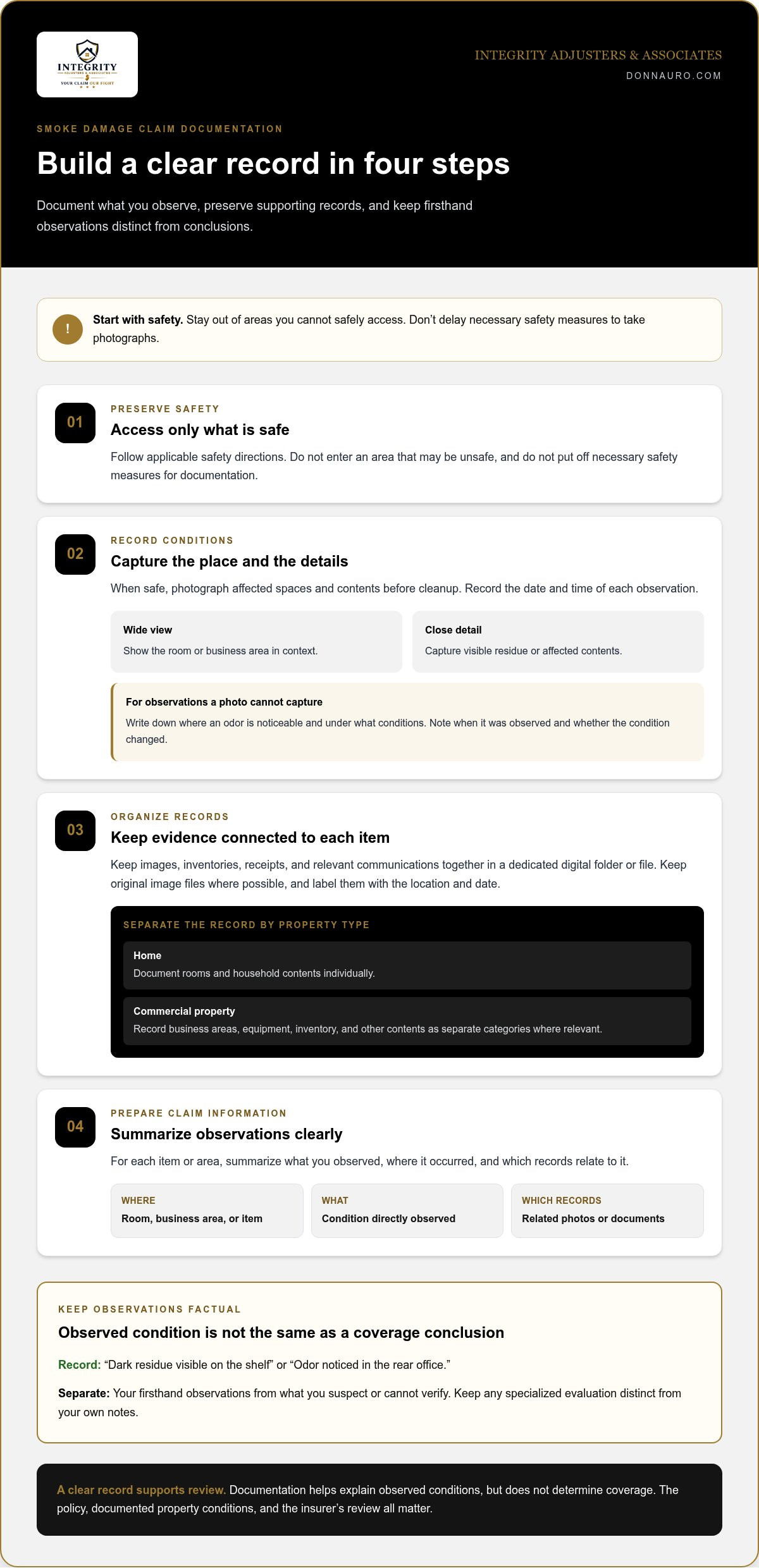
Start with safety, then work through a clear sequence: record conditions, organize supporting records, and prepare concise claim information. Don’t enter an area that may be unsafe. Follow applicable safety directions, and photograph affected spaces and contents before cleanup only when it’s safe to do so. If conditions change or cleanup must happen first, note what changed and keep any available records of the earlier condition.
Dated, organized records show what you observed, where it appeared, and how the property loss was documented over time. They provide a consistent reference when you describe the loss and respond to questions. They don’t establish coverage on their own, but they can keep important details from getting scattered across memory, messages, and loose paperwork.
- Preserve safety. Stay out of areas you can’t safely access. Don’t delay necessary safety measures to take photographs.
- Record conditions. When safe, photograph affected locations and contents before cleanup, and note the date and time of each observation.
- Organize records. Keep images, inventories, receipts, and relevant communications together in a dedicated digital folder or file.
- Prepare claim information. Summarize what you observed, where it occurred, and which records relate to each item or area.
Build a dated record of smoke, soot, and affected contents
Take wide photographs that show a room or business area in context, followed by closer images of visible residue or affected contents. Keep the original files where possible. Label them with the location and date, such as “upstairs hall, May 12,” instead of relying on memory. Add a written log for odors or other observations that a photograph can’t capture.
Record affected rooms, business areas, and individual contents separately. Note when each condition was observed and whether it changed. Keep receipts, inventories, and insurer communications in the same organized file so each document can be connected to the relevant property or question.
Preserve observations without making unsupported damage claims
Use factual descriptions such as “dark residue visible on the shelf” or “odor noticed in the rear office.” Keep those firsthand observations separate from conclusions about the cause, extent, or repair requirements. When safe and practical, photograph affected contents before moving or discarding them. If an item must be removed, record its identifying details and keep any available documentation.
A Passaic NJ public adjuster for smoke damage can help policyholders organize loss documentation and prepare a comprehensive claim for insurer review. If you need support turning scattered records into a clear presentation, policyholder-side claim support can help bring structure to the process.
What a Passaic Smoke Damage Claim Review Should Consider
A useful review organizes the loss into clear categories instead of treating every observation as one general smoke damage item. Consider building conditions, personal or business contents, supporting records, and questions about how the policy applies. Then compare what you observed with what appears in the insurer’s written assessment.
A clean-looking surface doesn’t settle every smoke-related question. It may be relevant evidence, but it doesn’t answer questions about other locations, contents, or reported odors. Likewise, don’t assume that an unmarked surface or item has damage. Keep the record specific: distinguish observed conditions from items you want the insurer to review, and connect each claim item to available evidence.
| Review area | Observation | Supporting evidence | Question for claim review |
|---|---|---|---|
| Building | Residue observed on a wall or fixture | Dated photos and location notes | Is this area included in the written scope? |
| Contents | A listed item has visible residue | Photographs, inventory, and available ownership records | How is this item addressed in the assessment? |
| Reported condition | Odor noticed in a particular room | Dated notes identifying the location | Was this observation considered, and what information is needed? |
| Policy question | A claim item has unclear treatment | Relevant policy language and insurer communication | Which policy provision or review finding applies? |
Separate building observations from contents documentation
Create separate lists for building areas and contents. For each building entry, identify the room or business area and the condition observed. For each personal or business item, record a description and attach available photographs and ownership records, such as an inventory or receipt. This structure helps the reviewer connect each item to its supporting evidence. Coverage depends on the applicable policy terms and claim circumstances.
Review the insurer’s assessment against the documented loss
Compare the written scope with your dated observations and supporting records, item by item. Mark anything that appears omitted, unclear, or described differently, then frame it as a question for further claim discussion. For example, ask whether a specific room or listed item was considered and what information supports its treatment. Understand the basis of an initial assessment before drawing conclusions about it.
A Passaic NJ public adjuster for smoke damage can help organize property loss documentation, prepare a comprehensive claim, and advocate for the policyholder through the insurer’s process. Integrity Adjusters & Associates supports residential and commercial claimants in New Jersey, with each property’s conditions and needs considered individually. Claim advocacy can help present the documented loss clearly, while coverage remains subject to the policy and insurer review.
Steps to Move a Passaic Smoke Damage Claim Forward
Once your records are organized, compare them with the insurer’s communications and documented claim scope. A focused review helps identify what has been addressed, what needs clarification, and which supporting information may be useful. Keep the discussion tied to specific documented items rather than broad conclusions about the entire loss.
Use this sequence to prepare:
- Gather the core file. Put the policy, claim correspondence, photographs, contents inventories, receipts, and dated observations together. Keep copies of documents you submit and note when they were sent.
- Write a short timeline. Record the event or discovery, when smoke-related conditions were first observed, and key communications with the insurer. Use dates where available, and distinguish firsthand observations from estimates or recollections.
- Compare records with the assessment. Review the insurer’s written scope alongside your documentation. Match each listed building area or item to the relevant photograph, inventory entry, or other supporting record.
- Prepare concise questions. Identify items that appear absent, unclear, or described differently. Ask whether a specific item or area was considered, what information informed its assessment, and whether additional documentation would help clarify the review.
For broader context on fire-related claims, the Cherry Hill fire damage public adjuster guide discusses claim advocacy in another New Jersey community. The property details and policy terms still shape each individual claim.
Prepare for a focused conversation about the claim
Keep your questions brief and tie each one to a record. For example: “The inventory lists a desk in the rear office, but I can’t find it in the written scope. Was this item reviewed?” This is easier to address than a general statement that the assessment is incomplete. Track responses and add any new documents to the same claim file.
Know when policyholder-side claim advocacy may help
A public adjuster represents the policyholder’s interests, not the insurer’s. A Passaic NJ public adjuster for smoke damage can help document property losses, organize supporting information into a comprehensive claim, and advocate through insurer communications. This can be useful when a residential or commercial loss involves multiple areas, contents, or questions that are difficult to track. The commercial property claim advocacy guide provides related context for business property owners.
Claim advocacy supports the presentation and review of documented items. It doesn’t guarantee coverage or a particular settlement. If you want policyholder-side support organizing and presenting your smoke loss, request claim advocacy support.
Work With a Passaic Public Adjuster on Your Smoke Damage Claim
Smoke damage claims can involve more than one room or category of property. A homeowner may be tracking building conditions and household belongings, while a landlord may need to distinguish building records from tenant-related information. A business property owner may also need to organize records for affected work areas, equipment, or inventory. Each loss has its own details, so the claim record should reflect the property and documented conditions.
A Passaic NJ public adjuster for smoke damage can help policyholders document property losses, build a comprehensive claim, and navigate the insurer’s process. This is policyholder-side claim advocacy, not a promise of coverage or a particular settlement. Outcomes depend on the policy, documented loss, and insurer review.
What to bring to an initial claim discussion
Organized records help keep a claim discussion specific. Gather what you have, even if some details are still being clarified:
- The insurance policy and claim correspondence
- Photographs and dated notes about observed conditions
- Separate lists of affected rooms, building areas, and contents
- Available inventories, receipts, or ownership records
- A basic timeline of the event, discovery, and communications
- Questions about items or areas that seem absent or unclear in the insurer’s assessment
You don’t need to turn this material into a final claim presentation before discussing it. A clear folder and a short list of unresolved questions make it easier to identify what is documented, what still needs explanation, and which records relate to each concern.
How Integrity Adjusters & Associates supports policyholders
Integrity Adjusters & Associates provides public-adjusting advocacy for residential and commercial property claimants in New Jersey. The firm helps document losses and prepare comprehensive claims for insurers, then advocates for policyholders as they navigate the claim process. The work centers on organizing and presenting information about the loss.
This support can help a homeowner document household contents, a landlord sort building-related records, or a business owner organize evidence tied to commercial property. The needs and records differ by property. A structured review helps keep those distinctions clear and present documented items and questions coherently for insurer consideration.
Bring the information you have and identify the next question you need answered. Discuss your Passaic smoke damage claim with Integrity Adjusters & Associates to explore policyholder-side claim advocacy for your property loss.
Make Your Next Claim Step Clear
Your next move can be small and specific: choose the unresolved claim question that matters most, then connect it to the record that supports it. A clear priority helps keep follow-up focused, especially when several rooms, contents, or communications are part of the file. Start with the point that needs the clearest explanation.
Integrity Adjusters & Associates provides residential and commercial property claim advocacy in New Jersey, helping policyholders document losses, build comprehensive claims, and work through insurer communications. A Passaic NJ public adjuster for smoke damage can offer a policyholder-side perspective as you decide how to present the next question. The claim outcome depends on its circumstances and review.
Bring your current records and the question you want addressed. Discuss your Passaic smoke damage claim with Integrity Adjusters & Associates and take a clear, organized step forward.
Frequently Asked Questions
Can a public adjuster help with smoke damage in Passaic, NJ?
Yes. A public adjuster represents the policyholder by helping document property losses, build a claim, and navigate communications with the insurer. A Passaic NJ public adjuster for smoke damage can help organize information about reported conditions, such as residue in a hallway or affected business contents. Whether representation is useful depends on the specific loss and policy. It can’t guarantee coverage, claim approval, or a particular settlement.
What should I document after smoke damage to my property?
Prioritize safety, then preserve dated photographs, notes about affected locations, observations of contents, available receipts or inventories, and insurer correspondence. Don’t enter an area that may be unsafe to reach. Label photos with the room and date, and keep a separate note if an odor is present but can’t be photographed. Record what you personally observed, not conclusions about cause or coverage. Organized records help explain the loss.
Does homeowners insurance cover smoke damage without direct fire damage?
It depends on the policy language, the facts of the event, and the insurer’s review. The absence of visible fire damage doesn’t by itself answer whether a reported smoke-related condition is covered. Preserve relevant records and review the policy rather than assuming coverage or exclusion. Note where residue or odor was observed and when. A claim discussion should be based on the documented loss and applicable policy terms.
Can smoke damage affect contents as well as walls and ceilings?
A claim review may consider building areas and contents as separate documentation categories. If you observe residue on a shelf and on items stored there, record each condition distinctly instead of combining them into a vague entry. Dated inventory notes and photographs can help identify what was observed and where. Whether a particular item is covered or requires specific work depends on the policy and assessment of the individual claim.
What if the insurance company’s assessment does not include damage I documented?
Compare the written assessment with your dated observations and the records tied to each item. Then ask focused questions about anything that appears omitted or unclear, such as whether a listed cabinet or room was considered. Keep the wording factual and include the supporting record. A public adjuster can help document losses and present a comprehensive claim. Review the basis of an assessment before drawing conclusions about it.
Can a Passaic public adjuster help with a commercial smoke damage claim?
Yes. Integrity Adjusters & Associates provides public-adjusting advocacy for commercial and residential property claims in New Jersey. For a business property loss, the firm can help document affected property, organize claim information, build a comprehensive claim, and navigate the insurer’s process. Business claim records may differ from a homeowner’s, so the presentation should reflect the specific property and documented conditions. No particular outcome is guaranteed.
When should I contact a public adjuster about smoke damage?
You may seek claim advocacy when you need help documenting a loss, organizing claim materials, or navigating insurer communications. A Passaic NJ public adjuster for smoke damage can help you organize the available information, even if you’re still gathering records. Keep relevant documents and observations together, and review your policy for applicable claim requirements. Timing can depend on the policy and circumstances, so discuss your situation with Integrity Adjusters & Associates rather than relying on a general deadline.


