

What if falling revenue is only part of the loss your business needs to document? After a fire or storm disrupts operations, a Trenton NJ business interruption claim may involve more than lost sales. Coverage generally depends on the policy wording and the connection between covered property damage and resulting operational losses. Payroll, rent, and other expenses may continue during the interruption.
That pressure is real, and organizing evidence can be difficult when you’re also trying to keep the business running. A well-supported claim connects the damage to a clear record of how operations changed and what the interruption cost. The policy and facts determine whether particular losses qualify.
This guide explains what business interruption coverage may include and how sales reports, payroll records, repair documentation, and extra-expense records can help show the impact. You’ll also find practical next steps for a claim in Trenton and learn how a public adjuster can help document damage, assemble a comprehensive commercial property claim, and advocate through the insurer process while you focus on operations.
Key Takeaways
- A Trenton NJ business interruption claim depends on the policy and the facts linking covered property damage to operational and financial losses.
- Keep property repair costs separate from lost income and continuing expenses so each part of the claim is clear.
- Build an organized record by preserving financial documents, mapping the interruption, tracking extra expenses, and comparing business performance.
- A business closure alone doesn’t establish coverage. Connect the interruption and claimed losses to relevant evidence and policy wording.
- Follow your policy’s notice and cooperation requirements. Public-adjusting support can help document damage, prepare a comprehensive claim, and navigate insurer communications.
What a Trenton, NJ Business Interruption Claim May Cover
A fire, storm, or other event can disrupt operations even after the immediate property damage is understood. A Trenton NJ business interruption claim addresses a separate question: whether the policy covers financial losses caused by the interruption. Property damage and business income losses may stem from the same event, but they are distinct parts of a claim and may be evaluated under different policy provisions.
Business interruption coverage is policy-dependent protection for qualifying income loss and related expenses when a covered event interrupts business operations. That doesn’t mean every closure, revenue decline, or continuing bill qualifies for payment. The policy’s terms, exclusions, endorsements, and the facts surrounding the interruption all matter. The Business Interruption Insurance Overview describes common coverage concepts and related provisions, but your own policy controls your claim.
How physical damage and policy wording relate
Many policies tie business interruption coverage to qualifying physical damage to insured property. The damage may affect the business premises or, depending on the policy, another property relevant to the interruption. The connection is not automatic: a business being closed or disrupted doesn’t, by itself, establish that the policy’s coverage trigger has been met.
New Jersey’s Department of Banking and Insurance provides a one-page business interruption coverage summary with insurance application or renewal materials. Use it as an orientation, not a substitute for the full policy. Review the applicable coverage grant, definitions, exclusions, and endorsements to understand the conditions relevant to your circumstances.
Which business losses may be relevant
Once you identify the potential coverage trigger, assess the financial impact separately from the cost to repair or replace damaged property. A damaged roof, equipment, or inventory may involve property coverage. Lost income and certain continuing operating expenses relate to the interruption and must be assessed under the policy’s specific language. Don’t assume every expense or revenue shortfall is covered.
- Income loss: Compare actual business performance during the interruption with relevant historical records, accounting for business-specific changes.
- Continuing expenses: Identify operating costs that continued while operations were reduced or suspended, then review how the policy treats them.
- Property damage costs: Keep repair or replacement estimates and invoices separate from calculations of interruption-related financial loss.
For example, if storm damage limits a Trenton shop’s operating capacity, property records can show what was affected, while sales reports and expense records help explain the business impact. These records support a clearer evaluation, but they don’t determine coverage on their own. The claim must connect the documented loss to the policy terms and the interruption caused by the event.
How to Document Trenton Business Interruption Losses
A useful record does more than collect receipts. It shows what changed, when operations were affected, and how each claimed financial loss relates to that change. For a Trenton NJ business interruption claim, organize evidence so the insurer can follow the sequence from damage to disruption to documented business impact.
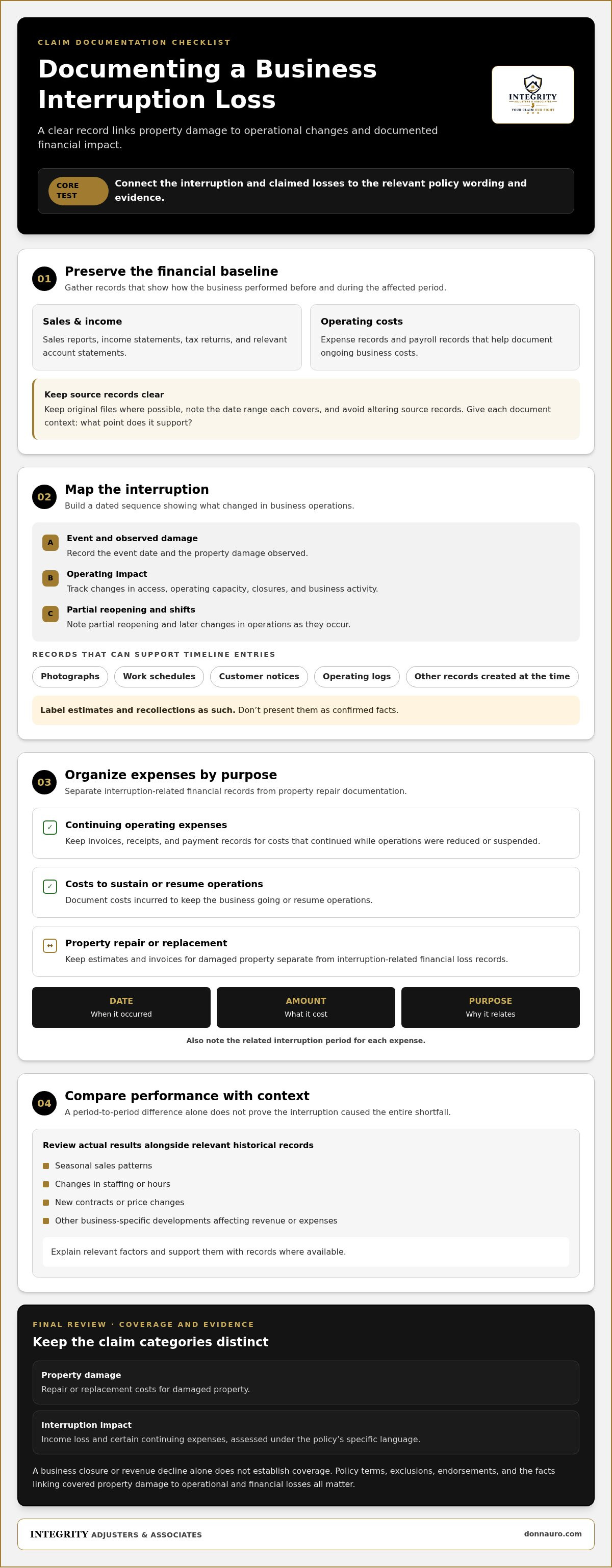
Consistent, dated records make an interruption claim easier to evaluate by connecting operational changes to financial evidence. Use this workflow to build that connection:
- Preserve the financial baseline. Gather available sales reports, income statements, expense records, tax returns, payroll records, and relevant account statements for the periods being reviewed. Keep original files where possible, note the date range each covers, and avoid altering source records. Each record should support a specific point, such as prior sales activity or payroll costs, rather than sit without context.
- Map the interruption. Create a dated timeline of the event, observed damage, changes in access or operating capacity, closures, partial reopening, and shifts in business activity. Support entries with photographs, work schedules, customer notices, operating logs, or other records created at the time. Label estimates or recollections as such rather than presenting them as confirmed facts.
- Organize expenses by purpose. Keep invoices, receipts, and payment records for continuing operating expenses and costs incurred to sustain or resume operations. Note the date, amount, business purpose, and related interruption period for each item. Separate these records from property repair or replacement documents so the different loss categories can be reviewed distinctly.
- Compare performance with context. Compare actual results during the affected period with relevant historical financial records. Consider seasonal sales patterns, changes in staffing or hours, new contracts, price changes, or other business-specific developments that could affect revenue or expenses. Explain these factors with supporting records where available. Don’t treat a simple difference between two periods as proof that the interruption caused the entire shortfall.
Build a clear financial baseline
No single comparison period or calculation method fits every business. A seasonal business may need records from comparable periods, while a newer operation may have a shorter or changing history. Tax and payroll records can help corroborate sales summaries and operating costs, but may not capture every relevant change. Preserve source documents and explain why the periods selected are useful. The policy wording and circumstances determine which comparison is relevant.
Connect the timeline to business records
Cross-reference timeline entries with financial evidence. For example, link a documented reduction in operating hours to schedules, sales reports, and payroll records from the same dates. Store insurer communications, claim submissions, and responses in the same organized file, along with copies of what was sent and when. The New Jersey Department of Banking and Insurance also provides helpful resources regarding consumer rights and disaster preparedness. Use it as general guidance, and consult with professionals like Integrity Adjusters & Associates for claim support.
Keep documented facts distinct from estimates and explanations. A concise index listing each record, date range, and loss category can reveal gaps and help keep claim materials consistent as they are assembled.
Why Trenton Business Interruption Claims Are Disputed
A business closure can create immediate financial pressure, but closure alone doesn’t establish that an insurance policy covers the resulting loss. A Trenton NJ business interruption claim may be disputed because the insurer and business owner interpret the cause of damage, the policy’s coverage trigger, the amount of lost income, or the interruption period differently. A clear record helps explain the claim, but the policy wording and supporting facts remain central.
Use this comparison to identify questions that may need a direct answer:
| Insurer question | Relevant business evidence | Policy issue to review |
|---|---|---|
| What caused the damage, and did it affect insured property? | Dated photographs, inspection records, incident reports, and a timeline of observed damage | Coverage trigger, definitions, exclusions, and applicable endorsements |
| How did the event change business operations? | Closure notices, operating schedules, transaction records, and dated notes about reduced capacity | How the policy defines interruption and any conditions connecting it to covered damage |
| How was the claimed income loss calculated? | Sales and income records, payroll and expense documents, and context about seasonal or business-specific changes | Policy provisions that apply to the calculation and treatment of expenses |
| What dates are included in the claimed interruption period? | A dated operational timeline, reopening records, and evidence of changes in business activity | Policy wording that governs the applicable period and any relevant limitations |
Coverage trigger, cause, and exclusions
Disagreement may begin with the cause of damage. Records showing what was damaged and when can support the factual account, but they don’t automatically establish how the policy applies. Distinguish observed damage from assumptions about its cause or the scope of coverage. Exclusions and endorsements vary by policy, so don’t treat a provision in one policy as a universal rule. Consider the specific wording alongside the documented event.
Loss amount and interruption period
Incomplete or inconsistent financial records can make it harder to compare expected business performance with actual results. Missing sales reports, unexplained payroll changes, or unrecorded business developments may leave questions about how much loss followed the interruption. A dated operational timeline also matters because it connects changes in capacity or activity to the period being claimed. There is no standard duration for every claim; policy terms and circumstances control.
A lower assessment or disagreement from the insurer doesn’t, by itself, establish that coverage applies or determine the correct amount. Respond by identifying the specific issue, locating records that address it, and separating documented facts from estimates or interpretations. An organized response gives each disputed point a clear evidentiary basis without overstating what the policy may cover.
What Trenton Business Owners Should Do After an Interruption
After damage disrupts operations, priorities compete: protect people, limit further harm, keep the business functioning, and preserve facts for an insurance claim. Work through these steps in order where circumstances allow. Safety comes first. Keep a calm, dated record of decisions and changes as the situation develops.
- Put safety first. Keep employees and customers away from unsafe areas. Don’t enter a space if conditions may be hazardous. Record what you can observe safely, including affected areas and operational impacts.
- Take reasonable steps to protect property. Document damage before taking protective action when it’s safe and practical. Keep notes, photographs, and records of steps taken to limit further damage or maintain essential operations. Preserve invoices and receipts, but don’t assume every resulting cost is covered.
- Notify the insurer and follow policy requirements. Review your policy’s notice and cooperation provisions, then communicate according to those terms. Don’t assume a deadline. Keep copies of notices, emails, submitted documents, and responses, and record the date and subject of calls.
- Track operational changes and expenses. Note closures, reduced capacity, affected services, changed hours, temporary operating arrangements, and when each change begins or ends. Retain relevant sales records, invoices, receipts, payroll information, and other documents showing how operations changed.
- Assemble a dated claim timeline. Arrange damage documentation, business records, insurer correspondence, and operating updates by date. Check for gaps or inconsistencies, such as different closure dates in separate records, and clarify them before submitting materials.
Preserve records while managing operations
Keep a central claim file, digital or paper, with clear folders for damage, operating changes, financial records, expenses, and insurer communications. Add a short note explaining what each document shows. For example, pair an updated operating schedule with sales records from the same period. This makes it easier to distinguish recorded facts from estimates while you continue managing the business.
Prepare a clear claim timeline
Use dates and specific business activities in your account. Describe what was affected, such as customer access, a service area, or the ability to use particular equipment. Note temporary changes and when they occurred. Avoid broad statements that imply the whole business stopped if some operations continued. A consistent timeline helps reviewers follow the interruption and compare it with supporting records.
Organizing evidence alongside the policy’s notice and cooperation requirements can make a Trenton NJ business interruption claim easier to present and review. Integrity Adjusters & Associates provides public-adjusting advocacy for commercial property claims, helping document damage, prepare a comprehensive claim, and navigate the insurer process while you focus on business operations.
How Integrity Adjusters & Associates Supports a Trenton Business Interruption Claim
Property damage and lost business income can create two related but distinct sets of records. Integrity Adjusters & Associates helps commercial policyholders document damage, assemble a comprehensive claim, and navigate the insurer process. For a Trenton NJ business interruption claim, that means bringing property-loss evidence and business records together in a clear presentation, so the claimed losses can be considered in context.
What public-adjusting advocacy contributes
Public adjusting is policyholder-side claim advocacy. Integrity Adjusters & Associates helps organize documentation, prepare claim materials for presentation to the insurer, and support policyholders through insurer communications and the claim process. The work focuses on the claim and its evidence, not legal representation. Coverage decisions and outcomes depend on the policy wording, applicable endorsements, and the facts of the loss.
Organization matters. Property photographs, damage records, and repair-related documents can establish what was affected, while business records and operating updates help explain the interruption’s financial and practical effects. Arranging these materials consistently makes it easier to see which evidence supports each part of the claim and identify questions that need clarification. The firm helps assemble and present the record; the insurer reviews the policy.
Prepare for a claim-support conversation
You don’t need a perfect file to begin organizing the facts. Gather the materials you have, note what is missing, and prepare a concise account of what happened and how operations changed. These categories can help focus the discussion:
- Policy documents: Include the policy and any endorsements or related documents available to you.
- Damage records: Collect photographs, inspection notes, invoices, and other records describing the property damage.
- Business records: Gather relevant financial documents, such as sales, payroll, and expense records, along with records of changes to operations.
- Insurer correspondence: Keep copies of notices, submitted materials, questions, and responses in one place.
- Timeline: Note the event date, observed damage, operational changes, and how business activity changed over time.
Keep confirmed details separate from estimates or recollections. If dates or documents don’t align, flag the difference rather than filling the gap with an assumption. A clear timeline explains the sequence of events and gives claim-support discussions a practical starting point.
Integrity Adjusters & Associates provides public-adjusting advocacy for New Jersey commercial property claims. The firm’s website is Integrity Adjusters & Associates.
Take the Next Step With a Clear Plan
You don’t need to wait until every document is perfectly organized. Start with the records you have, note what remains uncertain, and identify the questions you need answered about your claim. A focused conversation can help you decide how to move forward with the policy wording and documented facts at the center of the process.
For a Trenton NJ business interruption claim, Integrity Adjusters & Associates provides commercial property claim advocacy, helping policyholders document damage, build a comprehensive claim, and navigate insurer communications. Public adjusting supports the claim process, while coverage and outcomes depend on the policy and facts.
Discuss your business interruption claim with Integrity Adjusters & Associates. Bring the records you have and a concise timeline to discuss organizing claim evidence and navigating the insurer process while you focus on business operations.
Frequently Asked Questions
Does business interruption insurance require physical damage to the property?
Often, a policy requires qualifying physical damage, but the exact trigger depends on its wording and endorsements. For a Trenton NJ business interruption claim, identify the damaged property and connect it to the business disruption rather than relying only on the fact that operations stopped. New Jersey courts have generally required physical loss or damage under business interruption policies; the New Jersey Supreme Court’s 2024 AC Ocean Walk decision found COVID-19 shutdown losses did not meet that standard without physical alteration.
Can a business interruption claim include continuing operating expenses?
Potentially, if the policy’s terms provide for them. Expenses such as rent, payroll, or utilities may continue even while income falls, but the treatment of each cost depends on the policy and claim facts. Separate expenses that continued from costs that stopped or declined during the interruption. Payroll records, for example, may show which staff remained on the schedule, while utility bills can help document ongoing costs. Don’t assume every continuing expense is reimbursable.
How long does a business interruption insurance claim take in New Jersey?
There’s no single timeline for every New Jersey claim. Review may depend on the complexity of the property damage, the completeness of financial records, questions about the policy, and how long it takes to clarify disputed information. Keep a dated log of submissions and insurer communications so you can track what has been provided and which issues remain open. Follow your policy’s notice and cooperation requirements rather than relying on a general estimate.
Can a business claim interruption losses if it continues operating at reduced capacity?
Possibly. A full shutdown isn’t necessarily the only situation to assess, but reduced operations alone don’t establish coverage. Document which services, work areas, or operating hours changed, and compare activity during the affected period with appropriate business records. Appointment logs or transaction reports, for example, may help show a change in capacity. The policy must support the claimed loss, and the evidence should explain how the covered event affected operations.
What happens if a supplier interruption affects my Trenton business?
Supplier-related losses may depend on whether the policy includes contingent business interruption coverage and what conditions that provision sets. Some policies may require physical damage at the supplier’s property, along with a covered cause of loss. Keep supplier notices, purchase orders, delivery records, and communications showing how the disruption affected your business. Review the policy’s relevant terms and exclusions. A supplier delay by itself doesn’t guarantee that resulting income loss is covered.
Is lost revenue the same as lost profit in a business interruption claim?
No. Revenue generally describes sales coming into the business, while profit reflects what remains after relevant expenses are accounted for. A revenue decline doesn’t automatically equal the amount of an interruption loss. The policy’s calculation language and the business’s records matter, including expenses that changed or were avoided during the disruption. Keep sales summaries alongside expense records, and explain unusual changes such as a seasonal peak or a major contract starting or ending.
Can temporary relocation expenses be considered in a business interruption claim?
They may be relevant if the policy covers applicable extra expenses and the circumstances meet its requirements. Costs for moving equipment, using temporary premises, or adapting operations should be documented, but don’t assume every relocation cost qualifies. Retain contracts, invoices, receipts, and records explaining why the expense was incurred and how it relates to the interruption. Review the policy’s extra-expense wording and any limits or conditions before treating those costs as covered losses.
What records should I gather before discussing a business interruption claim?
Gather the policy and endorsements, dated photographs or other damage records, insurer correspondence, and business documents covering the affected period. Useful financial materials may include sales reports, income statements, payroll records, tax returns, invoices, and account statements. Add a short timeline of the damage, operating changes, and key communications. If a record is missing or figures don’t align, flag the gap and explain what you know rather than filling it with an unsupported estimate.


