

If you searched “insurance company underpaying claim” after receiving a settlement that won’t cover repairs, start by checking the estimate against the damage and repair work you documented. A low payment may point to a discrepancy, but it doesn’t by itself explain why the amount differs or establish bad faith. Insurance estimates can be difficult to decode, so focus on specific, verifiable differences before deciding how to respond.
Compare the insurer’s estimate with your damage records and the work needed to repair the property. Look for areas that aren’t included, incomplete repair details, or differences in how materials and damage are described. Clear records help you explain specific concerns and decide what questions to raise.
This article explains how New Jersey property owners can review a low claim payment, document discrepancies, and consider next steps. You’ll learn what to compare, how to organize supporting evidence, and when public-adjusting advocacy may help present a more complete claim. The goal is to make your response specific and documentation-based, rather than relying on guesswork.
Key Takeaways
- An insurance company underpaying claim may reflect a gap in the estimate, but a low payment alone doesn’t establish why it happened.
- Compare the estimate’s scope, quantities, materials, and calculations with your damage records to identify specific differences.
- Review your policy to understand how actual cash value and replacement cost apply to your payment.
- Organize claim communications and supporting records, and request written clarification about disputed items.
- Public-adjusting advocacy can help document damage and present a comprehensive residential or commercial property claim.
What does it mean when an insurance company underpays a property claim?
A payment that seems too small to restore your home or business can leave you unsure what the insurer has agreed to cover. An underpayment may mean there’s a gap between the covered loss and the amount paid, but the payment alone doesn’t explain the reason. If you’re searching “insurance company underpaying claim,” begin by comparing the insurer’s estimate and payment calculation with the damage and repair work you’ve documented.
A partial payment differs from a denial. With a partial payment, the insurer pays some amount on the claim; a denial rejects coverage for all or part of the loss. A deductible also affects the payment under the policy’s terms, but it isn’t automatically evidence that damage was overlooked. Policy limits can cap payment for particular types of loss, even when repair needs exceed the applicable limit.
These distinctions help you identify what kind of question to raise. An item missing from the estimate may involve the repair scope or supporting documentation. An item identified as excluded or subject to a limit raises a different question about how the policy applies. Review the insurer’s explanation and relevant policy wording before treating every difference as the same kind of shortfall.
How can you recognize a possible claim shortfall?
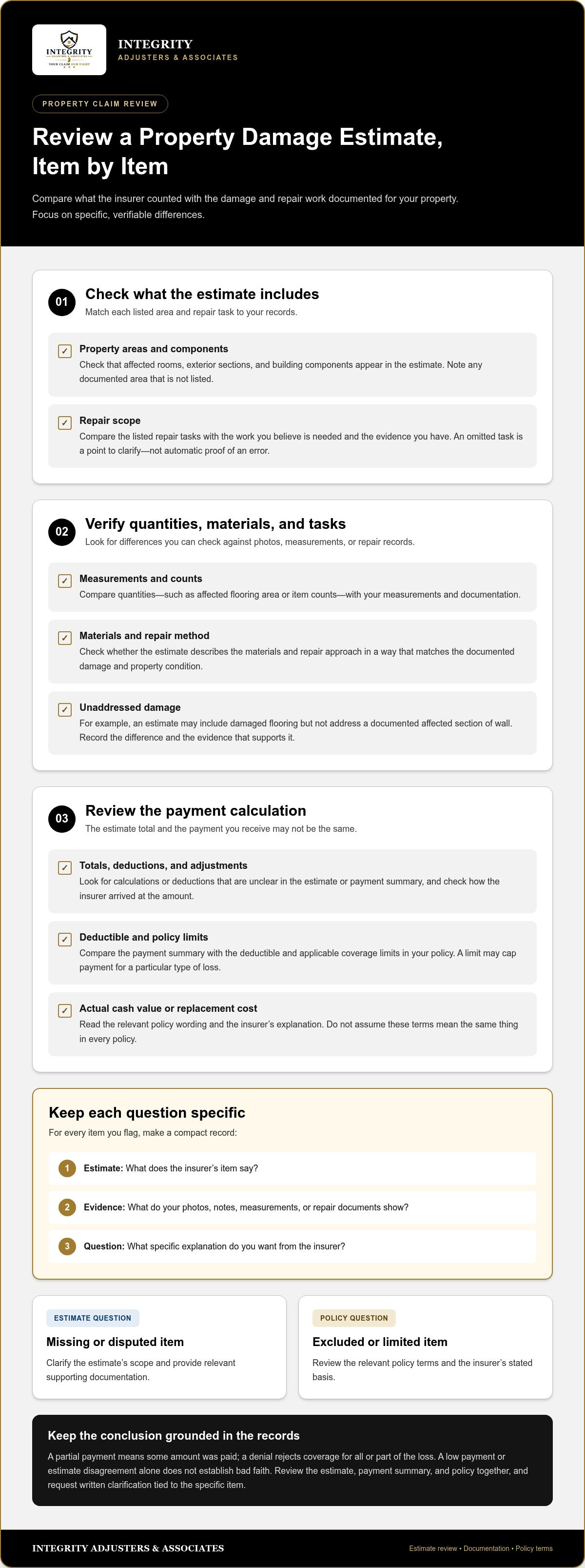
Use the estimate as a working document. Compare each listed area and repair task with your photos, inspection notes, contractor documents, and other available records. Look for rooms or surfaces that aren’t listed, quantities that don’t match the measurements, materials described differently, or necessary tasks that appear to be missing. For example, an estimate might include replacing damaged flooring but not address a documented section of affected wall. That difference is worth clarifying, but it isn’t automatically proof of an error.
Separate an omitted or disputed estimate item from one the insurer says is excluded or limited. The first may call for more evidence or an explanation of the estimate’s scope. The second calls for reviewing the policy terms and the insurer’s stated basis. For each item, note what the estimate says, what your records show, and what you want the insurer to explain.
Why can the first payment differ from expected repair needs?
The insurer’s estimate may use different measurements, define the damaged area differently, or assume a repair method that doesn’t match the work you believe is needed. Materials and repair tasks may also be described differently. Those differences can affect the estimate, but they aren’t automatically mistakes. Compare the assumptions with the property’s condition and your supporting documentation.
The payment calculation may also reflect a deductible, policy terms, or an applicable limit. Check how the insurer arrived at the amount and what each deduction or restriction represents. If the policy refers to actual cash value or replacement cost, read the relevant wording rather than assuming the terms mean the same thing in every policy. Reviewing the estimate, payment summary, and policy together can show what remains unresolved.
A low payment doesn’t, by itself, establish insurer misconduct or bad faith. That is a distinct issue, not a conclusion to draw from an estimate disagreement alone. For general background, see Insurance bad faith; the specific facts and policy terms matter when evaluating a claim.
How to read the insurer's property damage estimate
An estimate is more than a total. It shows what the insurer counted, how it described the work, and which calculations it used. Review it alongside your photos, inspection notes, measurements, and repair documents. If you’re concerned about an insurance company underpaying claim, a line-by-line comparison can turn a general concern into specific questions about the scope or payment calculation.
Which estimate details deserve a closer look?
Start with the property areas listed. Check that rooms, exterior sections, and damaged components match your records. Then compare quantities and measurements, such as the area of affected flooring or the number of damaged items. Review the listed materials and repair tasks as well. If the estimate describes a limited repair but your evidence shows damage across a larger area, record the difference and the supporting document or photo.
Not every variation means the estimate is wrong. An assessor may have observed a different condition, used another measurement, or assumed a different repair approach. Focus on what can be checked. Mark unclear descriptions, missing tasks, and unexplained differences, then request a written explanation tied to the specific estimate item.
- Scope: Are all affected rooms, building areas, and components included?
- Quantities: Do measurements and item counts align with your documentation?
- Materials and tasks: Do the listed materials and work reflect the observed damage?
- Calculations: Are totals, deductions, and adjustments explained in the estimate or payment summary?
How do policy terms affect the payment?
The estimate and the amount you receive may differ because of the deductible or a policy limit. A deductible is the amount applied to the loss under your policy when determining payment. A limit sets a maximum for covered loss under the applicable policy terms. Review the payment summary to see whether either affects the amount, then compare the figures with the deductible and coverage limits in your policy.
Actual cash value and replacement cost are policy terms, not interchangeable labels. In general, actual cash value may account for depreciation, while replacement cost refers to the cost of replacing covered property under the policy’s provisions. The exact definitions, calculation method, and conditions depend on your contract. Check the definitions, endorsements, coverage limits, and deductible wording that apply to the damaged property. Don’t assume a term has the same effect in every policy.
For each difference you identify, keep a copy of the estimate and note the related evidence, the policy wording you’re relying on, and the question that remains. Coverage depends on the individual policy and claim facts. If the estimate and records are difficult to reconcile, property claim estimate review can help bring the discrepancies and supporting documentation into focus.
A low claim payment does not automatically mean bad faith
A difference between an insurer’s estimate and your repair documentation deserves careful review, but it doesn’t, by itself, show that the insurer acted improperly. Searches for “insurance company underpaying claim” may bring up strong legal language, but a disputed amount can have several explanations. Start by identifying what the insurer says it covered, what it left out, and why.
Possible explanations include how a policy term applies, a deductible or limit, the insurer’s assumptions about the damage, missing documentation, or a disagreement over repair scope. For example, an estimate may include repair work for one section of a building while your records show damage in a connected area. The key question is whether the written estimate and explanation address the documented damage and applicable policy terms, not simply whether the numbers differ.
What may explain a difference in the payment?
Read the estimate, payment summary, and any written coverage explanation together. Check which items the insurer included, adjusted, or omitted, and whether a deductible or limit affected the payment. Then compare the insurer’s repair assumptions with your evidence. The insurer’s explanation gives you a starting point for review, but check whether it accounts for each relevant area and task.
Keep the discussion specific. Instead of saying only that the payment is too low, identify the estimate item, the condition or repair task you believe it misses, and the record that supports your concern. Ask the insurer to explain its decision in writing. A clear response can help distinguish a coverage question from a measurement, documentation, or scope disagreement.
When is the disagreement more than a simple estimate difference?
Pay closer attention if a documented discrepancy remains unanswered after you provide relevant records, or if the insurer’s explanation doesn’t address the item you raised. Repeated omissions or unresolved questions don’t automatically establish misconduct, but they do indicate that the claim needs an organized review and may benefit from informed guidance.
Keep a dated record of what you submitted, the insurer’s responses, and any changes to the estimate. Organize each disputed item with supporting photos, measurements, invoices, or other relevant documents. This creates a clear record of the issue and the steps taken to resolve it.
Claim advocacy and legal advice are different roles. A public adjuster can help policyholders document property damage, assemble a comprehensive claim, and navigate the insurer’s process. That work does not determine whether a legal claim exists or provide legal representation. Standards for bad faith vary by jurisdiction and depend on the specific facts and applicable law. If you’re considering legal rights, litigation, or whether an insurer’s conduct meets a legal standard, speak with a qualified attorney. Keep the claim review grounded in documents, and avoid drawing a legal conclusion from the payment amount alone.
What to do if your insurer underpays your claim
A low payment can be frustrating, but a clear, documented response is more useful than a rushed accusation. If you believe your insurance company is underpaying a claim, preserve your records, compare the estimate with your damage evidence, and raise specific questions in writing. Follow the instructions in your policy and claim correspondence as you review next steps.
- Preserve your claim records. Keep the policy, estimates, payment summaries, insurer letters, photographs, invoices, and messages together. Save copies of anything you submit and note when you sent it.
- Review the estimate and payment calculation. Mark line items, measurements, repair tasks, or deductions you don’t understand. Compare them with your photos, inspection records, and other documentation.
- Identify each discrepancy. Connect a specific estimate item to the evidence that supports your concern. Separate questions about repair scope from questions about policy terms, deductibles, or limits.
- Request written clarification. Ask the insurer to explain a calculation, omission, or assumption. If you submit additional documents or request a supplement or appeal, follow the policy and insurer’s stated procedures. The process depends on the policy and claim.
Check your policy and correspondence for deadlines or instructions before acting. Requirements and time limits can depend on the policy and claim circumstances, so don’t assume a general timeline applies to your situation. Keep a record of any deadline you identify and seek clarification through appropriate channels if the instructions are unclear.
How should you organize a documented estimate disagreement?
Create a simple comparison list with one entry for each disputed item. Note what the insurer’s estimate says, what your records show, and which document or photograph supports your concern. For example, identify the area or repair task in question and attach the relevant image or measurement. Keep insurer letters, estimates, invoices, photographs, and communications in one organized file. Ask focused written questions, such as which measurement was used or why a documented task was omitted.
For a water-loss claim, the residential water damage claim guide offers related context on documenting a property claim. Use your own evidence and policy terms to guide your response.
When should you seek professional claim advocacy?
Consider professional claim advocacy if the damage is complex, the records are difficult to organize, or documented differences remain unresolved. A public adjuster can help document property damage, build a comprehensive claim, and navigate the insurer’s process. This support is relevant to residential and commercial property losses, including water, storm, and fire claims. Business owners handling a commercial loss can also review commercial property claim help.
For support organizing documentation and presenting a property claim, connect with a public adjuster. Claim advocacy is not legal representation. If you have questions about legal rights or deadlines, consult a qualified New Jersey attorney.
How a New Jersey public adjuster can help address a property claim shortfall
A property claim involves more than a single estimate. Damage records, policy terms, repair documentation, and insurer communications all affect how the loss is presented and reviewed. For New Jersey homeowners and commercial property owners, public-adjusting advocacy can bring those pieces together when a claim payment appears inconsistent with the documented damage.
What does public adjusting advocacy involve?
A public adjuster works on behalf of the policyholder to document and advocate for a property claim. The work can include organizing damage information, reviewing claim materials, building a comprehensive presentation of the loss, and helping the policyholder navigate the insurer’s process. Well-organized evidence can connect each documented concern to the relevant part of the claim.
Integrity Adjusters & Associates supports residential water, storm, and fire claims, along with commercial fire, storm, and business property claims. The focus is the property claim and its supporting documentation. Public adjusting is not legal representation and does not involve performing physical repairs. It also doesn’t guarantee a particular settlement. The purpose is to present the documented claim clearly and support the policyholder through the insurance process.
If you’re concerned about an insurance company underpaying claim, advocacy may help when the loss is complex, the records are extensive, or specific documented differences remain unresolved. A public adjuster can help organize evidence and communicate the scope of the loss. Legal questions require advice from a qualified attorney.
What is a practical next step for New Jersey property owners?
Gather records that show what happened and how the insurer evaluated it. A complete starting file can make a claim discussion more focused:
- Your insurance policy and relevant endorsements
- The insurer’s estimate, payment summary, and written explanations
- Photographs, videos, inspection records, and damage notes
- Repair estimates, invoices, and other documents related to the loss
- Letters, emails, and notes from conversations with the insurer
Keep the materials together and make a short list of questions or items you believe need further review. The applicable policy and claim circumstances guide the process, so don’t assume one procedure or deadline applies to every loss. If documentation issues remain unresolved, a public adjuster can help assess the records and organize a comprehensive claim presentation.
Residential and commercial property owners in New Jersey can discuss their claim documentation and advocacy needs with Integrity Adjusters & Associates. Bring the estimate, payment information, policy, and claim correspondence to focus the discussion on the documented loss and appropriate next steps. Discuss your property insurance claim with a claim advocacy team.
Turn your claim concerns into a clear next step
A claim disagreement doesn’t have to remain a stack of unanswered questions. Identify what you need clarified next, then focus on the records and specific concerns that support that question. If the phrase “insurance company underpaying claim” brought you here, you can review the shortfall without assuming its cause or the outcome of a claim review.
Integrity Adjusters & Associates provides residential and commercial property claim advocacy for policyholders who want help organizing the next step. The team helps document damage, prepare a comprehensive claim, and navigate the insurer’s process. The aim is to present the documented loss clearly, not to promise a particular settlement.
You don’t need to resolve every question at once. A focused discussion can help you determine how to approach your claim documentation and advocacy needs. Discuss your property insurance claim with Integrity Adjusters & Associates. Bring your records and questions to start a practical discussion about your property claim.
Frequently Asked Questions
How do I know if my insurance company underpaid my property claim?
You may have a shortfall if the insurer’s payment calculation doesn’t account for damage or repair work supported by your records. A search for “insurance company underpaying claim” often starts with a gap between the payment and a contractor’s estimate, but that difference alone isn’t conclusive. Check whether both estimates address the same areas, materials, and repair tasks, then compare the insurer’s coverage decisions with your policy and claim documents.
Can I dispute an insurance payment that is lower than my repair estimate?
Yes, you can raise a documented disagreement with the insurer. A contractor’s estimate can support your concern, but it doesn’t automatically establish what the policy covers or what the insurer should pay. Ask the insurer to review specific differences, such as a missing repair task or a quantity that doesn’t match the contractor’s measurements. Follow the claim instructions and keep copies of your request and any response.
What should I do first if my insurance claim payment seems too low?
Gather the insurer’s estimate, payment summary, policy, and claim correspondence in one place. Check that you have the complete estimate, including pages that explain calculations or deductions. Then note the specific item that concerns you and the document that supports your question. This focused review gives you a clear basis for asking the insurer for clarification.
Does a low insurance settlement mean the insurer acted in bad faith?
No. A low settlement or disagreement over repair scope doesn’t establish bad faith by itself. In New Jersey, a first-party property bad-faith claim involves a legal standard concerning whether the insurer had a fairly debatable reason for its position and its knowledge of that basis. Applying that standard depends on the evidence and circumstances. For advice about possible legal rights or action, consult a qualified New Jersey attorney.
Can a public adjuster help with an underpaid property insurance claim in New Jersey?
Yes. A public adjuster can help a New Jersey policyholder organize claim records, document property damage, and present a comprehensive claim to the insurer. For example, they can connect photos and other damage records with items in the insurer’s estimate so the issues are clearly presented. Public adjusting is claim advocacy, not legal representation or repair work, and it can’t guarantee a particular settlement.
How is actual cash value different from replacement cost in an insurance claim?
Actual cash value and replacement cost are policy-defined ways of valuing covered property, and their precise meaning depends on your contract. Actual cash value may account for depreciation, while replacement cost may be based on the cost to replace covered property under the policy’s terms. Review the definitions and any conditions that apply to your loss. Check the insurer’s calculation and policy wording before assuming which method applies.
What happens if the insurer and contractor disagree about the damage estimate?
Narrow the disagreement to specific items rather than comparing only the totals. Ask the contractor to explain the repair scope, measurements, and materials behind the estimate, then compare those details with the insurer’s line items. Provide relevant supporting documents to the insurer and request a written response to the disputed points. If the estimates still don’t align, organized documentation can help clarify whether the difference concerns damage, repair assumptions, or policy coverage.


