

After a New Jersey storm, a facilities manager may find torn roofing, water inside the building, and damaged equipment, yet still be unsure what the policy may cover. A commercial roof damage insurance claim is easier to assess when the reported cause, building damage, and relevant policy language are clearly connected. A few roof photos alone may not show the full loss.
If you’re facing a large or complex loss, it can be difficult to know what to document first or whether an estimate accounts for all related damage. This guide explains how to preserve evidence, organize roof, interior, equipment, and repair records, and review the insurer’s assessment. It also covers practical steps for keeping the claim file clear as the process moves forward.
A public adjuster can support policyholders by documenting commercial property losses, assembling a comprehensive claim, and advocating through the insurance process. The goal is a clear, organized presentation that gives the insurer a fuller picture of the reported damage and helps your business make informed decisions about what comes next.
Key Takeaways
- Connect the documented cause of roof damage, the affected property, and relevant policy language to help the insurer assess the loss.
- Build a commercial roof damage insurance claim file with dated photos, inspection records, maintenance history, and separate inventories of affected property.
- Follow a clear sequence after damage: protect people, take reasonable steps to prevent further harm, document the loss, notify the insurer, and track communications.
- Review policy wording, exclusions, conditions, and endorsements together. The reported cause and the building’s history may factor into the insurer’s assessment.
- A public adjuster can help document commercial losses, organize a comprehensive claim, and advocate for the policyholder through insurer communications.
Commercial Roof Damage Insurance Claims: What Makes These Losses Complex?
A commercial roof damage insurance claim asks the insurer to evaluate property loss and determine whether the policy may cover it. Filing a claim is not the same as receiving approval. Coverage depends on the policy wording, the circumstances of the damage, applicable exclusions and conditions, and the insurer’s evaluation.
One reason these claims can be complex is that a roof is a system, not just a surface. A storm may displace a membrane or flashing, allow water to reach insulation, and cause damage inside the building. The same event could affect ceiling materials, electrical or mechanical equipment, inventory, and spaces used by employees or customers. Each part of the reported loss may need its own evidence. A repair project focuses on work to the building; an insurance claim documents and presents the reported loss for review. The two are related, but they serve different purposes.
Which commercial roof problems may lead to an insurance claim?
Sudden storm-related damage, such as displaced roofing material or impact damage, may prompt a claim, but a visible condition alone doesn’t establish coverage. Insurers may consider the reported event alongside the roof’s age, maintenance history, prior repairs, and pre-existing conditions. A useful record distinguishes what was observed after the event from conditions that may have developed over time.
Evidence needs also depend on the building. A low-slope roof over a warehouse may have different materials, access points, and interior exposures than a roof over occupied office space. Record the affected roof section and the building area below it, then connect those observations to any resulting interior damage. Include wide views for context and closer images of visible details when safe. One photograph rarely tells the full story.
Why a roof claim can affect more than the roof
Water can travel from a roof opening through insulation or ceiling cavities before appearing elsewhere inside. A stain below a damaged area may not show the full path or extent of intrusion. Record affected rooms, equipment, stock, and other business property separately, with dates and location details where available.
Keep physical damage records distinct from information about operational disruption. Photos, inspection findings, and damaged-item inventories describe property conditions. Separate business records can help explain whether access, production, or normal use was affected. Whether a policy addresses particular losses depends on its terms and the facts, so don’t assume every operational impact is covered.
One terminology distinction can also prevent confusion: Commercial General Liability Insurance concerns liability exposures, while a business’s own roof and contents are generally evaluated under its property coverage. The policy itself controls. A clear claim presentation connects the reported cause to the roof condition, traces resulting damage through the building, and keeps repair planning separate from the documentation used to support the claim.
How Policy Language and the Cause of Roof Damage Shape Coverage
A roof’s condition is only one part of a coverage decision. For a commercial roof damage insurance claim, read the relevant policy as a whole: coverage provisions, exclusions, conditions, deductibles, and endorsements may all affect how a reported loss is evaluated. Two businesses with similar roof damage may have different terms, so general assumptions can’t replace reviewing the actual policy and claim facts.
A visible roof defect alone does not determine claim coverage. Important questions include what happened, when it happened, what damage followed, and how the policy addresses those circumstances. A storm may have occurred near the time damage was discovered, for example, but timing alone doesn’t establish the cause or decide whether the loss falls within coverage.
Insurers may consider storm impact alongside the roof’s age, maintenance history, previous repairs, and pre-existing conditions. These details can help explain whether the observed condition is consistent with a particular event or may have developed over time. Avoid labeling damage as storm-caused or ordinary wear based only on appearance. A clear claim file separates observed facts from conclusions that require further assessment.
How insurers assess storm damage versus wear and maintenance
Dated roof records and pre-loss photographs can provide useful context. They may show the roof’s condition before the reported event and help identify what appears to have changed. Build a timeline using the date damage was noticed, available weather records, prior inspections, maintenance entries, and later observations. Keep source documents and dates together so the sequence is easy to follow.
Physical indicators may require technical interpretation. If the cause or extent of damage is disputed or unclear, an assessment by a qualified roofing or engineering professional may help explain the conditions. Keep technical findings distinct from the insurer’s coverage decision, which depends on the policy and claim facts.
Which policy details deserve close attention?
Review the full policy, including applicable coverage language, exclusions, deductibles, reporting conditions, and endorsements. Look for provisions that address roofs, the reported types of loss, or how a loss must be documented. Roof-related limitations and endorsements can differ among commercial policies, so don’t assume wording from another building’s policy applies to yours.
- Coverage: Identify the provisions relevant to the reported property and cause of loss.
- Exclusions and endorsements: Read them alongside the coverage language, not in isolation.
- Conditions: Note documentation and reporting requirements stated in the policy.
- Deductible: Record the applicable terms for the reported loss.
For New Jersey businesses, use the policy documents to identify claim reporting requirements and deadlines. Integrity Adjusters & Associates helps policyholders organize commercial property loss documentation and navigate insurer communications. Learn more about commercial claim support.
Build a Commercial Roof Claim File That Shows the Full Loss
A well-organized file connects roof observations to damage elsewhere in the building. For a commercial roof damage insurance claim, preserve original records where possible and label new material with the date, location, and person who created it. Keep copies in one secure digital folder, with a separate backup, so documents remain easy to retrieve as the claim progresses.
Core evidence for a commercial roof claim includes dated photographs and videos, inspection reports, maintenance and prior repair records, property inventories, receipts, operating records, and insurer communications. Not every claim will involve every category. Preserve records related to the reported loss and make their context clear.
Record roof conditions and related building damage
Document visible conditions from a safe location. Don’t climb onto a roof or enter an unsafe area to get a better image. Start with wide views that show where damage is located, then take closer views of visible details when safe. Include the date, building area, and a brief factual description. If a professional performs an inspection, retain the report and supporting photographs.
A simple location map can prevent confusion across a large property. Label roof sections and connect them to interior spaces below, such as a loading area, office, or stockroom. Record where water was observed and when. Keep observations separate from conclusions: a photograph may show a damaged area, but it doesn’t establish the technical cause, coverage decision, or final repair scope.
Preserve pre-loss maintenance logs, inspection records, and prior repair documents alongside current evidence. These records can show what work was previously completed and provide context for the observed condition. Keep documents intact, and note when and where each record came from.
Connect property records to business operations
Track losses by category rather than combining everything in one list. For affected equipment or stock, record the item, location, observed condition, and available identifying details. Photograph items before disposal or repair when it’s safe and practical, and retain related inventory records, service documents, or purchase information. Keep receipts and records for temporary protective measures, noting the date and the area they relate to.
Roof damage may also affect access, occupancy, or normal business activity. Preserve relevant schedules, facility logs, or other operating records that show what changed and when. Keep these separate from physical damage evidence. This distinction helps reviewers see which records describe damaged property and which document possible disruption.
Use a dated claim log to record inspections, communications, document submissions, and follow-up requests. For each entry, note the date, participants, subject, and next step. Save copies of emails, letters, invoices, and insurer documents in chronological order. A consistent file makes it easier to spot missing information, answer questions accurately, and show how the reported loss was documented over time.
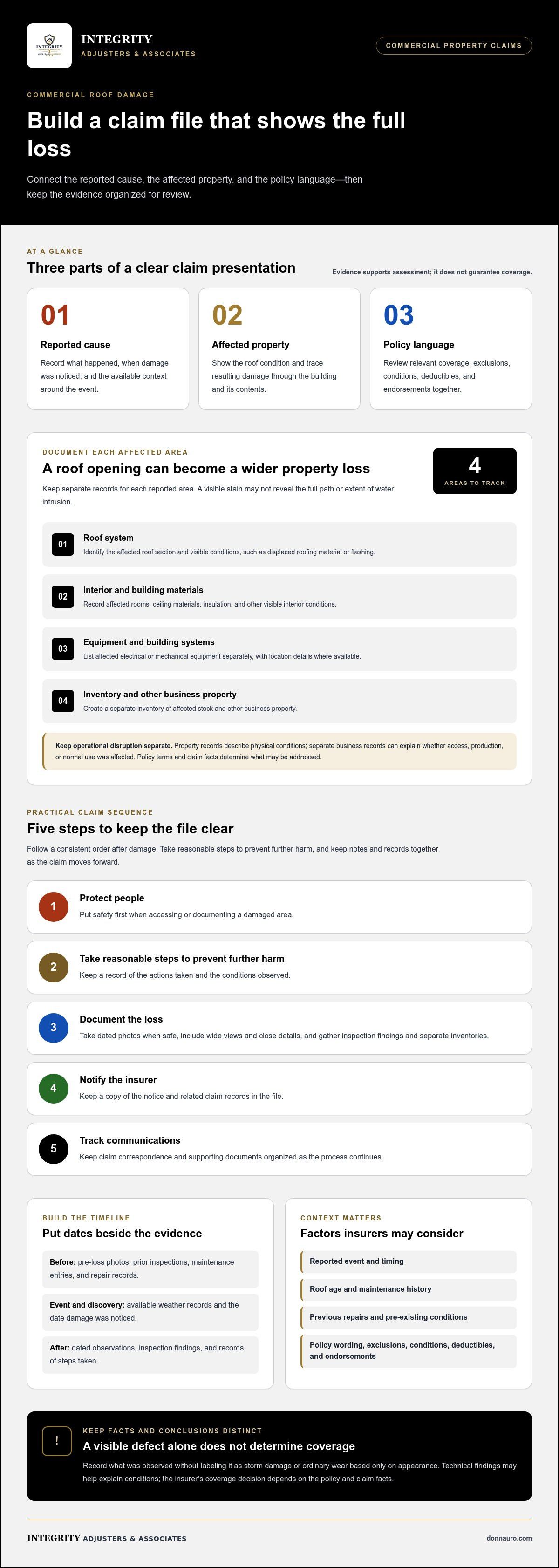
Commercial Roof Damage: Practical Claim Sequence Steps
A roof loss can create pressure to act quickly. Keep the response orderly: protect people, reduce further damage safely, preserve evidence, notify the insurer according to the policy, and track each step. This sequence addresses immediate needs while helping build a clearer claim record.
- Protect people. Keep employees, tenants, and visitors away from unsafe roof surfaces, falling debris, or affected interior areas. If there’s an urgent safety hazard, contact the appropriate emergency responders. Don’t delay necessary steps to protect people while trying to take photographs.
- Prevent further damage safely. Take reasonable protective measures that can be completed without creating additional risk. Follow applicable policy duties, and keep receipts, invoices, and notes describing what was done, when, and where.
- Document visible conditions. Before cleanup or temporary measures change the scene, record damage with dated photos or video when safe and feasible. If safety requires immediate action first, prioritize that action and document conditions as soon as practical afterward.
- Notify the insurer. Review the policy’s reporting requirements and provide notice through the applicable process. Keep a copy of what you submit, the date sent, and any confirmation or response.
- Track the claim. Maintain a dated log of discoveries, protective actions, inspections, conversations, requests, and documents shared. Save related correspondence and receipts with the entry they support.
Take immediate steps without compromising evidence
Safety comes before a complete photo record. Don’t climb onto a roof or enter an unsafe area to document damage. Restrict access where needed, and record what can be seen from a safe location. Note which areas were affected and when conditions were discovered. If urgent protective action changes the scene, preserve available before-and-after records and explain the sequence in your notes.
Keep descriptions factual. For example, record that water was observed in a specific interior area rather than asserting a cause you haven’t established. That distinction separates direct observations from later technical findings or coverage decisions.
Review the insurer’s inspection and estimate carefully
When you receive inspection findings or an estimate, compare them against the areas and property documented in your file. Check whether the materials address the reported roof sections, related interior spaces, equipment, and other affected business property. The initial estimate is one part of the evaluation and may not account for every item in the reported loss.
If something appears omitted or unclear, list the question and identify the supporting photograph, receipt, record, or inspection finding. Send organized information through the insurer’s claim process and retain a copy. A specific, evidence-based question is easier to address than a general concern that the estimate seems incomplete.
Integrity Adjusters & Associates helps policyholders organize documentation and navigate insurer communications for commercial property claims. Read more about commercial property claim support.
How a Public Adjuster Supports a New Jersey Commercial Roof Claim
A public adjuster represents the policyholder in preparing and presenting a property insurance claim. For a business dealing with a commercial roof damage insurance claim, that support can bring structure to a process involving roof sections, interior spaces, equipment, stock, and insurer questions. The role is to document and present the reported loss from the policyholder’s side, not to guarantee coverage or a particular outcome.
Integrity Adjusters & Associates helps New Jersey businesses document commercial property losses, assemble comprehensive claims, and navigate insurer communications. The firm supports commercial storm and business property claims, including roof-related losses. Claim advocacy is distinct from legal representation, insurance policy sales, physical roof repairs, and emergency mitigation. Repairs address the building; claim advocacy focuses on documenting and presenting the loss for the insurer’s evaluation.
When claim advocacy may help a business owner
Support may be useful when a roof system is complex, damage appears across multiple areas, or the claim file includes extensive maintenance, inspection, and repair records. It can also help when the insurer’s assessment raises questions about the reported damage or its scope. An organized presentation makes it easier to see how evidence relates to the property loss, but it cannot predetermine the insurer’s coverage decision.
For example, a business may need to connect an observed roof condition with damage reported in an interior space and affected equipment. Policyholder-side claim support can help organize those materials, identify gaps, and present relevant records clearly. For a broader look at the process, read this commercial property insurance claim guide.
What to expect from a policyholder-side claim review
A review can begin with available policy and claim materials, photographs, inspection findings, repair history, invoices, and insurer correspondence. The aim is to understand what has been reported and identify documentation that helps explain the commercial property loss. If information is missing or unclear, the review can help organize follow-up questions and supporting records.
From there, a public adjuster can help assemble and present a comprehensive claim and support the policyholder through communications with the insurer. That may include keeping evidence organized, clarifying what each document shows, and responding to questions with relevant information. The insurer still evaluates the claim under the applicable policy and facts. Advocacy is a structured process, not a promise of approval or a specific recovery.
For New Jersey businesses whose roof loss followed a storm, the claim file should connect the reported event to documented property damage without assuming the outcome. Integrity Adjusters & Associates provides policyholder-side commercial claim support focused on documentation and the insurer process. Learn more about commercial property claim advocacy.
Set Your Commercial Claim Up for a Clear Next Step
Turn uncertainty into a workable plan by identifying what still needs clarification, keeping new claim information together, and tying each question to a document or observation. A commercial roof damage insurance claim can involve decisions that affect the business beyond the immediate roof work, so don’t treat unanswered questions as settled.
Integrity Adjusters & Associates supports New Jersey businesses with commercial storm damage claims, documenting property losses and building comprehensive claims for policyholders. This support brings focus to the records and insurer discussions while the policyholder considers what to do next. Coverage and outcomes depend on the policy and the facts of the loss.
To discuss your commercial roof damage claim with Integrity Adjusters & Associates, get in touch.
Frequently Asked Questions
Is commercial roof damage covered by business insurance?
It may be, but coverage depends on the business’s specific policy and the facts of the loss. A policy may treat different causes or types of property damage differently, and exclusions, conditions, or endorsements can affect the evaluation. For a New Jersey business, review the policy documents that apply to the building and report the facts accurately. Visible damage alone doesn’t mean the loss is covered.
What should I do first after storm damage to a commercial roof?
First, keep people away from unsafe areas and address urgent hazards through appropriate emergency response. Once it’s safe, note when and where damage was discovered, and preserve available evidence before conditions change. Notify the insurer according to the policy’s reporting instructions. If the building has a facilities or property manager, agree on who will keep the incident notes and copies of communications so details don’t become scattered.
Can an insurance claim cover interior damage caused by a roof leak?
Interior damage may be considered as part of a claim, but the policy and circumstances determine whether it’s covered. Describe each affected area separately, such as a ceiling, stored materials, or equipment, and record when the damage was first noticed. If the water path isn’t obvious, avoid guessing at its source. A clear account of locations and observations can help the insurer assess how the reported interior loss relates to the roof event.
How do insurers distinguish storm damage from roof wear and tear?
Insurers may compare the reported event and timing with inspection findings, maintenance history, prior repairs, and the roof’s condition before the loss. For example, an older maintenance record may establish that an area was previously inspected, while dated photographs may show visible changes later. These materials provide context, but they don’t establish cause by themselves. Technical conclusions may require assessment by a qualified roofing or engineering professional.
What documents should I include in a commercial roof damage insurance claim?
Include records that help explain the loss and its timeline: dated photos, inspection findings, maintenance logs, prior repair documents, affected-property inventories, invoices, and relevant insurer correspondence. For stock or equipment, add identifying records where available, such as inventory entries or service documents. Keep originals or clear copies, label files by date and location, and note which part of the reported loss each item relates to. The applicable policy may specify additional documentation duties.
Can a public adjuster help with a commercial roof damage claim in New Jersey?
Yes. A public adjuster represents the policyholder in preparing and presenting a property claim. In New Jersey, Integrity Adjusters & Associates helps businesses document commercial losses, assemble claim materials, and navigate insurer communications. This policyholder-side advocacy can help organize information and address questions during review. It isn’t legal representation, repair work, or a promise of coverage or a particular settlement; the insurer evaluates the claim under the policy and facts.
What happens if the insurer’s roof damage estimate leaves out damaged areas?
Identify the specific area or item that appears missing, then gather related records, such as a photograph, inspection note, or inventory entry. Send a clear written question through the insurer’s claim process and keep a copy of the response and supporting documents. For example, if an estimate addresses the roof but not a documented interior area, describe that difference precisely rather than relying on a general objection.


